India – March 6, 2026 – Naukri has unveiled the second edition of its annual Voices @ Work International Women's Day report, "What Women Professionals Want," cutting through the noise with insights from over 50,000 women across more than 50 industries. The survey highlights shifting priorities, from soaring demands for equal pay audits to persistent biases hindering progress, challenging organizations to step up for gender equity.
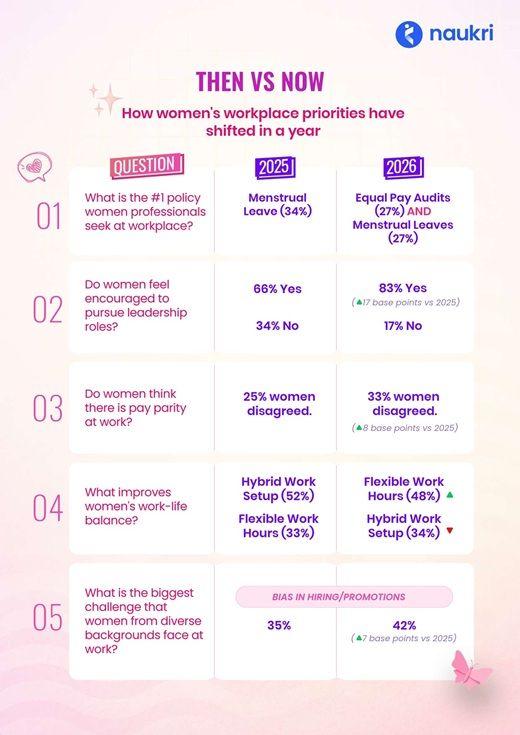
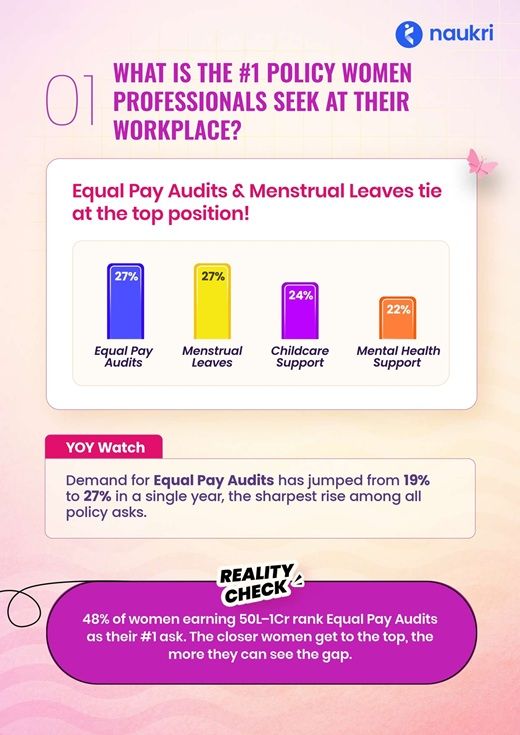
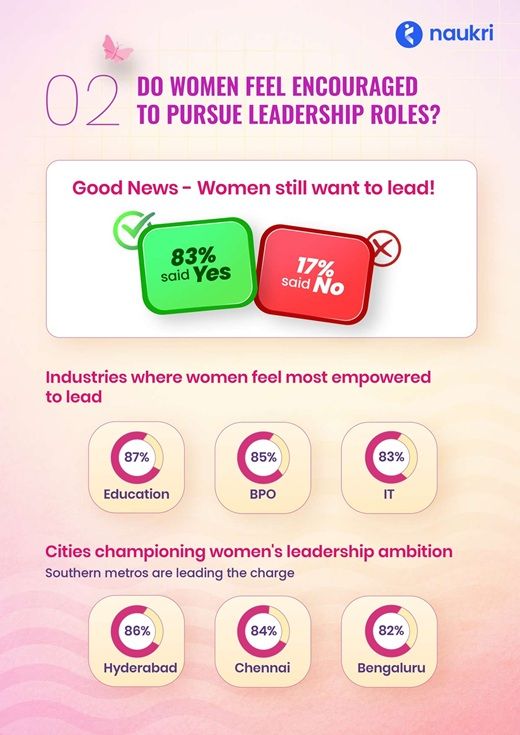
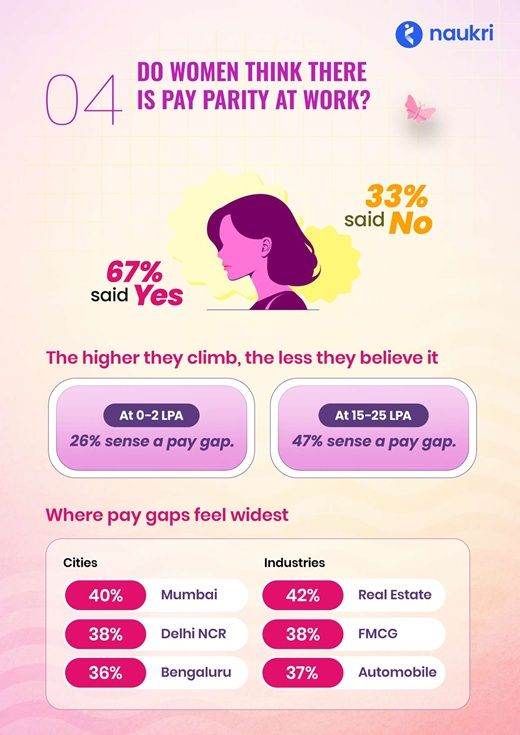
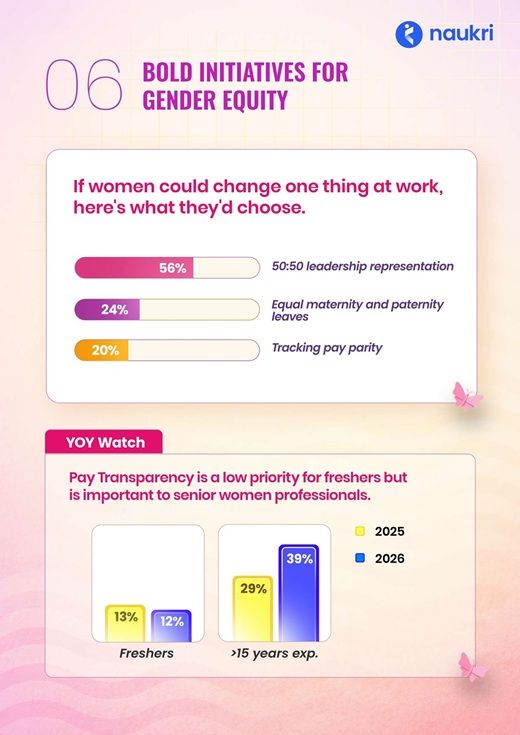
Key callouts include a dramatic rise in calls for equal pay audits, jumping from 19% to 27% year-over-year and tying with menstrual leave as the top policy ask; leadership encouragement leaping to 83% from 66%, signaling stronger ambitions especially in southern metros; and eroding trust in pay parity, with 33% disagreeing—up from 25%—as gaps widen with career advancement.
Key Insights
Surging Demand for Equal Pay Audits: Equal pay audits tie with menstrual leave at 27%, with demand spiking among high-earners—48% of those making 50L-1Cr prioritize it, as "the closer women get to the top, the more they can see the gap."
Rising Leadership Ambition Amid Encouragement: 83% feel encouraged to pursue leadership roles, up from 66%, with southern cities like Hyderabad (86%) leading and industries such as education (87%) empowering women most.
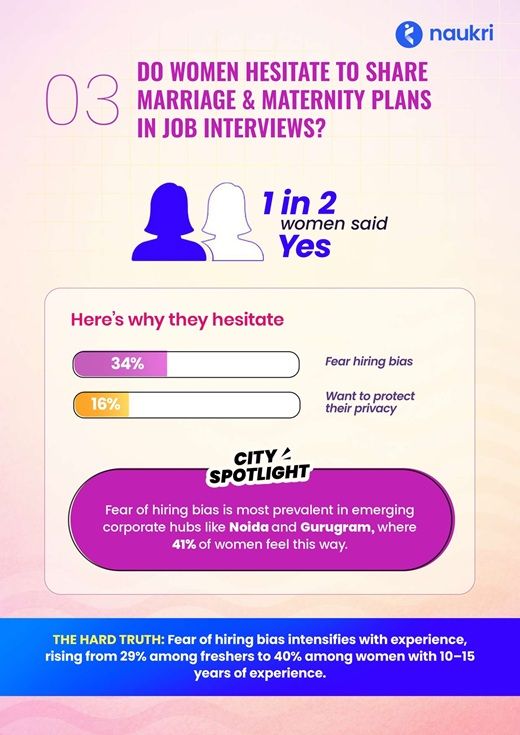
Hiring Bias and Hidden Personal Plans: One in two women hesitate to share marriage or maternity plans in interviews due to fear of bias (34%), intensifying with experience from 29% among freshers to 40% for those with 10-15 years.
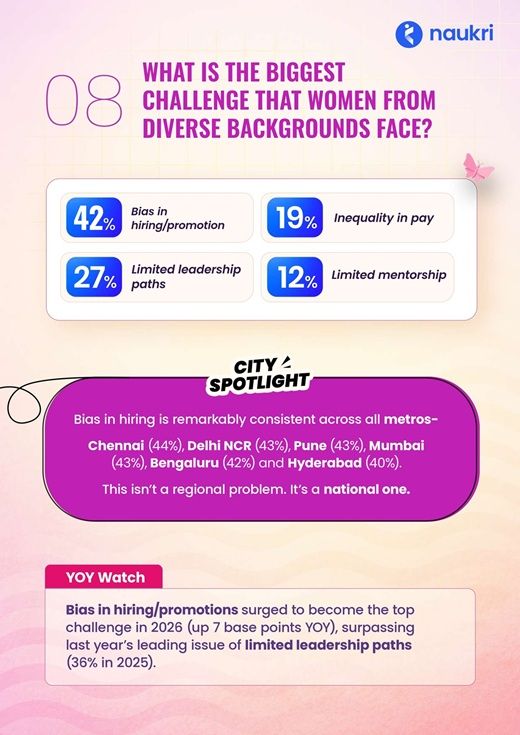
Persistent Bias as Top Challenge: 42% cite bias in hiring and promotions as the biggest hurdle for diverse women, up 7 basis points YoY, consistent across metros like Chennai (44%) and Delhi NCR (43%).
Sumeet Singh, Group CMO, Info Edge, said, "Behind every data point in this report is a woman who is ambitious. The fact that 83% feel encouraged to lead is something to celebrate. However, the fact that one in two still hide their marriage or maternity plans in interviews tells us the work is far from done. As India's leading career platform, it felt not just important but necessary for us to shine a light on these gaps through the second edition of our report."