An authorization letter is used to grant authority to someone is the absence of a higher authority. It is an important letter and must have all the information that relates to the authorization. A professional approach is a must when drafting this letter. In this comprehensive guide, we will delve into the intricacies of authorization letters, their importance, and how to draft one effectively.
What is an Authorization Letter
An authorization letter is a written document that grants someone the power to act on your behalf. It is commonly used when you are unable to personally attend to a specific task or when you want to delegate certain responsibilities to another person. The purpose of this letter is to provide legal proof that the person acting on your behalf has your consent and authority to do so.
Authorization Letter Formats
Official Authorization Letter Format
[Your Name]
Subject: Authorization Letter
This authorization will be valid from [start date] to [end date]. I kindly request you to extend your support to [Authorized Person’s Name] in carrying out the necessary tasks. Thank you for your cooperation.
|
Formal Authorization Letter Format
[Your Name]
Subject: Authorization Letter
Details of the Authorized Person:
This authorization is valid from [start date] to [end date]. Please provide them with the necessary assistance and access required to complete the task.
Thank you for your cooperation.
|
Read How to Write a Recommendation Letter
Business Authorization Letter Format
[Your Company Letterhead]
Subject: Authorization Letter
This authorization is effective from [start date] to [end date]. Please extend your support to [Authorized Person’s Name] in carrying out this task.
|
Simple Authorization Letter Format
[Your Name] [Your Address] [City, State, PIN Code] [Your Mobile Number] [Your Email] Date: [DD/MM/YYYY]
[Address] [City, State, PIN Code]
Subject: Letter of Authorization
This authorization enables the above-named person to:
This authorization is valid from [Start Date] to [End Date]. I hereby declare that all actions taken by my authorized representative within the scope of this authorization letter shall be binding on me. The authorized person's specimen signature is provided below: Specimen Signature of Authorized Person: _________________
[Your Signature] [Your Full Name]
Witnesses:
|
Key Elements of an Authorization Letter
An authorization letter typically contains several key elements to ensure clarity, legality, and effectiveness. Below are the main components that should be included:
1. Subject Line
Mention the purpose of the email clearly. An example can be "Authorization for [Action/Request]".
2. Salutation
Greet formally and address the recipient appropriately, using their title and last name if possible (e.g., "Dear Mr. Smith").
3. Introduction
Introduce yourself or the organization authorizing the action or request. And define the purpose of the Email by briefly explaining why you are writing the email.
4. Details of Authorization
Define the specifics of the authorization and clearly state what is being authorized, including any relevant dates, locations, or actions.
Outline any conditions or limitations associated with the authorization and give a reason for authorization to provide context/justification if necessary.
5. Recipient Details
Clearly identify the person or entity being authorized. Specify any responsibilities or expectations for the recipient.
6. Contact Information
Provide details on how to contact you or the organization for any questions or further clarifications.
7. Closing
Sign off professionally by using a formal closing, such as "Sincerely" or "Best Regards". Include your name, title, and possibly a handwritten signature if it’s a printed document.
Read How to End a Letter
8. Attachments (if any)
Attach necessary documents that support the authorization (e.g., contracts, identification).
Types of Authorization Letter
a) Financial Authorization Letter:
This type of letter grants someone the authority to handle financial transactions on your behalf, such as withdrawing money, making payments, or managing your bank accounts.
Example:
[Your Company Letterhead]
Subject: Financial Authorization Letter
This authorization is effective from [start date] to [end date]. Please extend your full support to [Authorized Person’s Name] in all financial dealings during this period.
|
b) Medical Authorization Letter:
A medical authorization letter allows someone to make medical decisions on your behalf, especially in situations where you are unable to communicate or make decisions for yourself.
Example:
[Your Name]
Dear [Recipient's Name],
This authorization is effective from [start date] and will remain in effect until [end date/indefinitely].
|
c) Travel Authorization Letter:
When you are unable to travel due to personal or professional commitments, a travel authorization letter allows someone else to travel on your behalf, granting them the necessary permissions and authority.
Example:
[Your Name]
Dear [Recipient's Name],
Please extend your support and assistance to [Authorized Person’s Name] during this travel period.
|
d) Legal Authorization Letter:
This type of letter is used to grant someone the authority to act on your behalf in legal matters, such as signing contracts, attending court hearings, or representing you in legal proceedings.
Example:
[Your Name]
Dear [Recipient's Name],
This authorization is effective from [start date] and will remain in effect until [end date/indefinitely].
|
Tips to Write an Authorization Letter
1. Use a Formal Business Letter Format
When drafting an authorization letter, it's essential to adhere to a formal business letter format to maintain professionalism and clarity. The format should begin with the sender's contact information, followed by the date of the letter. Include the recipient's details, such as their name and title, and then a clear subject line that succinctly describes the purpose of the letter. This format sets a formal tone and helps to easily identify necessary parties for legal and administrative purposes.
2. Define Purpose and Authorization Details
One of the most critical aspects of an authorization letter is clarity regarding its purpose and the specifics of the authorization being granted. Start the letter with a direct statement outlining why the authorization is necessary. Clearly identify the person or entity being authorized, including their full name and any relevant identification details. Specify in detail what actions or responsibilities the authorized individual is permitted to undertake. This clarity helps prevent misunderstandings and ensures that the authorized party knows the extent of their authority.
3. Use Professional and Polite Language
Using professional and polite language throughout the letter is essential to convey respect and maintain a positive tone. Avoid using overly technical terms or jargon that may not be easily understood by the recipient. Instead, opt for clear and straightforward language that clearly communicates the intent of the authorization. Politeness in language also reinforces the professional relationship between the authorizer and the recipient, fostering goodwill and cooperation.
4. Include Contact Information
Incorporating contact information is crucial to facilitate communication between the authorizer and the recipient of the authorization letter. Provide your phone number and email address at the end of the letter, indicating where the recipient can reach you for any questions or clarifications regarding the authorization. This proactive approach not only demonstrates accessibility but also ensures that any potential issues or queries can be promptly addressed, thereby facilitating smooth implementation of the authorized actions.
5. Proper Closure with Signature and Date
Conclude the authorization letter with a proper closure that reinforces professionalism and authenticity. Use formal closing phrases such as "Sincerely," "Best Regards," or "Yours faithfully," followed by the authorizer's printed name and handwritten signature. Including the date of the letter is essential for documentation purposes, as it indicates when the authorization was issued. This formal closure not only signifies the end of the communication but also adds a layer of authenticity and legality to the authorization being granted.
Common Mistakes to Avoid When Writing an Authorization Letter
- Not being clear and specific about the task or action being authorized.
- Failing to include important details such as the duration of the authorization and any limits or restrictions.
- Using overly complex or legal language that may be difficult to understand.
- Failing to sign and date the letter, which can make it invalid.
- Not verifying the identity of the authorized person, which can lead to unauthorized actions.
- Not keeping a copy of the authorization letter for your own records.
- Sending the letter to the wrong recipient or address, which can cause delays or confusion.
- Failing to comply with any relevant legal or regulatory requirements, which can lead to legal consequence
In conclusion, an authorization letter can be a powerful tool for delegating authority and allowing someone else to act on your behalf.
By following the right format and including all necessary information, you can ensure that your letter is clear, legally binding, and effective. Avoiding common mistakes is also crucial for making sure that the authorized person acts within the intended scope and doesn't cause any unintended consequences.
Read How to Write an Appointment Letter
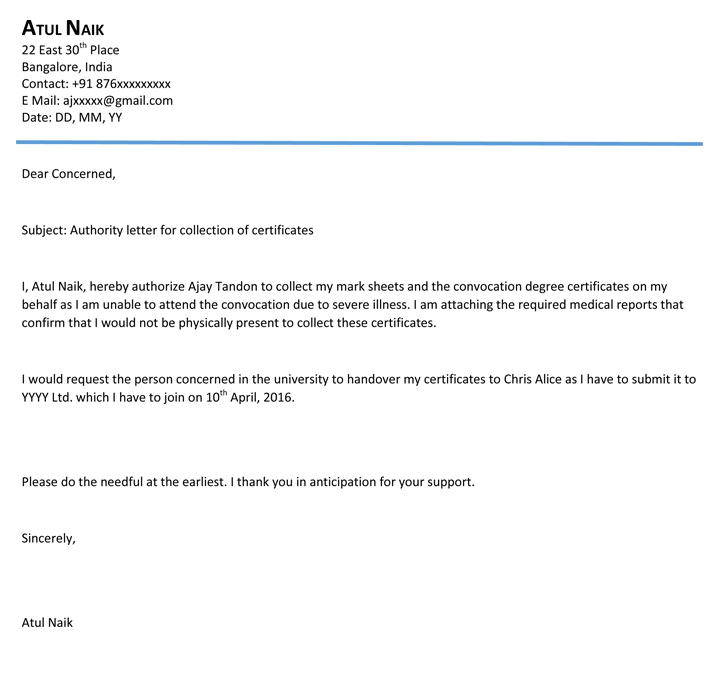
Here's what an Authorization Letter looks like:
Read Leave Application
Frequently Asked Questions
How do I write an authorization letter?
To write an authorization letter, start by addressing the concerned person or organization. Clearly mention your name, contact details, and the purpose of the authorization. Specify who is being authorized, the tasks they can perform on your behalf, and any relevant conditions. End the letter with your signature, date, and contact information.
Is there a specific format for an authorization letter?
There is no strict format, but an authorization letter should include the date, sender and recipient details, a clear statement of authorization, details of the authorized person, the purpose of authorization, any limitations, and the sender's signature. In some cases, notarization may also be required.
Can I revoke or cancel an authorization letter?
Yes, you can revoke an authorization letter at any time. To do so, create a written revocation letter stating that the previous authorization is no longer valid. Share the revocation notice with the authorized person and any relevant organizations involved.
How do I write a handwritten authorization letter?
A handwritten authorization letter should include the date, recipient details, a clear statement of authorization, the name of the authorized person, the purpose of authorization, and your signature. For added authenticity, you may have the letter witnessed or notarized if required.
What is proof of authorization?
Proof of authorization refers to documents or evidence that confirm a person has been granted permission to act on behalf of another individual or organization. This may include authorization letters, power of attorney documents, identity proofs, or notarized declarations.
