





Lifesight interview experience Real time questions & tips from candidates to crack your interview
SDE - 1
Lifesight


3 rounds | 9 Coding
problems

 Selected
 Interview preparation journey

Preparation
Duration: 3 Months
Topics: DataStructures, Algorithms, Problem Solving, Big Data, Distributed Systems, Spark

Tip 1 : Be solid with the basics of Ds, Algo. Good to have end to end projects which are hosted on cloud.
Tip 2 : Its always good to be presentable and have good communications skills
Tip 3 : Be honest, clear in approach and always walkthrough your thought process to the interviewer
Application process
Where: Linkedin
Eligibility: 2+ years of Work Experience in the relevant field
Tip 1 : Mention your projects and experience at the top. Be clear on what was done, a brief on how it was done, language /tech stack involved. If possible try to host and make it accessible. You never know if you can present it with just one click.
Tip 2 : Choose a balance between, white spaces and text, it should be well indented, no grammatical errors.
Tip 3 : It takes less than 2 min to scan a resume. Don't mention things which are irrelevant.

Interview rounds
01
Round
Medium
Video Call
Duration75 Minutes
Interview date28 Dec 2020
Coding problem3
This round was with SDE-1
After my introduction , he asked me 3 Questions
1. Cycle Detection In Undirected Graph
Moderate

0/80
Asked in companies



You have been given an undirected graph with 'N' vertices and 'M' edges. The vertices are labelled from 1 to 'N'.
Your task is to find if the graph contains a cycle or not.
A path that starts from a given vertex and ends at the same vertex traversing the edges only once is called a cycle.
Example :
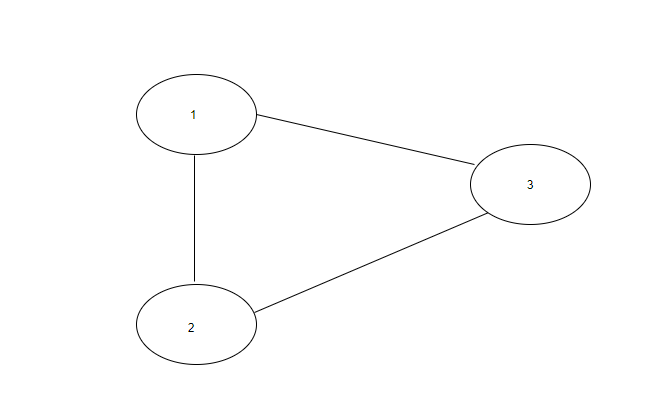
In the below graph, there exists a cycle between vertex 1, 2 and 3.
Note:
1. There are no parallel edges between two vertices.

2. There are no self-loops(an edge connecting the vertex to itself) in the graph.

3. The graph can be disconnected.
For Example :
Input: N = 3 , Edges =  [[1, 2], [2, 3], [1, 3]].
Output: Yes

Explanation : There are a total of 3 vertices in the graph. There is an edge between vertex 1 and 2, vertex 2 and 3 and vertex 1 and 3. So, there exists a cycle in the graph.
2. Longest Sub-string With K Distinct Characters
Easy
15m average time
85% success
0/40
Asked in companies



You are given a string 'S' of length 'N' consisting of lowercase English alphabet letters. You are also given a positive integer 'K'.
Now, a substring of this string is good if it contains at most 'K' distinct characters. A string 'X' is a substring of string 'Y' if it can be obtained by deletion of several continuous elements(possibly zero) from the beginning and the end from the string 'Y'.
Your task is to return the maximum size of any good substring of the string 'S'.
Example:
‘S’ = “bacda” and ‘K’ = 3.

So, the substrings having at most ‘3’ distinct characters are called good substrings. Some possible good substrings are:
1. “bac”
2. “acd”
3. “acda”

The substring “acda” is the largest possible good substring, as we cannot get any other substring of length 5 or more having distinct characters less than or equal to ‘3’. Thus, you should return ‘4’ as the answer.
3. Validate BST
Moderate
25m average time
0/80
Asked in companies


You have been given a binary tree of integers with N number of nodes. Your task is to check if that input tree is a BST (Binary Search Tree) or not.
A binary search tree (BST) is a binary tree data structure which has the following properties.
• The left subtree of a node contains only nodes with data less than the node’s data.
• The right subtree of a node contains only nodes with data greater than the node’s data.
• Both the left and right subtrees must also be binary search trees.
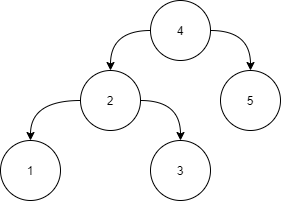
Example :
Answer :
Level 1:

All the nodes in the left subtree of 4 (2, 1, 3) are smaller
than 4, all the nodes in the right subtree of the 4 (5) are
larger than 4.

Level 2 :

For node 2:
All the nodes in the left subtree of 2 (1) are smaller than
2, all the nodes in the right subtree of the 2 (3) are larger than 2.
For node 5:
The left and right subtrees for node 5 are empty.

Level 3:

For node 1:
The left and right subtrees for node 1 are empty.
For node 3:
The left and right subtrees for node 3 are empty.

Because all the nodes follow the property of a binary search tree, the above tree is a binary search tree.
02
Round
Medium
Video Call
Duration90 Miinutes
Interview date30 Dec 2020
Coding problem3
This round was with a Senior Data Engineer as this position was a mix of Backend and Big Data.
1. Technical Questions
He asked me 4-5 SQL queries.
Asked to implement Upsert functionality in Spark Dataframes,
Asked about optimizations I had used and was aware about, interanl implementation of thoese Optimization.
2. Combination Sum
Easy
15m average time
85% success
0/40
Asked in companies


You are given an array 'ARR' of 'N' distinct positive integers. You are also given a non-negative integer 'B'.
Your task is to return all unique combinations in the array whose sum equals 'B'. A number can be chosen any number of times from the array 'ARR'.
Elements in each combination must be in non-decreasing order.
For example:
Let the array 'ARR' be [1, 2, 3] and 'B' = 5. Then all possible valid combinations are-

(1, 1, 1, 1, 1)
(1, 1, 1, 2)
(1, 1, 3)
(1, 2, 2)
(2, 3)
3. Covid Vaccination
Moderate
0/80
Asked in companies



We are suffering from the Second wave of Covid-19. The Government is trying to increase its vaccination drives. Ninja wants to help the Government to plan an effective method to help increase vaccination following safety measures. Time is running out. Can you help the nation?
You are given two positive integers: ‘n,’ ‘maxVaccines’ denoting the number of days for which this vaccination drive will go on and the total number of vaccines available for the drive, respectively. You have to find the number of vaccines administered each day. You are also given a number ‘dayNumber,’ and we are interested to know the maximum number of vaccines that can be administered on ‘dayNumber’ th day.
The rules of the vaccination drive :
1. There should be a positive number of vaccines administered each day during the vaccination drive.
2. The absolute difference between the number of vaccines in two consecutive days should not exceed 1.
3. The sum of all the elements of the vaccines array does not exceed maxVaccines, that is, you cannot administer more vaccines than what is provided to you.
4. Vaccines administered on ‘dayNumber’ th day should be maximized.
03
Round
Easy
Video Call
Duration75 Minutes
Interview date4 Jan 2021
Coding problem3
This round was taken by Engineering Manager
There were 2 sections to this round
Technical and Non Techincal
1. Maximum In Sliding Windows Of Size K
Moderate
20m average time
80% success
0/80
Asked in companies


Given an array/list of integers of length ‘N’, there is a sliding window of size ‘K’ which moves from the beginning of the array, to the very end. You can only see the ‘K’ numbers in a particular window at a time. For each of the 'N'-'K'+1 different windows thus formed, you are supposed to return the maximum element in each of them, from the given array/list.
2. Technical Questions
He took a deep dig at my projects and asked me everything around my resume, after that he asked me a coding Question
He then asked me a SQL query on window functions and dense rank
In Spark in he asked me around the fundamentals and implementation of Broadcast Variables.
3. Basic HR Questions
My Aspirations, How my team mates should be , How my Manager should be, Relationships with Manager,Relationships with Team members, Difficult scenario encoutered in the past, how did I overcome an unwinable situation.


Here's your problem of the day 
Solving this problem will increase your chance to get selected in this company
Skill covered: Programming
How do you remove whitespace from the start of a string?
Choose another skill to practice
Similar interview experiences
SDE - 1
4 rounds | 8 problems
Interviewed by Amazon
 Selected
11210 views

0 comments

0 upvotes
Analytics Consultant
3 rounds | 10 problems
Interviewed by ZS
Selected 1253 views
0 comments
0 upvotes
SDE - Intern
1 rounds | 3 problems
Interviewed by Amazon
Selected 4456 views
0 comments
0 upvotes

SDE - 2
4 rounds | 6 problems
Interviewed by Expedia Group
 Selected
 3373 views
0 comments
0 upvotes
Companies with similar interview experiences
SDE - 1
5 rounds | 12 problems
Interviewed by Amazon
 Selected
 117552 views
24 comments
0 upvotes

SDE - 1
4 rounds | 5 problems
Interviewed by Microsoft
Selected 60143 views
5 comments
0 upvotes
SDE - 1
3 rounds | 7 problems
Interviewed by Amazon
 Selected
 36138 views
7 comments
0 upvotes