





NCR Corporation interview experience Real time questions & tips from candidates to crack your interview

SDE - Intern
NCR Corporation


4 rounds | 8 Coding
problems

 Selected
 Interview preparation journey

Preparation
Duration: 2 months
Topics: Data Structures , Algorithms , OOPS , DBMS , Operating Systems , Puzzles

Tip 1 : Atleast 200 to 250+ Data Structures and Algorithms Questions
Tip 2 : Thorough with your Projects , Skills , any previous experience etc. mentioned in your resume.
Tip 3 : Practice of Mathematical and Logical Puzzles
Application process
Where: Campus
Eligibility: 8 CGPA
Tip 1 : Mention projects which you can explain and defend clearly.
Tip 2 : Resume should always be crisp and clear and should be of 1 page.
Tip 3 : If you do competitive programming , you can put links of your various online platforms profiles
Tip 4 : There should not be any false achievements or false experience mentioned in the resume.

Interview rounds
01
Round
Medium
Online Coding Interview
Duration120 minutes
Interview date7 Sep 2020
Coding problem2
This was the first round and it consisted of 20 MCQs and 2 programming questions.
The test was on HackerEarth platform.
The test was of 2 hours , web-proctored and switching between tabs was not allowed.
1. Longest Palindromic Substring
Moderate
20m average time
80% success

0/80
Asked in companies



You are given a string 'str' of length 'N'.
Your task is to return the longest palindromic substring. If there are multiple strings, return any.
A substring is a contiguous segment of a string.
For example :
str = "ababc"

The longest palindromic substring of "ababc" is "aba", since "aba" is a palindrome and it is the longest substring of length 3 which is a palindrome.

There is another palindromic substring of length 3 is "bab". Since starting index of "aba" is less than "bab", so "aba" is the answer.
Problem approach
Step 1 : I first thought of the naive approach by first considering all the substrings and then check weather it is a palindrome or not and then check weather its length is maximum till now or not. But the complexity of this approach was O(n^3) which can't be executed according to constraints.
Step 2 : Then I thought of another DP approach using gap strategy of first finding palindrome for small length substrings and then use the answer to calculate further.
The complexity of this approach was O(n^2) and I was able to pass all the test cases.
2. Count ways to reach the nth stairs
Moderate
30m average time
80% success
0/80
Asked in companies


You have been given a number of stairs. Initially, you are at the 0th stair, and you need to reach the Nth stair.
Each time, you can climb either one step or two steps.
You are supposed to return the number of distinct ways you can climb from the 0th step to the Nth step.
Note:
Note: Since the number of ways can be very large, return the answer modulo 1000000007.
Example :
N=3
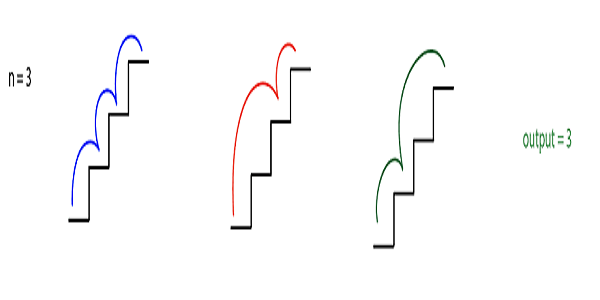
We can climb one step at a time i.e. {(0, 1) ,(1, 2),(2,3)} or we can climb the first two-step and then one step i.e. {(0,2),(1, 3)} or we can climb first one step and then two step i.e. {(0,1), (1,3)}.
Problem approach
Step 1 : The first method I thought uses the technique of recursion to solve the problem. We can easily find the recursive nature in the problem. The person can reach nth stair from either (n-1)th stair or from (n-2)th stair. Hence, for each stair n, we try to find out the number of ways to reach (n-1)th stair and (n-2)th stair and add them to give the answer for the nth stair.
But the complexity for the problem is O(2^n) and I got time limit exceed in some cases.
Step 2 : Then I used the approach of DP which is of O(N) complexity and all the test cases passed.
02
Round
Medium
Video Call
Duration45 minutes
Interview date17 Nov 2020
Coding problem3
This was the second round and the interview round. It was all about OOPS concepts , OS and DBMS fundamentals.It was of 45 minutes approximately .
1. DBMS
What is Normalization ?
Why it is needed ?
Types of Normalizations and there conditions.
What is Indexing ?
Types of Indexing and the difference between them.
2-3 SQL queries to find the nth largest salary , maximum salary of each department etc.
Difference between primary and unique constraints in SQL.
Problem approach
Tip 1 : Have a thorough knowledge of concepts of DBMS.
Tip 2 : Check out videos for better understandings.
Tip 3 : Practice of SQL queries is must.
2. Operating System
What is Deadlock ?
What are the conditions of Deadlock ?
Real life scenarios where deadlock happens.
What is CPU Scheduling?
Round Robin in CPU Scheduling.
What are Semaphores and its applications?
Problem approach
Tip 1 : Have a thorough knowledge of concepts of Operating Systems.
Tip 2 : Check out videos for better understandings.
3. OOPS Concepts
Real Life Examples of OOPS fundamentals like Abstraction , Encapsulation , Polymorphism , Inheritance.
Difference between Dynamic and Static Polymorphism.
To write a small program which shows how Dynamic Polymorphism work.
How interfaces works and difference between abstract class and interfaces.
Exceptional Handling and some code related questions of Exceptional Handling.
Problem approach
Tip 1 : Have deep knowledge of all OOPS concepts.
Tip 2 : Hands on coding experience of OOPS concepts is a plus.
03
Round
Medium
Video Call
Duration30 minutes
Interview date21 Nov 2020
Coding problem2
This was the third round and the round was focused on Projects and Puzzles. It was of 1/2 hour approximately.
1. PROJECT
My project was based on Machine Learning and the discussion was all about the algorithm of the project , the accuracy ,
and the application of it in real world.
Problem approach
Tip 1 : Have the knowledge of all the concepts you used in your project.
Tip 2 : Know how your project can be used in real-world problems.
2. Puzzle
1. How do we measure forty-five minutes using two identical wires, each of which takes an hour to burn? The wires burn non-uniformly.
2. Given two hourglass of 4 minutes and 7 minutes, the task is to measure 9 minutes.
04
Round
Medium
HR Round
Duration30 minutes
Interview date23 Nov 2020
Coding problem1
It was the last round and was all about HR questions.
1. General Questions
Tell me about yourself.
Are you willing to go for higher studies.
What challenges did you face in your life and how did you overcome them?
When have you tried to adapt to a new situation?
Are you a smart worker or a hard worker?
Problem approach
Tip 1 : You should prepare the answers for some of the common questions beforehand and for other questions you should always answer smartly and confidently.


Here's your problem of the day 
Solving this problem will increase your chance to get selected in this company
Skill covered: Programming
How do you remove whitespace from the start of a string?
Choose another skill to practice
Similar interview experiences
SDE - Intern
5 rounds | 5 problems
Interviewed by NCR Corporation
 Selected
1324 views

0 comments

0 upvotes
SDE - Intern
4 rounds | 7 problems
Interviewed by NCR Corporation
Selected 1317 views
0 comments
0 upvotes
Associate Software Engineer
4 rounds | 9 problems
Interviewed by NCR Corporation
 Selected
 1639 views
0 comments
0 upvotes
Software Engineer Intern
3 rounds | 9 problems
Interviewed by NCR Corporation
Selected 1373 views
0 comments
0 upvotes
Companies with similar interview experiences

SDE - Intern
2 rounds | 4 problems
Interviewed by Arcesium
 Selected
 3915 views
0 comments
0 upvotes
SDE - Intern
3 rounds | 5 problems
Interviewed by Arcesium
Selected 2888 views
0 comments
0 upvotes

SDE - Intern
3 rounds | 5 problems
Interviewed by BNY Mellon
Selected 2484 views
0 comments
0 upvotes