





Optum interview experience Real time questions & tips from candidates to crack your interview

SDE - 1
Optum


3 rounds | 5 Coding
problems

Rejected
Interview preparation journey

Journey
At the starting, i was a very bad student in terms of data structure and algorithm but when i realized that this is the only way to get placement then i started preparation in this field.
Application story
I applied to the company when the company come to our college for the placements .
Why selected/rejected for the role?
I was rejected because i was not able to answer all the questions which were asked in the exam
Preparation
Duration: 4 Months
Topics: Data Structures, Pointers, OOPS, System Design, Algorithms, Dynamic Programming

Tip 1 : OOPS - You should be well versed with basic OOPS principles
Tip 2 : You should be confident and have profound knowledge about the projects you worked on
Tip 3 : Basic DB concepts like joins, normalisation
Application process
Where: Campus
Eligibility: Above 7 CGPA
Tip 1 : Have some projects on resume.
Tip 2 : Do not put false things on resume.

Interview rounds
01
Round
Easy
Video Call
Duration45 Minutes
Interview date23 Sep 2022
Coding problem2
1. Arithmetic Progression Queries
Ninja
44m average time
50% success

0/200
Asked in companies



Given an integer array(ARR) of size N, the following operations need to be performed:
update(l, r, val) : Add (val + i) to arr[l + i] where, 0 <= i <= r - l.

rangeSum(l, r): return the sum of all elements in the array from index l to r, i.e., the sum of array arr[l...r].
Two type of queries denote these operations:
Type 1: for update(l, r, val) operation.
Type 2: for rangeSum(l, r) operation.

Note: (1 based indexing) for the queries.
Problem approach
You are given a string ‘expression’ consists of characters ‘+’, ‘-’, ‘*’, ‘/’, ‘(‘, ‘)’ and ‘0’ to ‘9’, that represents an Arithmetic Expression in Infix Notation. Your task is to evaluate this Arithmetic Expression.
In Infix Notation, operators are written in-between their operands.
2. Interleaving Two Strings
Moderate
45m average time
50% success
0/80
Asked in companies


You are given three strings 'A', 'B' and 'C'. Check whether 'C' is formed by an interleaving of 'A' and 'B'.
'C' is said to be interleaving 'A' and 'B', if the length of 'C' is equal to the sum of the length of 'A' and length of 'B', all the characters of 'A' and 'B' are present in 'C' and the order of all these characters remains the same in all three strings.
For Example:
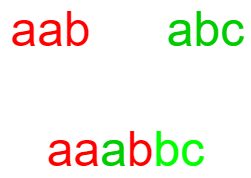
If A = “aab”, 'B' = “abc”, 'C' = “aaabbc”
Here 'C' is an interleaving string of 'A' and 'B'. because 'C' contains all the characters of 'A' and 'B' and the order of all these characters is also the same in all three strings.
If 'A' = “abc”, 'B' = “def”, 'C' = “abcdefg”
Here 'C' is not an interleaving string of 'A' and 'B'. 'B'ecause neither A nor 'B' contains the character ‘g’.
Problem approach
You are given three strings 'A', 'B' and 'C'. Check whether 'C' is formed by an interleaving of 'A' and 'B'.
'C' is said to be interleaving 'A' and 'B', if the length of 'C' is equal to the sum of the length of 'A' and length of 'B', all the characters of 'A' and 'B' are present in 'C' and the order of all these characters remains the same in all three strings.
02
Round
Easy
Video Call
Duration45 Minutes
Interview date23 Sep 2022
Coding problem2
1. Get DFS Path
Easy
15m average time
90% success
0/40
Asked in companies

You are given an undirected graph G(V, E), where ‘V’ is the number of vertices and ‘E’ is the number of edges present in the graph and two integers ‘v1’ and ‘v2’ denoting vertices of the graph, find and print the path from ‘v1’ to ‘v2’ (if exists) in reverse order. Print an empty list if there is no path between ‘v1’ and ‘v2’.
Find the path using DFS and print the first path that you encountered.
Note:
Vertices are numbered through 0 to V-1.
Problem approach
You are given an undirected graph G(V, E), where ‘V’ is the number of vertices and ‘E’ is the number of edges present in the graph and two integers ‘v1’ and ‘v2’ denoting vertices of the graph, find and print the path from ‘v1’ to ‘v2’ (if exists) in reverse order. Print an empty list if there is no path between ‘v1’ and ‘v2’.
Find the path using DFS and print the first path that you encountered.
2. All Prime Numbers less than or equal to N
Moderate
10m average time
90% success
0/80
Asked in companies

You are given a positive integer 'N'. Your task is to return all the prime numbers less than or equal to the 'N'.
Note:
1) A prime number is a number that has only two factors: 1 and the number itself.

2) 1 is not a prime number.
Problem approach
You are given a positive integer 'N'. Your task is to return all the prime numbers less than or equal to the 'N'.
03
Round
Easy
HR Round
Duration30 Minutes
Interview date23 Sep 2022
Coding problem1
1. Basic HR Questions
What motivates you to do good job?
What makes you angry?
Give me an example of your creativity.
How long would you expect to work for us if hired?
Are not you overqualified for this position?


Here's your problem of the day 
Solving this problem will increase your chance to get selected in this company
Skill covered: Programming
How do you remove whitespace from the start of a string?
Choose another skill to practice
Similar interview experiences
SDE - 1
2 rounds | 7 problems
Interviewed by Optum
 Selected
1788 views

0 comments

0 upvotes
SDE - 1
2 rounds | 2 problems
Interviewed by Optum
 Selected
 0 views
0 comments
0 upvotes
SDE - 1
2 rounds | 4 problems
Interviewed by Optum
Rejected
1095 views
0 comments
0 upvotes
SDE - 1
3 rounds | 3 problems
Interviewed by Optum
Rejected
999 views
0 comments
0 upvotes
Companies with similar interview experiences
SDE - 1
5 rounds | 12 problems
Interviewed by Amazon
 Selected
 117552 views
24 comments
0 upvotes

SDE - 1
4 rounds | 5 problems
Interviewed by Microsoft
Selected 60143 views
5 comments
0 upvotes
SDE - 1
3 rounds | 7 problems
Interviewed by Amazon
 Selected
 36138 views
7 comments
0 upvotes