Do you think IIT Guwahati certified course can help you in your career?
Introduction
In programming, particularly in C, branching statements are pivotal. They dictate the flow of control based on conditions, guiding a program's decision-making process. Grasping their use is crucial for any coding student, as they're fundamental to crafting dynamic & responsive code.
In this blog, we will learn about different types of branching statements in C. Furthermore, we will learn about advantages and disadvantages.
What is Branching Statements in C?
Branching statements in C control the flow of execution based on conditions. They include if, else, else if, switch, and the goto statement. These allow decision-making and control over which parts of the code are executed.
Types of Branching Statements in C
Conditional Branching Statements:
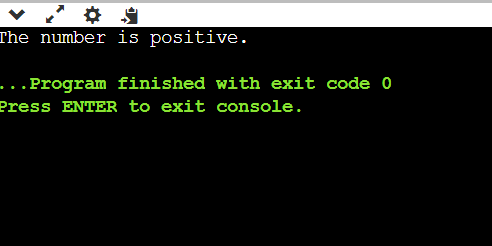
Conditional branching in C includes if, if-else, switch, and nested if statements. They evaluate conditions & execute code blocks based on the outcome.
Used within loops, break exits the loop, while continue skips to the next iteration.
Advantages & Disadvantages of Branching Statements
Advantages
Control Flow: Enables dynamic decision-making within a program.
Code Organization: Simplifies complex conditions, making code easier to read & maintain.
Disadvantges
Complexity: Improper use can lead to convoluted & hard-to-follow code.
Debugging Challenges: Tracing errors in nested conditions can be tricky.
Frequently Asked Questions
How do if-else and switch statements differ in usage?
if-else is ideal for checking a range of values or complex conditions. In contrast, switch is more efficient for specific value matches. switch enhances readability when dealing with numerous discrete values of a single variable, while if-else offers more flexibility for diverse conditions.
Can goto statements be harmful in programming?
While goto offers direct control, it's generally discouraged due to potential for creating 'spaghetti code' – code with complex & tangled control structures. Overusing goto can make programs hard to read & maintain. It's better to use structured looping & branching constructs.
Why is understanding branching statements crucial for a C programmer?
Branching statements are the backbone of decision-making in C programming. Mastery over them enables programmers to write efficient, dynamic, and responsive code. They form the basis of logic implementation in various applications, from simple calculations to complex algorithms.
Conclusion
Branching statements in C, encompassing both conditional and unconditional types, are vital tools in a programmer's arsenal. Their proper usage dictates the flow of a program, making it dynamic and responsive. Understanding their nuances, advantages, and potential pitfalls is crucial for any coding student. This mastery not only enhances code efficiency and readability but also lays the foundation for advanced programming concepts. Remember, the key to effective programming in C lies in the judicious use of these branching constructs, balancing control flow with code maintainability.







 1+ registered

