Do you think IIT Guwahati certified course can help you in your career?
Introduction
Hello, ninjas! You all must have come across the term algorithm for sure. In this article, we will learn about the characteristics of an algorithm.
Let us first study the meaning of an algorithm in detail.
What is an Algorithm?
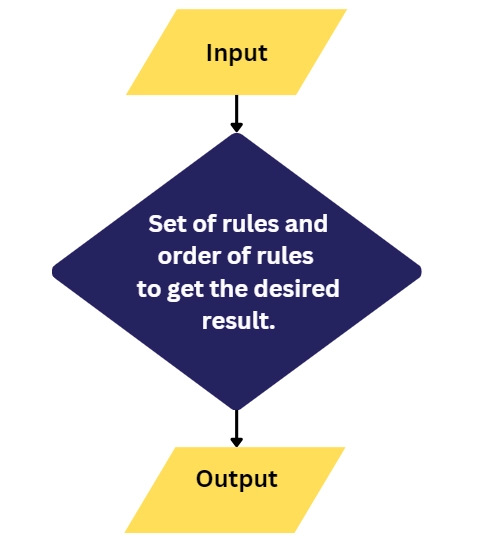
An algorithm is a structured and ordered set of instructions to do calculations and perform operations. It is a specific set of commands followed in a particular order to perform a task, and there are typical characteristics of an algorithm to get the desired result.
One important note is that an algorithm is not the whole program or code of the problem. It is simply a logic to be implemented to solve the problem. It can be described as a pseudo-code or can be represented as a flowchart.
For us to understand it completely, let us take a look at the definitions of some terms:-
Problem:-It is a real-world problem or some situation for which you must design rules or instructions to obtain the desired result.
Input:- For an algorithm, these are the entered parameters that are necessary for the output.
Output:- The desired result obtained after passing in the defined input according to the designed algorithm.
Characteristics of an Algorithm
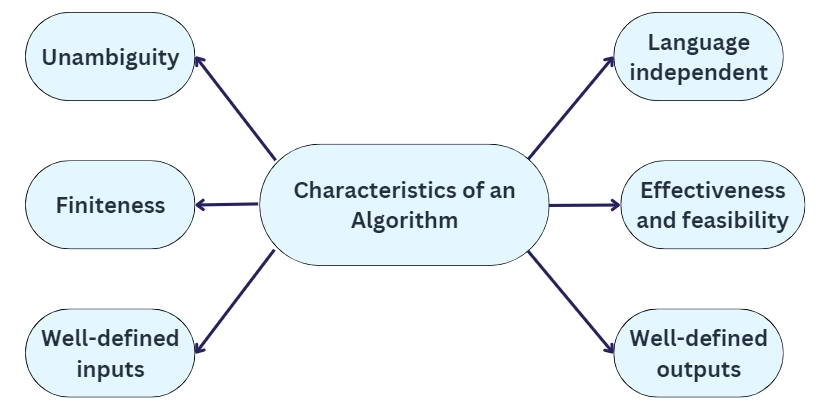
Let us now discuss the characteristics of an algorithm.
Well-defined Inputs
The expected inputs of an algorithm must be well-defined to ensure its correctness, predictability, and repeatability.
Well-defined inputs ensure that the algorithm's behavior is deterministic, which means, that the same input will always produce the same output.
Unambiguous inputs help prevent incorrect implementations and misunderstanding of the algorithm's requirements.
With well-defined inputs, it is easier to optimize the algorithm based on the characteristics of the input.
Well-defined Outputs
The outputs of an algorithm should be well-defined to ensure that the algorithm produces the intended and accurate result for a given set of inputs.
It avoids ambiguity and guarantees that the algorithm solves the problem correctly.
It is also easy to verify the correctness of the algorithm's implementation.
Well-defined outputs allow you to optimize the algorithm further to achieve the results more efficiently.
Unambiguity
Ambiguity in the algorithm's description can lead to incorrect implementations and unreliable results. That is why it is important for an algorithm to be unambiguous.
It allows the algorithm to be predictable, i.e., the same input produces the same output, which makes debugging an implementation easier.
It is also easier for unambiguous to be standardized and used widely for different applications.
While implementing unambiguous algorithms, you can focus more on optimizations rather than handling unexpected errors and edge cases.
Finiteness
The algorithm should end after a finite amount of time, and it should have a limited number of instructions.
A finite algorithm ensures that it will eventually stop executing and produce a result.
An infinite algorithm would never reach a conclusion, which is impractical in real-world scenarios where computation cannot be performed infinitely.
The time and space complexity can be analyzed in the case of a finite algorithm which is important for performing further optimizations.
Language Independent
A language-independent algorithm can be easily ported to different programming languages and platforms, making it more adaptable and usable across various environments.
Being language-independent also makes an algorithm future-proof which means it can be implemented easily using newer programming languages.
It is important for algorithms to be language-independent in educational settings where students are exposed to different programming languages.
It also makes it easier to compare the algorithm's performance using different programming languages.
Effectiveness and Feasibility
An algorithm should be feasible because feasibility indicates that it is practical and capable of being executed within reasonable constraints and resources.
It also avoids excessive execution times, which can make an algorithm unusable in real-world scenarios.
Feasible algorithms can be easily implemented using existing hardware infrastructure without using specialized resources.
They are adopted easily for usage across different fields due to its practical hardware requirements.
Examples
Sorting Algorithms: Quick sort and merge sort are efficient but can be complex to implement and understand.
Graph Algorithms: Dijkstra's algorithm is powerful for shortest path problems but requires significant memory.
Cryptographic Algorithms: RSA encryption is secure but computationally intensive, making it less efficient for large-scale data.
Types of Algorithms
Brute-force Algorithm
It is the approach that comes first to mind when solving a problem. It is the most basic approach to solving a problem.
Searching Algorithm
The searching algorithm searches for a particular element or a set of elements in a data structure. It can be linear search, binary search or any other search algorithm.
Sorting Algorithm
Sorting algorithms sort a data structure according to a set of rules. Generally, we use them to sort elements in increasing or decreasing order. These include bubble sort, insertion sort, and more.
Recursive Algorithm
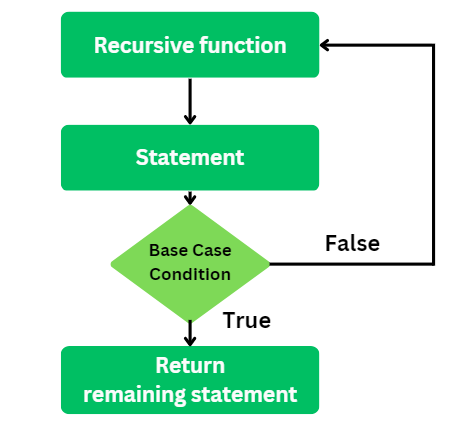
The recursive algorithm uses the concept of recursion. It breaks a problem into more minor problems and calls the same function repeatedly for those sub-problems. It continues to do so until it reaches a base case that terminates the function provided the given conditions are met.
Backtracking Algorithm
Backtracking algorithm searches for all the possible solutions. For each path, we backtrack to the first failure point of that path and then search again for the possible solution in the next path until we find the desired solution. The algorithm takes more amount of time.
Divide and Conquer Algorithm
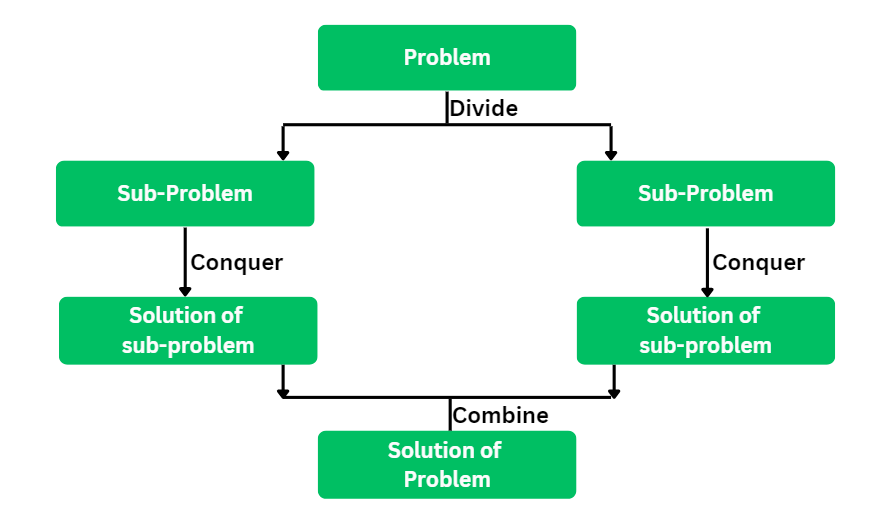
Divide and Conquer algorithms divide a problem set into smaller subsets, solve each separately, and then combine them for the final solution of the main problem. These include merge sort, quick sort, and more.
Greedy Algorithm
Greedy algorithms look for the best possible solution at each step and continue with that to obtain the final solution. The solutions obtained by this algorithm may or may not be optimal, but it computes solutions relatively quickly. These include algorithms like topological sort, selection sort, and more.
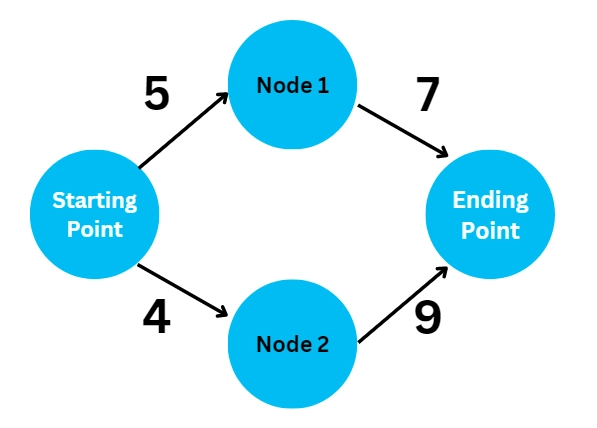
Suppose we have to go from starting point to the ending point in the given graph through the path with the minimum cost. The cost of an edge is written on it.
If we use the greedy algorithm, it will first choose the path with cost 4 being smaller than the path with cost 5. Finally, the solution will give a path of cost 13 using a greedy algorithm. But, in reality, the shortest path is the path with a cost of 12.
Dynamic Programming Algorithm
A Dynamic Programming algorithm uses the already computed results to avoid the repetition of the same calculations. This algorithm guarantees an optimal solution to the problem.
In the same example as discussed above, a solution following a dynamic programming algorithm will give the right path with cost minimization. The answer will be the path with the cost of 12.
Randomized Algorithm
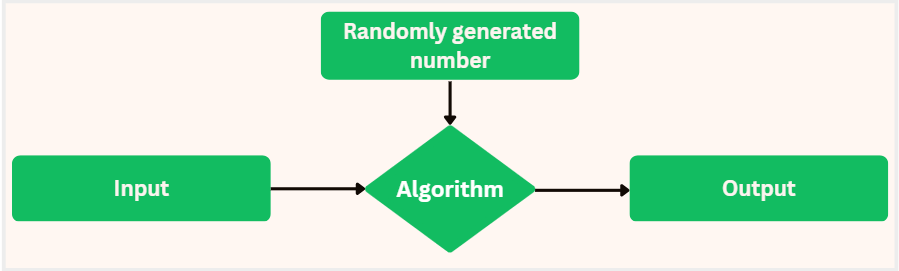
A randomized algorithm employs random integers to choose what action to take at any point in its logic. Due to the added randomness, the output can be different for the same inputs on different runs. It is commonly used in cryptographic algorithms to ensure safety. It also helps you avoid worst-case scenarios that a deterministic algorithm may run into. For example, randomized quick sort performs better than conventional quick sort in the worst-case scenario.
Algorithm Complexity
The characteristics of an algorithm help it achieve desired results, but the performance of an algorithm is determined by its complexities. The complexities are namely time complexity and space complexity.
Time Complexity
The amount of time an algorithm needs to run entirely, depending on the size of the input given, is called the time complexity of an algorithm.
There are asymptotic notations used for determining the time complexity of an algorithm. Generally, the time complexity of an algorithm is determined using big O notation.
Space Complexity
The measure of the memory required by an algorithm to run entirely, depending on the size of the input given, is called the space complexity of an algorithm.
It is also determined using big O notation.
Advantages of Algorithm
The following are some advantages of using algorithms:-
Efficiency: Algorithms provide systematic and optimized approaches to solving problems, ensuring that solutions are obtained with minimal time and resource usage.
Reproducibility: Algorithms are well-defined and deterministic, producing the same output for a given set of inputs consistently. This reproducibility ensures reliable results and easy verification.
Scalability: Well-designed algorithms can handle large problem sizes, making them suitable for various applications, including big data processing and complex computations.
Abstraction: Algorithms provide an abstraction over complicated processes by describing them with a set of clear and concise instructions, which makes it easy for you to understand them.
Disadvantages of Algorithm
The following are some disadvantages of using algorithms:-
Complexity: Some algorithms can be complex and difficult to understand or implement.
Time-Consuming: Developing and optimizing algorithms can be time-intensive.
Space Consumption: Certain algorithms require significant memory, affecting performance.
Problem-Specific: Algorithms are often tailored to specific problems and may not be easily adaptable.
Maintenance: Algorithms may require frequent updates and maintenance as requirements change.
Efficiency: Not all algorithms are efficient; some may have high time or space complexity.
Scalability: Some algorithms may not scale well with increased data or input size.
Frequently Asked Questions
What are the 3 algorithm characteristics?
The three key characteristics of an algorithm are correctness, efficiency, and clarity. Correctness ensures the algorithm solves the problem accurately, efficiency focuses on optimal use of time and resources, and clarity makes the algorithm easy to understand and implement.
What are the characteristics of algorithm and flowchart?
Both algorithms and flowcharts should exhibit clarity, correctness, and efficiency. Clarity ensures they are easily understood, correctness ensures they solve the intended problem accurately, and efficiency ensures optimal use of time and resources.
What are the 5 properties of algorithm?
The 5 properties of an algorithm are well-defined inputs, well-defined outputs, unambiguity, finiteness, language independence, and feasibility. With these properties, algorithms can become powerful tools that can be used for innovations and efficient problem-solving across different fields.
Conclusion
Algorithms are essential and inseparable parts of computer science. In this article, we discussed algorithms starting with the definition of an algorithm. Then, we studied various characteristics of an algorithm and different types of algorithms.
You can also refer to some other articles which are based on a similar topic







 7+ registered

