Do you think IIT Guwahati certified course can help you in your career?
Introduction
Data structures are fundamental building blocks for organizing and managing data efficiently in computer science. In C++, various data structures are used to store, process, and retrieve data effectively, enabling developers to solve complex problems with optimized performance. Whether it's arrays, linked lists, stacks, queues, or more advanced structures like trees and graphs, C++ provides robust support through its Standard Template Library (STL) and custom implementations. In this blog, we will explore different types of data structures in C++.
Data structures in C++ are organized ways of storing and managing data to efficiently perform operations like insertion, deletion, and retrieval. Here's a concise overview:
Arrays: Fixed-size collections of elements of the same type.
Vectors: Dynamic arrays that can grow or shrink in size.
Linked Lists: Sequences of nodes, each containing data and a pointer to the next node.
Stacks: Last-In-First-Out (LIFO) structures.
Queues: First-In-First-Out (FIFO) structures.
Trees: Hierarchical structures with a root node and child nodes.
Graphs: Collections of nodes (vertices) connected by edges.
Hash Tables: Key-value pair structures for fast data retrieval.
Heaps: Specialized tree-based structures, often used for priority queues.
Sets and Multisets: Collections of unique or non-unique elements, respectively.
Maps and Multimaps: Key-value pair collections with unique or non-unique keys.
Primitive Data Structures are pure and integral in form. These are used to form non-primitive data structures. These are supported at the machine level.
The primitive data structure includes the following:
Integer
Character
Float etc
Non-Primitive Data Structures
Non-Primitive Data Structures are derived data structures and these cannot be performed without primitive data structure. These data structures are derived using primitive data structures.
Non-Primitive data structures include the following data structures:
Arrays
Linked List
Stack
Queue
Tree
Graph
HashMap etc.
Types of Data Structures in C++
There are several types of data structures in C++:
Integer
Integers are whole numbers without fractional parts. In C++, there are several integer types like int, short, long, and long long, each with different sizes and ranges.
Character
Characters represent single letters, digits, or symbols. In C++, the char type is used to store individual characters, while strings can store sequences of characters.
Float
Floating-point numbers represent real numbers with fractional parts. C++ provides float and double types for different levels of precision.
Arrays
Arrays are fixed-size collections of elements of the same type, stored in contiguous memory locations. They offer quick access to elements using indices.
Linked List
Linked lists consist of nodes, each containing data and a pointer to the next node. They allow for efficient insertion and deletion of elements, but slower random access compared to arrays.
Stack
Stacks follow the Last-In-First-Out (LIFO) principle. Elements are added and removed from the same end, called the top. Stacks are useful for managing function calls, undo operations, and expression evaluation.
Queue
Queues follow the First-In-First-Out (FIFO) principle. Elements are added at one end (rear) and removed from the other end (front). Queues are used in task scheduling, breadth-first search algorithms, and buffer management.
Tree
Trees are hierarchical structures with a root node and child nodes. They're used for representing hierarchical relationships, file systems, and in various algorithms like binary search trees and heaps.
Graph
Graphs consist of vertices (nodes) connected by edges. They represent complex relationships and networks, used in social network analysis, routing algorithms, and many other applications.
HashMap
HashMaps (also known as unordered_map in C++) store key-value pairs, allowing for fast retrieval of values based on their keys. They use a hash function to compute the storage index of each key.
Why is it important to learn DSA?
Let’s talk about the importance of Data Structure and Algorithm in different terms. There are a number of reasons behind learning Data structure and algorithms. Let’s discuss them one by one.
Interviews:
Approx 95% of the companies who are recruiting for the role of Software development have one favourite round as data structure and algorithms. The reason behind taking this round is, they want to check the candidate’s problem-solving skills. They don’t expect from the candidate to give the exact solution of the problem, rather they check for the approx candidate to solve the problem.
Efficiency:
This is one of the main aims behind the concept of data structure and algorithm. Consider finding a book in a library and the same in a bunch of books. It would always be easier to find a book in the library because they are arranged in some way unlike the bunch of books. Data Structure uses the same concept.
Best Language to Learn DSA
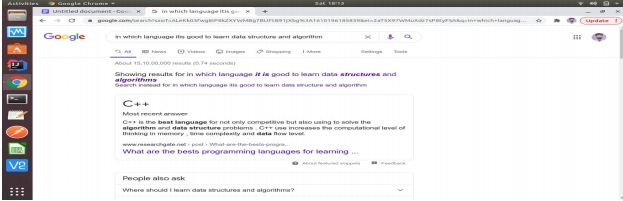
According to a recent search on google, it is found that C++ is the best language for the competition as well as to solve the data structure and algorithm problems. C++ can teach you memory management skills and time complexity instructions in an efficient manner.
Some of the Best Books to Learn C++
Let’s discuss some of the best books that would help you to make a good command over C++.
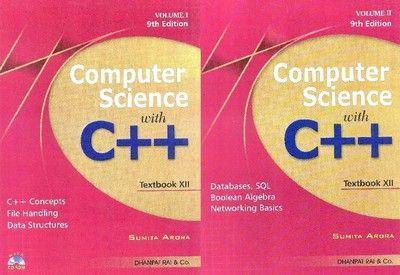
Computer Science with C++ by Sumita Arora:
As it is apparent by the name itself, the author of the book is Mrs Sumita Arora who is also an alumnus of Guru Gobind Singh Indraprastha University. Publisher of the book is Dhanpat Rai Co. & Lmt. This is an 854 pages book which is divided into two volumes, onwards from the edition of 2018.
The book is written in such a manner that a beginner too can grasp the concept easily and it follows the syllabus of CBSE board as well. This is definitely one of the best books to start with. It contains precise information about Data Structure and Algorithms and the most important part is the examples each topic has, they are very good.
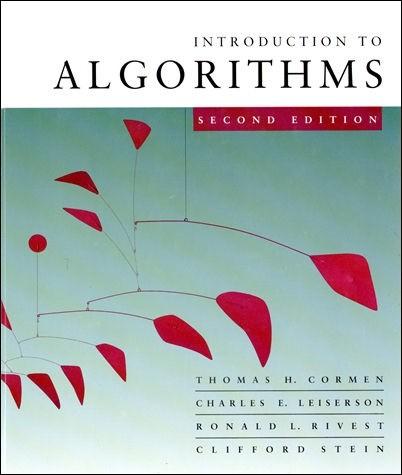
Introduction to Algorithms by MIT Press
If you are searching for a complete book on Algorithms, you must go with this book only. Let’s talk about what is the specification of this book, there are a number of books in the market but if there is a book that focuses on covering a number of topics, then it loses the clarity. This is the book that covers all the necessary topics and has clarity as well. Algorithms in this book are defined in English and pseudocode is written in such a manner that the one who understands English, can understand it easily.
The author includes T Cormen, C Leiserson, R Rivest, C Stein. The book is easily available on Amazon. This book is the bible of the Introduction to Algorithms.
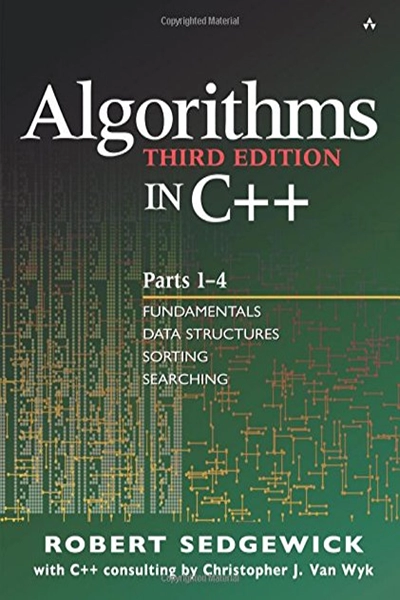
Algorithm in C++
This book is written by Robert Sedgewick. The book has the expanded coverage of the arrays, LinkedList, string, trees, and other basic topics. This is the third edition of the book and focuses on object-oriented programming and C++ classes than in previous editions. The book has more than 100 algorithms for sorting, searching implementations.
There are some new implementations for the BST, skip list, B trees and radix sorting also given and has much better quantitative information about the algorithm. There are around 1000 new exercises to make you learn the properties of algorithms in a better way.
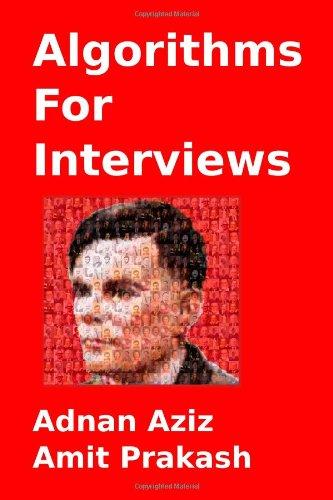
Algorithm For Interviews
Those who are preparing for interviews and recruitment exams, this book could be one of the great help. The book has solved algorithms, dynamic programming, strings, design problems etc. Not only this, but this book also tells how to tackle programming problems, and helps you to get ready for interviews. Those who are aspiring as software developers must go through this book.
The book is written by Adnan Aziz and Amit Prakash. I personally have much liking for the book because of the approach it follows to explain the concept. It would be very easy to understand Data Structures and Algorithms if you follow this book.
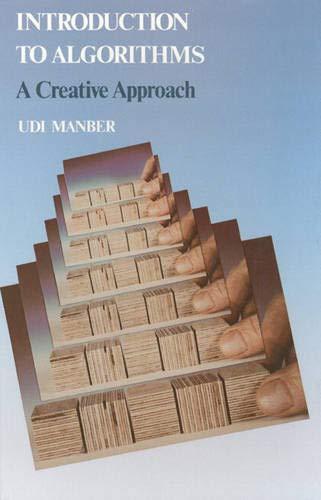
Introduction To Algorithm: A Creative Approach
This book is basically emphasising the creative approach of building an algorithm in step by step. Mathematical induction is the heart of building creative algorithms. The book is written by Udi Manber and it is one of the excellent books for self-study as there are a number of problems and examples provided in this book.
This can make one better in Problem solving and enhance the skills and make you better in writing good codes.
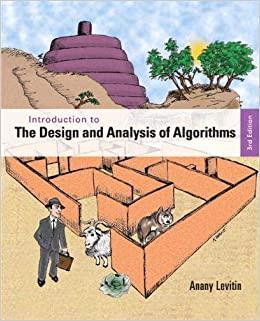
The Design And Analysis of Algorithms:
This book is written by Anany Levitin and this is one of the greatest books on Algorithms. Somebody who has some intro-level knowledge of algorithms can refer to this book. The book contains the advanced topics of the algorithms.
Best Online Courses to learn Data Structure and Algorithm in C++
Let’s talk about some of the best online courses to learn data structures and algorithms.
If you are someone who is good at buying online paid courses, then without a second thought, you must go with the Data Structure and Algorithm in C++ by Coding Ninjas course. This is mentored by Ankush Singla and Nidhi Agarwal. The cream part of the course is you would be leveled up step by step with topic-related quizzes and with relevant problems. The content of the course is really effective and very good.
One of the most important parts is the TA (Teaching Assistant), they are available whenever you are stuck somewhere, you may just raise the problem ticket and they would close the ticket only when you are fully satisfied with the answers they provide. At the end of the course, you would be able to write the course on your own and would be efficient in writing good code.
Algorithm and Data Structures in C++
People often focus on data structures but forget about the algorithms, The course focuses much on the algorithm part as well. The course is for the people who want to learn data structure and algorithms and improve programming solving skills. You can watch the course on TV/ mobile or laptop and it has lifetime access as well.
The Coding Interview Bootcamp: Algorithms + Data Structure
It has a rating of 4.7 out of 5. This course would prepare you to be able to learn and answer the interview questions easily. This is the best-suited course for the people who are preparing for the coding interviews and want to apply to the good software developer profile. The course purely focuses on the interview processes and is the best design for the interview preparation.
The course would mostly focus on the :
An overview of the most important data structures. Any non-Cs students can also pursue the course freely.
You would be mastered on the interview questions at the end of the course.
Not only Data Structure but the algorithm part is also very much explanatory of this course.
Javascript is used to solve challenging algorithms.
Mastering Data Structures and Algorithm using C and C++
It has an overall rating of 4.7 out of 5. The course would make you analyse, learn and implement the data structure and algorithm and is created by Abdul Bari.
The main focus of the course is:
A recursive approach to a different data structure.
To learn various popular data structures and algorithms and to be able to implement them.
To learn various sorting algorithms, which is a favourite topic in all the interviews.
C++ uses various data structures, including arrays, linked lists, stacks, queues, trees, graphs, hash tables, and containers from the Standard Template Library (STL).
What are the 4 data structures?
The four primary data structures are arrays, linked lists, stacks, and queues, each designed to store and manage data in specific ways for efficient access and manipulation.
How do I start learning DS and algorithms?
After mastering one programming language, the next step is to use that language to implement data structures. Starting from linear data structures, move towards advanced topics but don’t just study topics theoretically. Simultaneous implementation is important. To get a defined path, taking an online course is recommended.
Which language is best for DS and Algo?
Most competitive programmers use C++ because of its efficiency for DSA. That being said, the language is just a medium and any language that you are affluent with is appropriate for you to implement DSA.
How do I prepare for DS and algorithms?
Practicing as many problems as you can find and that too consistently is the key to mastering DSA. Online platforms like Coding Ninjas Studio, LeetCode, Codeforces have a pool of problems of all types, practicing which will help you master DSA.
How long will it take to learn data structures and algorithms?
It takes around 15 days to learn the data structures nicely and another 15 days to learn algorithms. After that you can keep practicing until you feel comfortable.
Which data structure should I learn first?
You should start from arrays, linked lists, stacks, queues and heaps and then move on to more complex data structures and algorithms.
Conclusion
We discussed how important data structure and algorithms are. And saw some of the best data structure and algorithm real-world examples and also discussed some of the best resources of the same, in terms of the books and the courses. The Courses we discussed are different for different audiences. Hope you liked the courses and the best books we discussed for data structure and algorithms.






 7+ registered

