







Introduction
Laplace Transform is one of the best ways to convert a differential equation into an algebraic equation. It is widely used in control system engineering, electrical circuit analysis, and many other engineering domains. Let's learn about the Laplace Transform in detail.
Laplace Transform
Laplace Transformation is an integral transformation of a function in real variable 't' to a function in complex variable 's.' It is a tool for solving differential equations. It transforms a linear differential equation into an algebraic equation.
The Laplace transform of a function f(t) is denoted by L{f(t)} or F(s) and can be calculated by the formula given below.
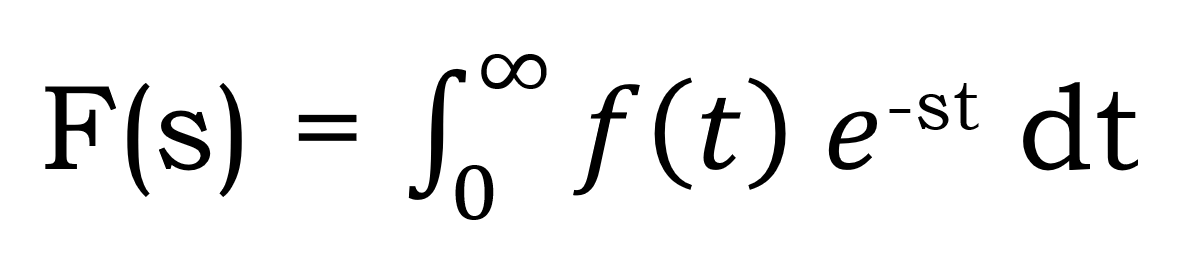
This integral formula is sometimes called a one-sided Laplace Transform because the integration is from 0 to +∞. When we take the integration limits from -∞ to +∞ , it is called a two-sided Laplace Transform.
Let’s calculate the Laplace Transform for a function f(t) = et
The Laplace transform of f(t) = et = F(s)
Now,

Hence the Laplace Transform of the given function is 1/(s-1)
Now I know what you must be thinking. You may wonder if you have to perform the tedious integration whenever you need to perform a Laplace Transform. The answer is a big NO. We have provided you with a table of transformations. In that transformation table, we put the function f(t) on the left side and the result F(s), found using the integration formula discussed above, on the right side. The transformation table is given below.
Transformation Table
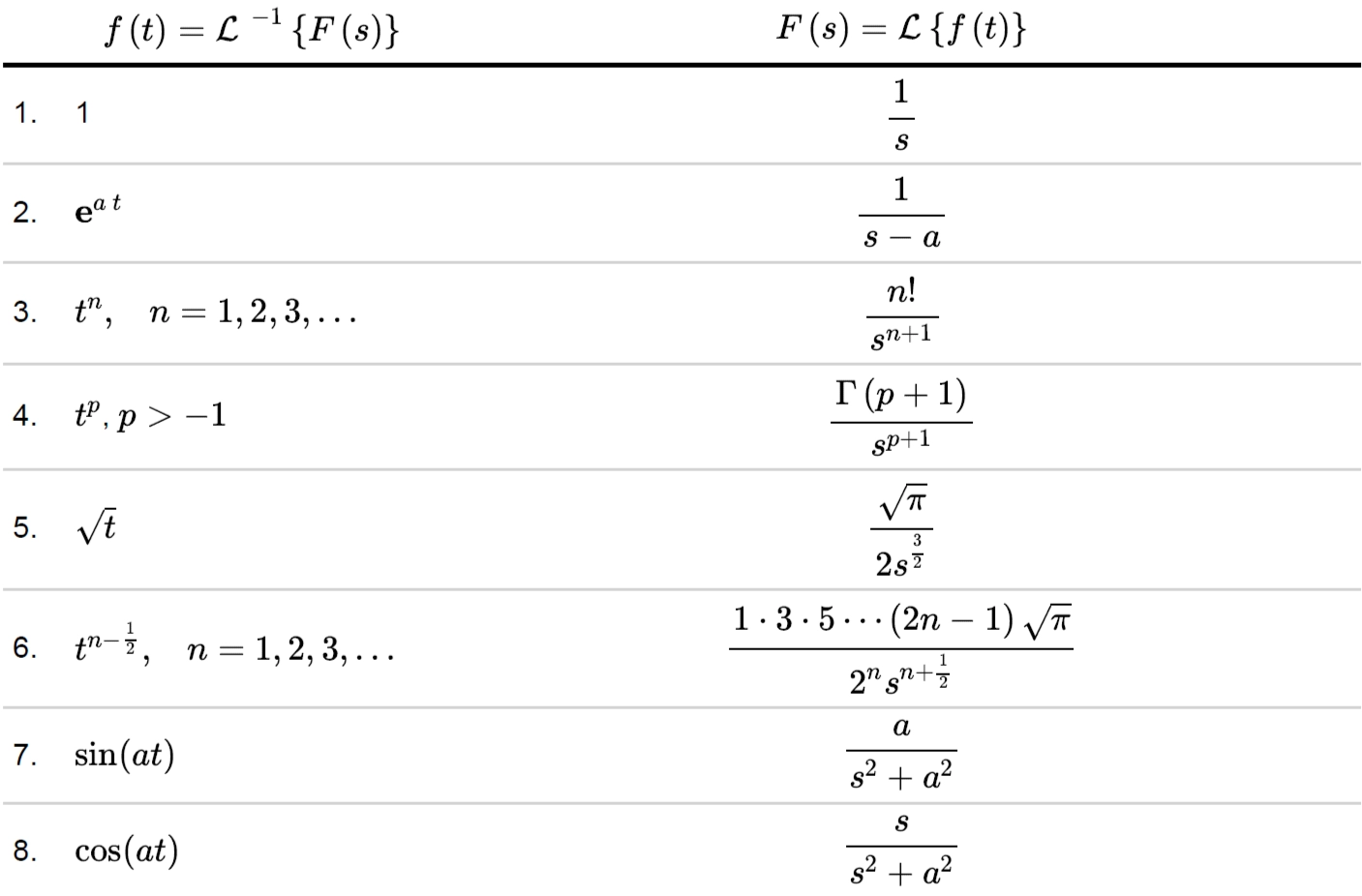
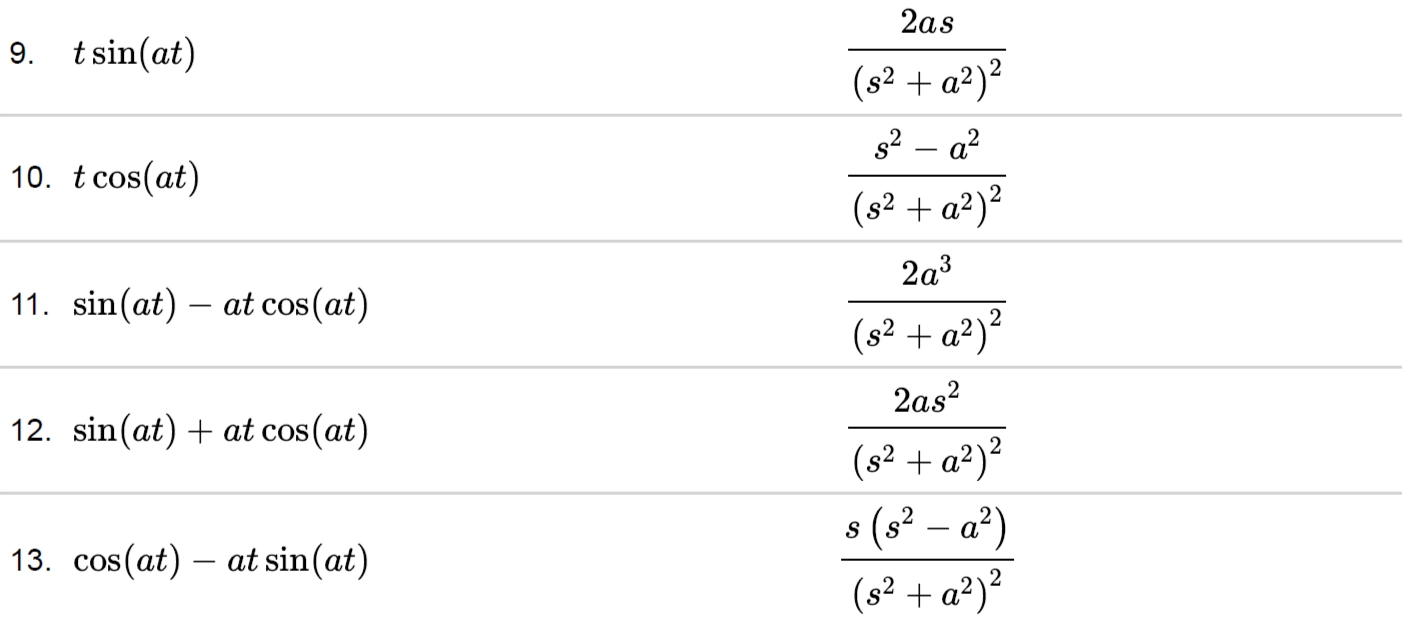

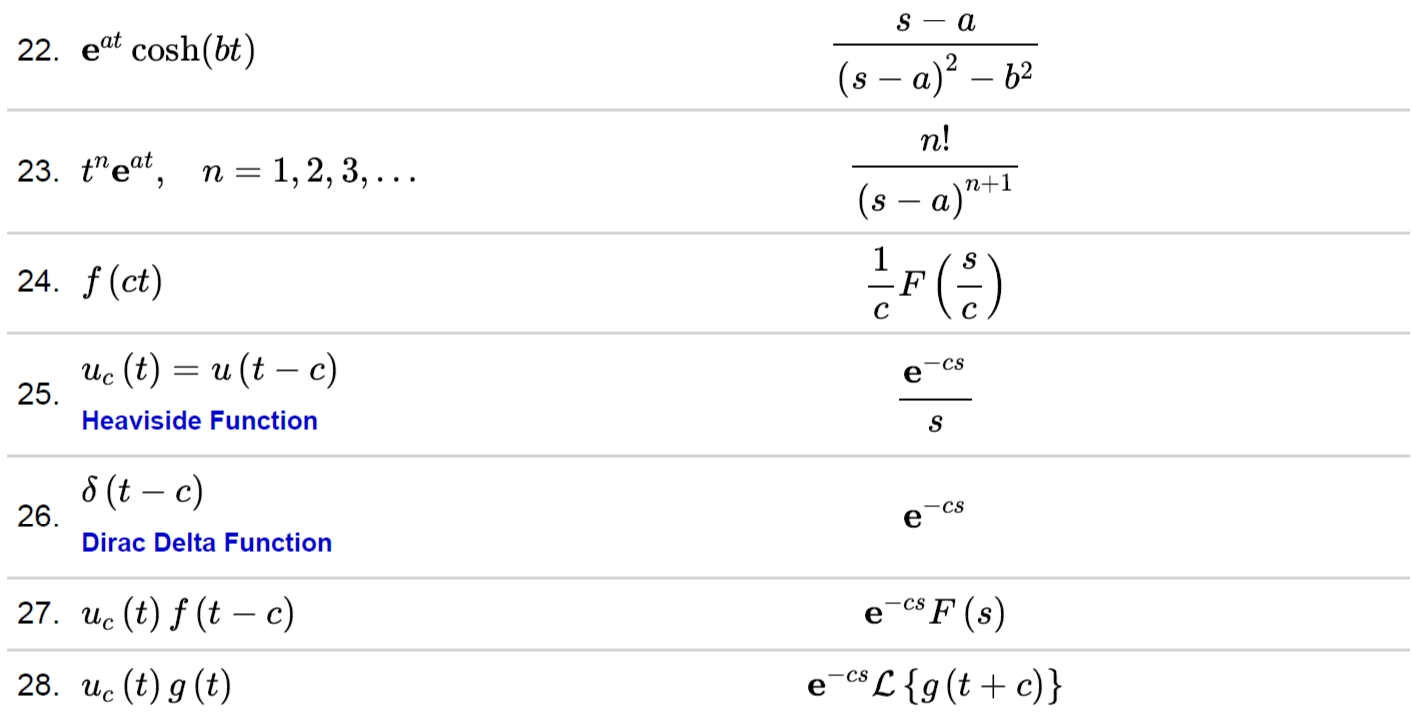
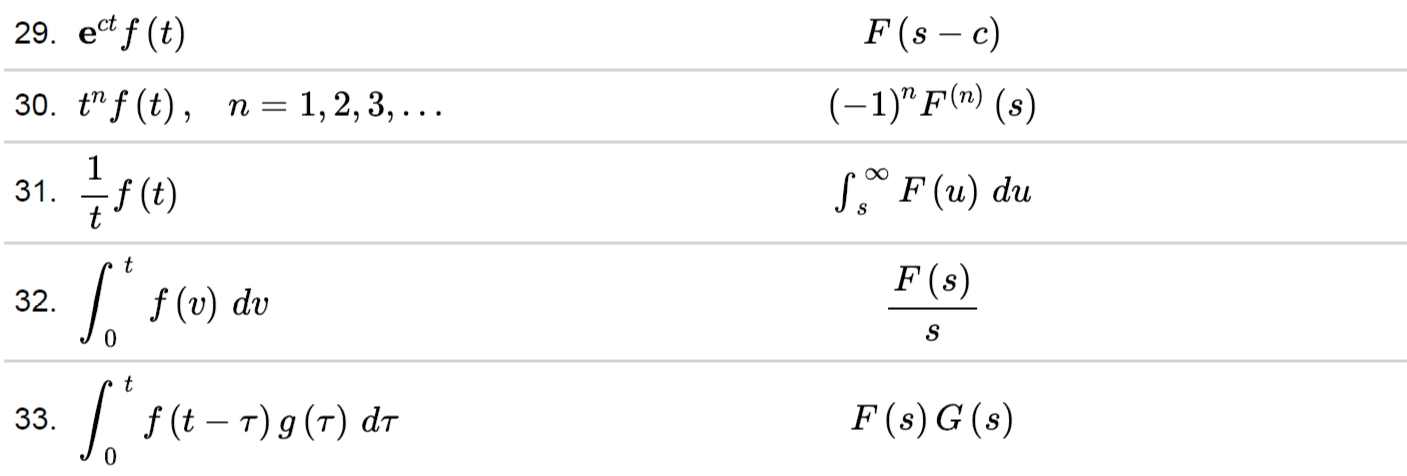
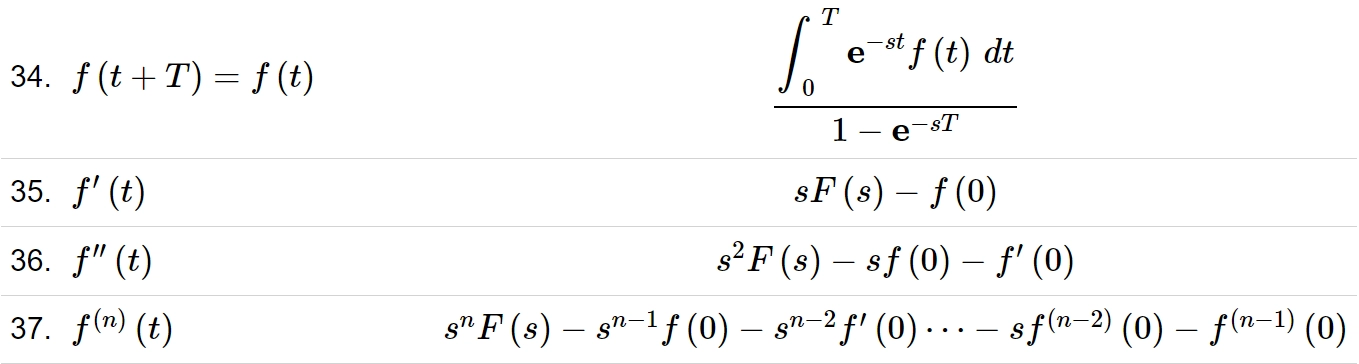
This table contains the most commonly used transformations, but there are many other transformations as well.
Properties
We know that all the Laplace Transformations we will have to perform are not listed in this table. But there is an exciting thing about it. We have some properties of Laplace Transform using which we can deduce the given function into standard functions (whose Laplace Transform is provided in the table). The properties of Laplace Transform are given below.
-
Linearity Property
If f(t) and g(t) are two functions and 'a' and 'b' are two real numbers, then
-
Time Shifting Property
For t ≥ a
-
Time Scaling

-
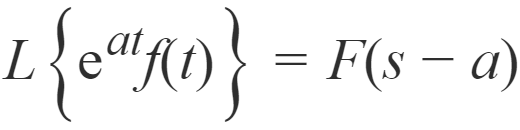
Frequency Shifting
-
Frequency differentiation
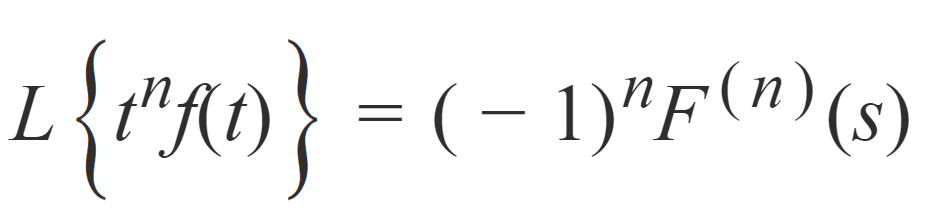
Where F(n)(s) is the nth derivative of F(s). -
Frequency Integration

-
Differentiation
If f(t) is n times differentiable, then
For n=1, i.e. first derivative,
-
Integration


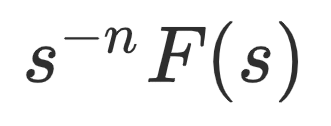
-
Convolution

-
Initial Value Theorem
This theorem enables us to find the initial value at time t = (0+) for a given Laplace transformation without finding f(t), which is a tedious job in those cases.
You can also read about Initial Value Theorem in detail.
-
Final Value Theorem
There are some applications where we need to know the value of f(∞) without calculating the whole f(t) function. For this purpose, we can use the final value theorem.


 1+ registered

