Why is Polymorphism Important in Java?
Polymorphism is important in Java because it allows one interface to be used for many forms. It improves code flexibility, reusability, and scalability. You can write code that works on the superclass but runs different behaviors at runtime, depending on the actual object. This makes the code easy to maintain and extend, as you can add new classes or behaviors without changing existing code.
Example of Polymorphism in Java
Real-Life Example: Different Roles of a Person
Think about a person who is a father at home, a husband to his wife, and an employee at work. He is one person but acts differently depending on where he is. In Java, a single method name can also behave differently depending on the object.
Example:
class Person {
    void role() {
        System.out.println("Person has different roles");
    }
}

class Father extends Person {
    void role() {
        System.out.println("Acts as a Father");
    }
}

class Employee extends Person {
    void role() {
        System.out.println("Acts as an Employee");
    }
}

public class RoleTest {
    public static void main(String[] args) {
        Person p;

        p = new Father();
        p.role();

        p = new Employee();
        p.role();
    }
}

You can also try this code with Online Java Compiler
Output:
Acts as a Father
Acts as an Employee
Explanation:
The reference variable p is of type Person, but the method that runs depends on the actual object (Father or Employee). This is an example of runtime polymorphism.
Key Features of Polymorphism
Polymorphism in object-oriented programming means "many forms." It allows objects to respond to the same method call in different ways, depending on their type or class. Java uses polymorphism to create clean and flexible code.
Multiple Behaviors
Polymorphism lets the same method or action behave differently based on the object. This helps in creating flexible and reusable code, where each object can respond in its own way without changing the method name.
Method Overriding
Method overriding happens when a subclass defines a method that already exists in its parent class. It changes the behavior of the method for the subclass while keeping the method signature the same.
Method Overloading
Method overloading means defining multiple methods in the same class with the same name but different parameters. It allows calling the same method in different ways, based on the number or type of arguments.
Runtime Decision
Polymorphism enables decisions at runtime rather than compile-time. The Java Virtual Machine (JVM) determines which method to call based on the actual object, not the reference type. This allows dynamic behavior in applications.
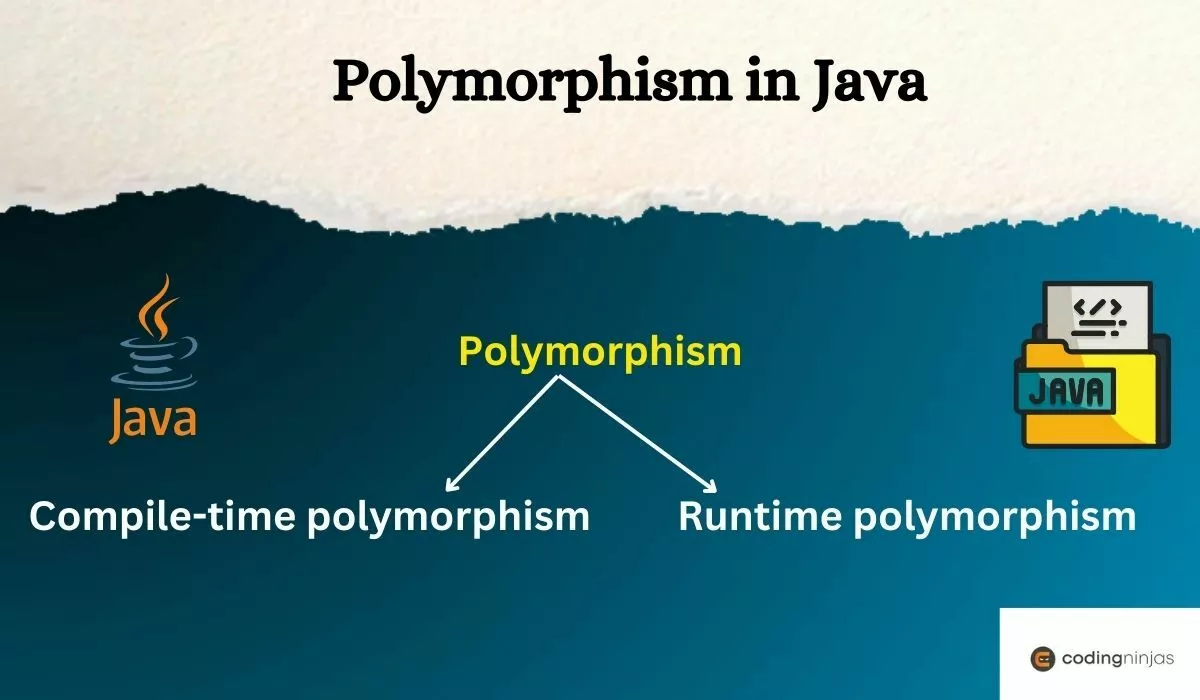
Types of Java Polymorphism
Java supports two main types of polymorphism:
- Compile-Time Polymorphism (Static Polymorphism)
- Runtime Polymorphism (Dynamic Polymorphism)
Compile-Time Polymorphism (Static Polymorphism)
Compile-time polymorphism means the method call is decided during program compilation. It mainly happens through Method Overloading and limited Operator Overloading.
Method Overloading
Method Overloading means writing multiple methods with the same name but different arguments in the same class.
class Calculator {
    int add(int a, int b) {
        return a + b;
    }

    double add(double a, double b) {
        return a + b;
    }
}
Explanation: Here, both methods are named add() but accept different input types. The compiler checks the method parameters and picks the correct one at compile-time.
Operator Overloading
Java supports limited operator overloading. Only the + operator is overloaded for:
- Adding numbers
- Joining strings
Example:
int a = 5, b = 10;
System.out.println(a + b); // Output: 15

String x = "Hello", y = "Java";
System.out.println(x + y); // Output: HelloJava
Note: Java does not support full operator overloading like C++.
Generics in Java
Generics allow you to write code that works with any data type in a safe way.
class Box<T> {
    T item;
    void set(T item) { this.item = item; }
    T get() { return item; }
}
This lets you use the Box class with any type like Box<Integer> or Box<String> without rewriting the class.
Runtime Polymorphism (Dynamic Polymorphism)
Runtime polymorphism means the method call is decided when the program runs. It happens through Method Overriding.
Method Overriding
Method Overriding is when a subclass gives its own version of a method that exists in its parent class. The method name and arguments are the same.
class Animal {
    void sound() {
        System.out.println("Animal makes a sound");
    }
}

class Dog extends Animal {
    void sound() {
        System.out.println("Dog barks");
    }
}

public class TestSound {
    public static void main(String[] args) {
        Animal a = new Dog();
        a.sound();
    }
}
Explanation: Even though a is declared as Animal, the method from the Dog class runs. This happens because the JVM checks the actual object at runtime and calls the right method. This is runtime polymorphism in action.
Polymorphism helps you build applications that are easy to manage, extend, and reuse. By using method overloading and overriding, Java makes it simple to write clean and flexible code.
How Polymorphism Works Internally in Java
There are mainly two ways in which Polymorphism Works Internally in Java: These are discussed below:
- Method Resolution at Compile Time and Runtime
- Dynamic Method Dispatch
Method Resolution at Compile Time and Runtime
In Java, the process of deciding which method to call can happen either at compile time or at runtime, depending on the type of polymorphism.
In compile-time polymorphism (also called method overloading), the Java compiler looks at the method name, number of arguments, and their types. Based on this information, it decides which method to call during the compilation of the program. Since everything is known beforehand, the call is resolved early.
Example:
void print(int a) { }
void print(String b) { }
// Compiler chooses the correct method based on the argument.
In runtime polymorphism (also known as method overriding), the compiler only checks that a method exists in the class hierarchy. But the JVM waits until the program runs to decide which version of the method to execute. It looks at the actual object type (not the reference type) to call the right method.
This behavior makes Java programs more flexible and allows them to respond differently based on the object used at runtime.
Dynamic Method Dispatch
Dynamic Method Dispatch is the process Java uses to select the correct method at runtime when a superclass reference points to a subclass object. This is a key part of runtime polymorphism.
Below is step by step process on how dynamic method dispatch works:
- A method is overridden in a subclass.
- You create a reference of the parent class, but assign it a child class object.
- When you call the overridden method, the JVM checks the object's actual type, not the reference type.
- It then calls the correct method defined in the subclass.
- This decision is made dynamically at runtime, not during compilation.
Example:
class Animal {
    void sound() {
        System.out.println("Animal makes sound");
    }
}

class Dog extends Animal {
    void sound() {
        System.out.println("Dog barks");
    }
}

public class Test {
    public static void main(String[] args) {
        Animal a = new Dog();
        a.sound();  // Output: Dog barks
    }
}
You can also try this code with Online Java Compiler
Why It’s Important:
Dynamic method dispatch allows Java to support flexibility and extensibility. You can write code that works on a superclass type but behaves correctly depending on the object type passed during execution. This makes it easier to add new classes and extend functionality without changing existing code.
Advantages of Polymorphism in Java
1. Code reusability: Polymorphism allows you to write code that can work with objects of multiple related types. This means you can write a single method that accepts a superclass type as a parameter, & that method can be used with any subclass objects. This promotes code reusability & reduces duplication.
2. Flexibility: Polymorphism makes your code more flexible by allowing you to write methods that can adapt to different types of objects. You can add new subclasses without modifying existing code that uses the superclass, as long as the new subclasses adhere to the same interface or superclass contract.
3. Maintainability: Polymorphism can make your code more maintainable by reducing the need for conditional statements and type checking. Instead of writing separate code paths for each subclass, you can treat objects uniformly based on their shared superclass or interface. This makes the code cleaner, easier to understand, and less prone to errors.
4. Extensibility: Polymorphism enables you to extend the behavior of existing classes through inheritance & method overriding. You can create specialized subclasses that inherit from a common superclass & override methods to provide specific implementations. This allows you to build upon existing code & add new features without modifying the original classes.
5. Loose coupling: Polymorphism promotes loose coupling between objects. When you write code that relies on a superclass or interface type rather than specific subclasses, your code becomes less dependent on the concrete implementations. This makes it easier to change or replace the subclasses without affecting the rest of the codebase.
Disadvantages of Polymorphism in Java
1. Complexity: Polymorphism can make your code more complex, especially if you have a deep hierarchy of classes or a large number of overloaded methods. It can be challenging to keep track of which method is being called in different situations, leading to potential confusion & bugs if not managed properly.
2. Performance overhead: There may be slight performance-related issues with polymorphism, especially with runtime polymorphism (method overriding). When a method is overridden, the JVM needs to determine the actual class of the object at runtime & then call the appropriate method implementation. This dynamic dispatch process adds a small amount of overhead compared to direct method calls.
3. Naming conflicts: When using method overloading, it's possible to inadvertently create naming conflicts if you're not careful with the method signatures. If you have multiple methods with the same name & similar parameter types, it can be confusing to determine which method will be called in a given situation. It's important to choose method names & parameters carefully to avoid ambiguity.
4. Inappropriate use: Polymorphism can be misused or overused, leading to code that is harder to understand & maintain. If you create overly complex hierarchies or use polymorphism in situations where it's not necessary, it can make your code more difficult to reason about & debug. It's important to use polymorphism judiciously & in appropriate situations.
5. Learning curve: Understanding and effectively applying polymorphism requires a solid grasp of object-oriented programming concepts. Developers who are new to OOP may find polymorphism challenging to comprehend and implement correctly. It's important to invest time in learning and practicing polymorphism to use it effectively in your Java programs.
Frequently Asked Questions
Why use polymorphism?
Polymorphism allows code reusability, flexibility, and easier maintenance by enabling one method or interface to work with different object types.
What is polymorphism in Java rules?
Key rules include method names being the same, method overloading for compile-time polymorphism, and inheritance with method overriding for runtime polymorphism.
What is the reason for polymorphism?
The main reason for polymorphism is to achieve dynamic behavior, allowing objects to respond differently to the same method call based on their type.
Can you use polymorphism with interfaces in Java?
Yes, polymorphism can be achieved through interfaces in Java. You can define methods in an interface and have multiple classes implement that interface, allowing you to treat objects of those classes polymorphically based on the interface type.
Conclusion
In this article, we discussed polymorphism in Java, its definition, types (compile-time and runtime polymorphism), method overloading and overriding, and its advantages and disadvantages. Polymorphism is a fundamental concept in object-oriented programming that allows objects to take on multiple forms and behave differently based on their specific types.
Recommended Readings:







 5+ registered

