




Introduction
Numerous cutting-edge sites utilise a framework to show lumps of information on their landing page just as different pages. Too many degrees matrix looks like a table, nonetheless, it is considerably more outwardly engaging and regularly shows kin components. A matrix must be responsive, for example, it ought to change in accordance with the screen size of the client.
What goes into a framework?
You have to know three things before building your matrix framework. To begin with, you have to plan your lattice. It is safe to say that you are utilising equivalent width or inconsistent width segments? What number of segments do you have? What’s the size of your drains and sections?
You can possibly make the correct framework figurings when you’ve addressed the above inquiries. To get you out, I composed an article about planning frameworks. Give it a read in case you need to figure out how to plan a framework.
Second, you have to know how your matrix acts at various viewports. Will you resize segments and drains relatively when viewport width changes? Will you change your segments while keeping canals fixed? Will you change the number of sections at explicit breakpoints?
You need to react to these requests moreover. They give you hints on the most proficient method to compute your segment and canal widths. I expounded on these contemplations in a similar article too, so give it a read in case you’re uncertain.
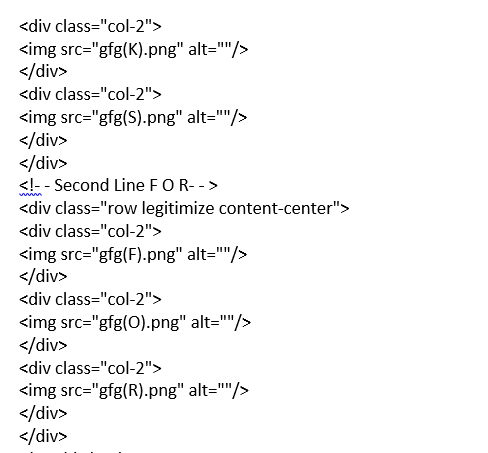
Third, will you like to compose framework classes in your HTML? The frontend world is part of two groups with regards to matrices frameworks. One group composes matrix classes in the HTML (this is the manner by which Bootstrap and Establishment do it). I consider it these vanilla html lattice framework.




 7+ registered

