The nursing profession stands as one of the most vital and rewarding careers in healthcare, with nurses serving as the backbone of medical systems worldwide. Understanding the comprehensive roles and responsibilities of a nurse is essential for anyone considering this noble profession or seeking to appreciate the critical work these healthcare heroes perform daily.
Nurses are the backbone of healthcare, providing vital patient care, administering medications, and educating patients. This article explores the multifaceted roles and responsibilities of nurses, explains why they are essential, and offers guidance for those pursuing a nursing career. It also covers key skills, career benefits, challenges, and practical tips for managing nursing duties effectively.
Who is a Nurse?
Nurses play a vital role within the healthcare system, serving as key providers of comprehensive patient care across a wide range of clinical settings. They are trained to monitor health conditions, administer treatments, and facilitate effective communication between patients and medical professionals. By combining clinical expertise with compassionate support, nurses ensure that patients receive safe, timely, and personalized care. Their responsibilities extend beyond direct medical treatment to include patient education, preventive health measures, and community health initiatives, making them indispensable contributors to the overall effectiveness and resilience of healthcare delivery.
Read More: Staff Nurse Resume
Different Types of Nursing Roles in India
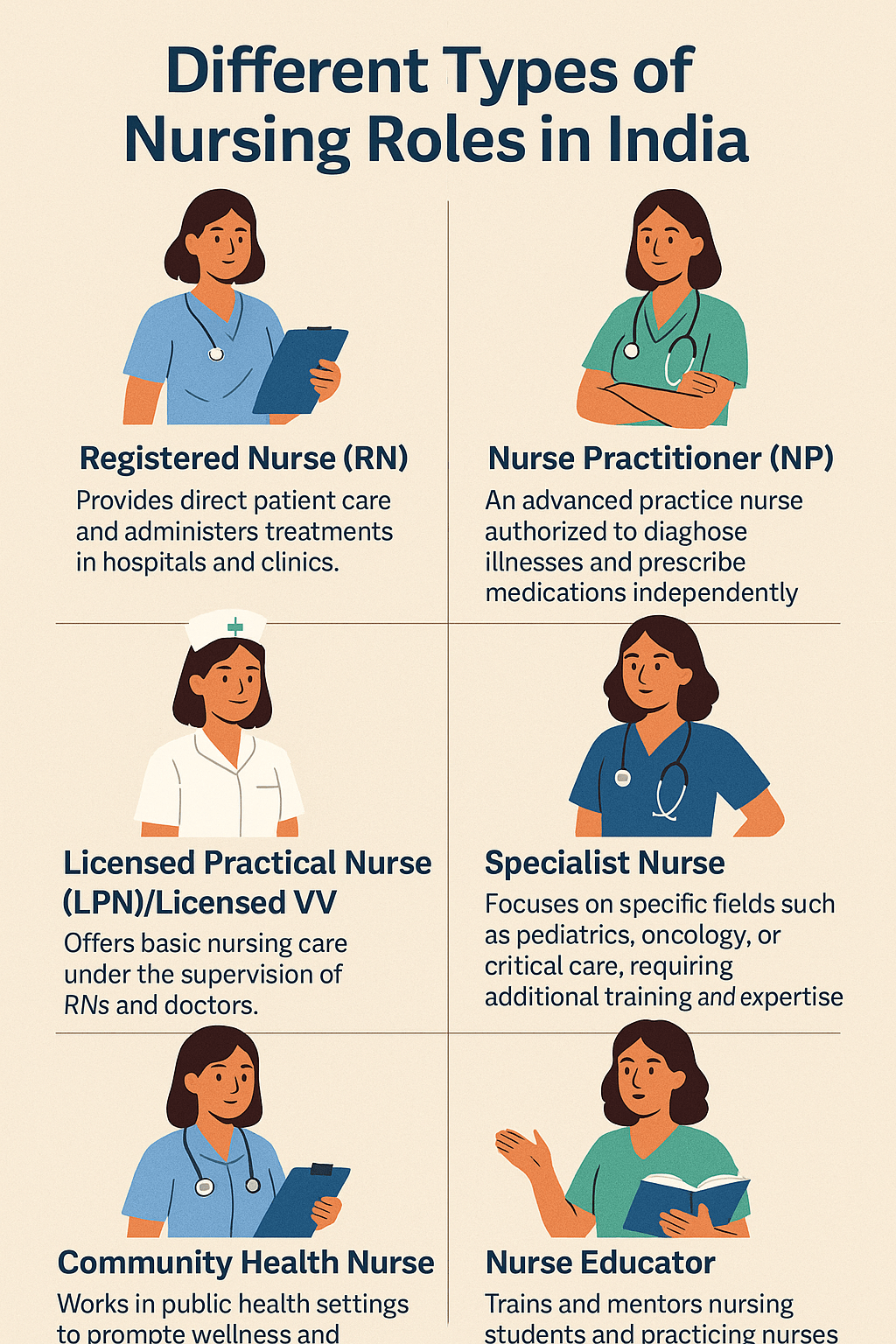
Roles and Responsibilities of a Nurse
Nurses hold a multifaceted role within healthcare, combining clinical skills, patient care, and interpersonal communication to ensure holistic health management. Their responsibilities are critical to patient recovery, safety, and overall wellbeing. Below is an in-depth look at the core duties that nurses typically perform:
1. Patient Assessment and Monitoring
Nurses conduct comprehensive patient evaluations, including physical examinations, vital sign monitoring, and continuous health status assessment. This fundamental responsibility involves documenting patient conditions, identifying changes in health status, and communicating critical information to physicians and healthcare teams.
2. Medication Administration and Management
One of the most critical nursing responsibilities involves the safe administration of medications, including oral, intravenous, intramuscular, and topical treatments. Nurses must verify medication orders, calculate dosages accurately, monitor for adverse reactions, and educate patients about their prescribed treatments.
3. Treatment Implementation and Care Coordination
Nurses implement physician-ordered treatments, manage medical equipment, and coordinate care across multiple healthcare disciplines. This includes wound care, therapeutic procedures, and ensuring continuity of care throughout patient treatment plans.
4. Patient and Family Education
Nurses go beyond care delivery to comfort families, educate communities, and advocate for patient rights. They provide essential health education to patients and families, explaining treatment plans, medication instructions, and preventive care measures.
5. Developing and Implementing Care Plans
Nurses collaborate with doctors and other healthcare professionals to assess patient needs and current health status. They develop individualized care plans with specific treatment goals and implement interventions and therapies as per the care plan. They regularly review and update care plans based on patient progress. These plans serve as blueprints to coordinate and standardize patient care.
6. Supporting Medical Procedures
Nurses assist in various medical procedures by:
- Preparing patients for surgery or diagnostic tests.
- Assisting physicians during procedures to ensure safety and efficiency.
- Managing medical equipment and supplies required for treatments.
- Monitoring patient responses during and after procedures.
7. Maintaining Safety and Hygiene Protocols
Ensuring a safe and clean environment is paramount in nursing duties. This includes:
- Following strict infection control measures such as hand hygiene and sterilization.
- Adhering to safety guidelines to minimize risks of injury or infection.
- Proper disposal of medical waste and sharps.
- Observing patient confidentiality and ethical standards at all times.
Read More: How to Write a Nursing Resume
Core Nursing Duties by Specialty Area
SPECIALITY AREA | KEY DUTIES |
a) Hospital-Based Nursing Responsibilities | |
Emergency Dept. Nurse | Triage, trauma care, emergency response |
ICU Nurse | Intensive monitoring, life-support, critical care management |
Medical Surgical Nurse | Post-op care, chronic disease, general medical conditions |
b) Community and Outpatient Nursing | |
Home Healthcare Nurse | In-home care, patient education, chronic illness management |
School Nurse | Student health monitoring, emergency response, education |
Public Health Nurse | Community wellness, immunizations, public awareness |
c) Specialized Nursing Roles | |
Pediatric Nurse | Child healthcare, vaccinations, parental guidance |
Oncology Nurse | Cancer treatment support, chemo admin, emotional counseling |
OB-GYN Nurse | Maternity care, labor support, women’s health education |
OR Nurse | Surgical support, sterile field maintenance, perioperative care |
Psych/Mental Health Nurse | Mental health assessment, therapy support, crisis intervention |
Geriatric Nurse | Elder care, chronic condition management, mobility support |
Telehealth Nurse | Remote consultation, digital patient monitoring, post-discharge follow-up |
Nurse Educator | Training, curriculum development, clinical supervision |
d) Administrative and Leadership Roles | |
Nurse Managers / Nursing Supervisors | Oversee staff, ensure policy compliance, and manage unit-level operations in healthcare facilities. |
Clinical Nurse Specialists (CNS) | Experts in specific fields who lead advanced practice initiatives and mentor clinical staff. |
Infection Control Nurses | Monitor and prevent the spread of infections within healthcare settings through education, surveillance, and compliance audits. |
Conclusion
The roles and responsibilities of nurses encompass a vast array of clinical, educational, and advocacy functions that are essential to modern healthcare delivery. From direct patient care and medication administration to health education and community advocacy, nurses serve as integral healthcare team members who make meaningful differences in patient lives daily.
Whether providing emergency care in hospital settings, managing chronic conditions in community health centers, or advancing healthcare policy through leadership roles, nurses demonstrate the versatility, compassion, and clinical expertise that define this noble profession.
For individuals considering nursing careers, understanding these comprehensive roles and responsibilities provides valuable insight into the professional opportunities, challenges, and rewards that await in this dynamic healthcare field. The nursing profession offers numerous specialization options, career advancement opportunities, and the personal satisfaction of making a positive impact on individual and community health outcomes.
FAQs
What are the key responsibilities of a nurse?
Nurses are responsible for patient assessment, administering medication, assisting doctors, maintaining medical records, monitoring patient conditions, educating families, and following strict hygiene and safety protocols in both public and private healthcare settings.
What qualifications are required to become a nurse in India?
To become a nurse in India, you need to complete one of the following:
- ANM (Auxiliary Nurse Midwifery) – 2 years
- GNM (General Nursing and Midwifery) – 3 years
- B.Sc. Nursing – 4 years
- Post Basic B.Sc. Nursing – 2 years after GNM
All programs must be recognized by the Indian Nursing Council (INC) and require registration with a State Nursing Council.
What are the most in-demand nursing specializations in India?
In 2025, high-demand nursing specializations in India include:
- Critical Care (ICU) Nursing
- Emergency Nursing
- Pediatric and Neonatal Nursing
- Mental Health or Psychiatric Nursing
- Oncology Nursing
- Midwifery and Obstetric Nursing
- Community Health Nursing, especially under public health missions such as NHM
Is nursing a good career choice in India?
Yes, nursing is a respected and secure profession in India with growing demand due to expanding healthcare infrastructure, government health missions, and the increased need for qualified professionals in rural and urban areas.
Opportunities are also strong for overseas placements, especially in Gulf countries, the UK, and Canada.
How can nurses in India grow in their careers?
Career advancement options include:
- Pursuing an M.Sc. Nursing degree in a specialization
- Becoming a Nurse Educator, Nurse Administrator, or Clinical Nurse Specialist
- Clearing competitive examinations for nursing officer or supervisor posts
- Moving into healthcare management or international nursing roles
