
“What are your strengths and weaknesses?” is one of the most common interview questions you will face as a college student or fresher. Yet, it is also one of the most misunderstood. Many candidates either provide generic answers, attempt to conceal their weaknesses, or copy answers from the internet, leading to rejection despite possessing good technical skills.
Recruiters do not ask this question to trap you. They ask it to understand your self-awareness, honesty, communication skills, and readiness for the workplace. For freshers, this question becomes even more important because employers know you may not have extensive work experience. Your mindset, attitude, and ability to learn matter more than your past roles.
This article is a step-by-step, practical, and interview-focused guide on identifying your strengths and weaknesses, specifically written for students and freshers preparing for their first job.
What Are Strengths and Weaknesses?
Before answering this interview question, it is important to understand what strengths and weaknesses actually mean in a professional context.
What Are Your Strengths?
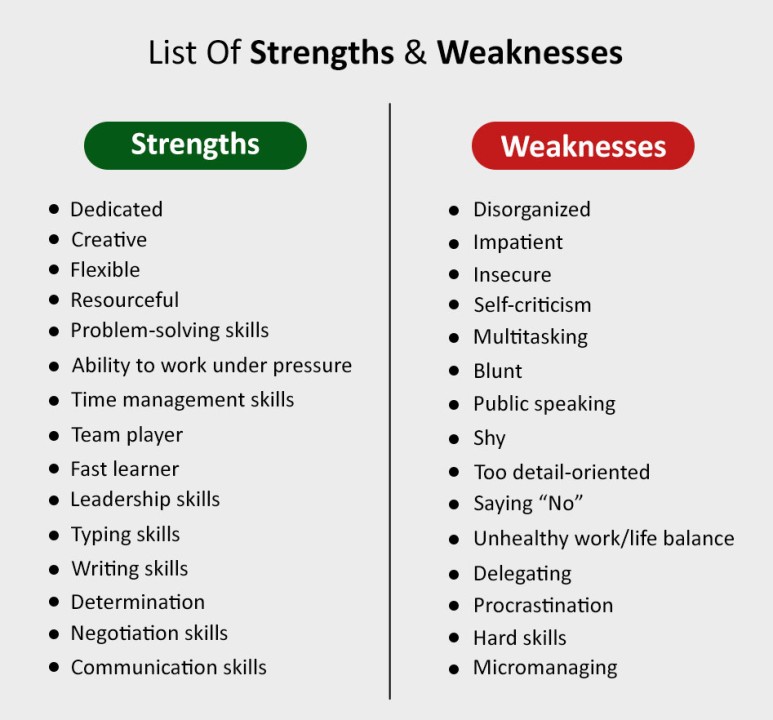
Your strengths are skills, qualities, and abilities that help you perform well in studies, projects, internships, teamwork, and problem-solving. Strengths can be:
- Technical Skills (programming, data analysis, design, writing)
- Behavioral Skills (communication, adaptability, leadership)
- Personal Skills (discipline, curiosity, resilience)
When interviewers ask “what are your strengths?” or “what is your greatest strength?”, they are checking:
- Whether your strengths match the job role
- If you can explain your value clearly
- If you understand how your skills help an organization

What Are Your Weaknesses?
Weaknesses are areas where you are still improving. Every candidate has them, especially freshers. Recruiters do not expect perfection, they expect honesty and growth.
When interviewers ask “what are your weaknesses?” or “how to answer what are your weaknesses?’” they want to know:
- Can you handle feedback and learn?
- Are you self-aware?
- Do you take responsibility for improvement?
Why Freshers Struggle With the ‘What Are Your Strengths and Weaknesses?’ Question
Most students struggle with this question because:
- They fear sounding overconfident
- They worry weaknesses will cost them the job
- They give copied or memorized answers
- They don’t connect answers to real examples
The truth is simple: interviewers reject vague answers, not honest ones.
How Interviewers Evaluate Your Answer
When answering what your strengths and weaknesses?, recruiters evaluate:
- Clarity – Are your answers structured and clear?
- Relevance – Do your strengths fit the role?
- Authenticity – Do you sound genuine or rehearsed?
- Growth mindset – Are you working on your weaknesses?
For freshers, attitude often outweighs experience.
What Is Your Strength – Best Answer Framework

To give the best answer for “what is your strength?”, follow this simple 3-step framework:
- State the strength clearly
- Explain it with a real example
- Connect it to the job role
Example: “My greatest strength is [strength]. I developed this during [college project / internship / activity], where I [specific action]. This strength helps me [job-relevant outcome].”
What Is Your Greatest Strength? – Best Answers for Freshers
Below are high-impact strengths in interviews for freshers, with sample answers.
- Discipline and Time Management: “My strength is discipline and time management. Balancing academics, assignments, and extracurricular activities taught me how to plan tasks efficiently and meet deadlines consistently.”
- Quick Learning Ability: “My greatest strength is my ability to learn quickly. As a fresher, I understand that every organization has its own tools and processes. During my college projects, I had to learn new technologies within short timelines, and I consistently adapted well. This helps me become productive faster and continuously upgrade my skills.”
- Strong Communication Skills: “My strength is clear communication. Whether it was group discussions, presentations, or project coordination, I focused on explaining ideas simply and listening actively. This helps in teamwork and reduces misunderstandings at the workplace.”
- Problem-Solving Mindset: “One of my strengths is problem-solving. During my academic projects, I enjoyed breaking down problems and finding logical solutions. This skill helps me approach challenges calmly and systematically.”
Strength and Weakness of a Student – How to Identify Yours
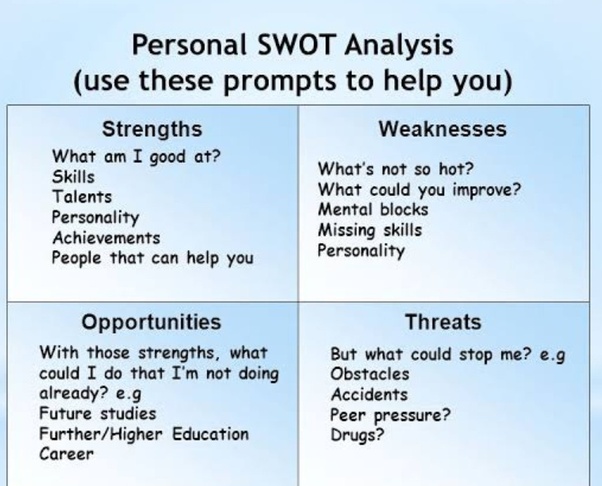
If you are confused about my strengths and weaknesses as a student, try this exercise:
To identify your strengths, ask yourself:
- What subjects or tasks come naturally to me?
- What do teachers or peers praise me for?
- When do I feel confident while working?
To Identify your weaknesses, ask yourself:
- What tasks do I avoid?
- What feedback do I receive repeatedly?
- Where do I need extra effort?
Self-awareness is the foundation of a strong interview answer.
What Are Your Weaknesses – How to Answer Smartly
This is where most freshers lose marks. The golden rules for answering weaknesses
- Never say, “I have no weaknesses”
- Avoid job-critical weaknesses
- Do not overshare personal flaws
- Always mention improvement steps
Weaknesses Examples for Students (With Safe Answers)
Below are some of the answers regarding the weakness examples for students:
- Fear of Public Speaking: “One of my weaknesses was public speaking. I realized this during college presentations. To improve, I started participating in group discussions and presentations. Over time, my confidence has improved significantly.”
- Overthinking: “I tend to overthink while solving problems. I have learned to manage this by breaking tasks into smaller steps and setting time limits, which has improved my efficiency.”
- Difficulty Saying No: “My weakness is that I sometimes take on too many responsibilities. I am learning to prioritize better and communicate timelines clearly.”
- Perfectionism: “I can be overly detail-oriented at times. While this ensures quality, I am learning to balance perfection with deadlines.”
Weakness in Resume for Freshers – Should You Mention It?
Generally, fresher resumes should focus on strengths, not weaknesses. However, if asked in interviews, keep weaknesses:
- Professional
- Honest
- Improvement-focused
Never list weaknesses directly on your resume unless explicitly required.
Role-Based Answers: Strengths and Weaknesses for Freshers
Recruiters evaluate strengths and weaknesses differently based on the role. Below are role-specific examples to help you tailor your answer without sounding generic.
Strength and Weakness for IT / Technical Freshers
- Strength: Logical thinking and quick learning of new technologies.
- Weakness: Limited real-world project exposure, which is being improved through hands-on practice and online labs.
Strength and Weakness for Non-Technical/Operations Roles
- Strength: Strong coordination and communication skills.
- Weakness: Initial hesitation in decision-making, now improving through structured planning.
Strength and Weakness for MBA / Management Freshers
- Strength: Analytical thinking and stakeholder communication.
- Weakness: Tendency to over-analyze data, managed by setting clear decision timelines.
Strength and Weakness for Commerce/Finance Freshers
- Strength: Attention to detail and numerical accuracy.
- Weakness: Limited exposure to industry tools, currently addressed via certifications.
Understanding what your strengths and weaknesses are is not just about cracking interviews; it is about knowing yourself better as a professional. For college students and freshers, this question is an opportunity to show maturity, honesty, and readiness to learn.
FAQs on Strengths and Weaknesses
What are your strengths and weaknesses?
Your strengths are skills and qualities that help you perform well, while weaknesses are areas you are actively improving. Interviewers want honest, job-relevant answers that show self-awareness and a willingness to learn, especially for freshers entering the workforce.
What is your strength best answer for fresher?
The best answer highlights a transferable skill like quick learning, communication, or adaptability. Support it with a college project or internship example and explain how it helps you perform better in a professional environment.
What are good strengths for interviews for freshers?
Good strengths include quick learning ability, discipline, teamwork, problem-solving, and communication skills. These strengths show recruiters that you can adapt, collaborate, and grow even without extensive work experience.
What are your weaknesses for freshers?
Common weaknesses for freshers include lack of experience, nervousness in presentations, or overthinking. The key is to explain how you are actively working to improve these areas through practice and feedback.
How to answer what are your weaknesses in an interview.
State the weakness briefly, take responsibility, and explain the steps you are taking to overcome it. This approach shows maturity, honesty, and a growth mindset—qualities employers value highly in freshers.
Should freshers mention weaknesses in their resume?
Freshers should not list weaknesses on their resume. Resumes should focus on skills and achievements. Weaknesses are better discussed verbally during interviews when you can explain improvement efforts clearly.
What is your greatest strength interview question really testing?
This question tests self-awareness, relevance to the role, and communication clarity. Recruiters want to see whether your strengths align with job requirements and whether you can articulate your value confidently.
Can strengths and weaknesses be the same?
Yes, sometimes. For example, being detail-oriented can be a strength but may become a weakness if it affects speed. The key is to show balance and learning rather than presenting it as a flaw.
What are strengths and weaknesses of a student?
A student’s strengths may include learning ability, discipline, and teamwork, while weaknesses often involve lack of exposure or confidence. Interviews focus on how students are preparing to bridge these gaps.
How many strengths and weaknesses should a fresher mention?
Usually, one or two strengths and one weakness are enough. Clear, well-explained answers are more impactful than listing multiple points without examples.

