





Accenture interview experience Real time questions & tips from candidates to crack your interview
Data Engineering Intern
Accenture


4 rounds | 4 Coding
problems

Rejected
Interview preparation journey

Preparation
Duration: 1 month
Topics: Networking, Security and Cloud, Aptitude, Prime number questions, Arrays, Logical and verbal reasoning, Pointers and dynamic memory allocation

Tip 1 : Prepare latest questions on Networking, Security and cloud as it has a separate section.
Tip 2 : Focus on basic array problems and techniques like prime factorization.
Tip 3 : Practice giving output of pseudocode.
Application process
Where: Campus
Eligibility: 7.5 CGPA, 85% in Class 12th
Tip 1 : Show willingness to work on latest technology like ML and Data Science.
Tip 2 : Show a good track record of academics if applicable.

Interview rounds
01
Round
Medium
Online Coding Interview
Duration90 minutes
Interview date5 Nov 2020
Coding problem1
The test was scheduled from 10:30 am to 12:00 pm. It was conducted via Secure Exam Browser. The instructions for the same were given before hand and the test link was sent in the mail. You needed to have webcam and mic on during the entire process. The test was well proctored and there were no lags/ server issues on their side.
1. MCQ's
There were 6 sections in which MCQ was divided.
Section 1- English and Verbal Reasoning (17 Questions)
Section 2 - Quantitative Reasoning (12 Questions)
Section 3 - Numerical Ability (15 Questions)
Section 4 - MS Office and Common applications (16 Questions)
Section 5 - Pseudocode (20 Questions)
Section 6 - Networking, Security and Cloud (10 questions)
02
Round
Easy
Online Coding Interview
Duration45 minutes
Interview date5 Nov 2020
Coding problem2
This was the coding round which happened just after the MCQ round. The people who had cleared the previous round were sent the link for further test. The timing was 12:15pm to 1:00 pm. It was conducted on the same environment SEB.
1. Print characters at prime indices
Easy
15m average time
90% success

0/40
Asked in companies


You are given a string 'STR' of length 'N'. You need to return a string that will contain all the characters present at the prime indices of the original string. The relative order of characters in the new string should be exactly the same as it was in the original string.
Note:
1. Prime indices are those indices that are prime numbers i.e. all the numbers except 0 and 1 which are divisible by 1 and the number itself. For eg. If a character is at index 5 in some string, then it is at a prime index, as 5 is a prime number.

2. The given string may consist of characters ‘a’-’z’, ‘A’-’Z’, ‘0’-’9’ at any place.

3. The given string follows 0-based indexing. So, assume that the first character of the given string is at index 0.
Problem approach
First I tried to solve by creating an isPrime boolean function which would check if each index is prime or not. Then I ran a loop for all indices and calculated the sum. This gave TLE. Then I created a boolean array to keep a track of all the prime elements and applied the Sieve of Eratosthenes method to calculate the prime indices and then compute the result.
2. Equilibrium indices of a Sequence
Moderate
15m average time
85% success
0/80
Asked in companies



You have been given an array/list 'SEQUENCE' denoting the sequence of 'N' integers. Your task is to find the equilibrium indices of the sequence in 'SEQUENCE'.
The equilibrium index of a sequence of integers is defined as the index such that the sum of all the elements at lower indices is equal to the sum of elements at higher indices.
Note:
1. 'SEQUENCE' may contain more than one equilibrium indices.

2. If there are no equilibrium indices, return an empty sequence.

3. Consider the sum of elements lower than the first index and higher than the last index to be 0 (zero).
Problem approach
Tried a basic approach to a two-pass solution. First calculated left sum starting from index 0 to index mid. Then calculated the right sum in a similar fashion from the last index to mid+1. Optimized the code using 2 pointer technique.
03
Round
Easy
HR Round
Duration20 minutes
Interview date7 Nov 2020
Coding problem0
This round was conducted at night. We could choose the slot from anywhere between 5:00 pm to 8:00 pm. It was an AI-powered test that checked our communication skills. A good USB mic was a pre-requisite for this round. There were passages which you had to speak out loud and some paragraphs and meanings. Pronunciation of some words also had to be recorded.
04
Round
Medium
Video Call
Duration40 minutes
Interview date9 Nov 2020
Coding problem1
We were asked to choose a slot and I chose evening 5:30 pm. The duration was variable but no one had an interview of more than 1 hour. There were two interviewers. Both of them were very nice and polite.
1. LCA of three Nodes
Easy
20m average time
60% success
0/40
Asked in companies



You have been given a Binary Tree of 'N' nodes where the nodes have integer values and three integers 'N1', 'N2', and 'N3'. Find the LCA(Lowest Common Ancestor) of the three nodes represented by the given three('N1', 'N2', 'N3') integer values in the Binary Tree.
For example:
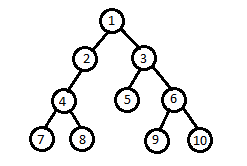
For the given binary tree: the LCA of (7,8,10) is 1
Note:
All of the node values of the binary tree will be unique.

N1, N2, and N3  will always exist in the binary tree.
Problem approach
They asked me the approach. I did it just as I learned on Coding Ninjas. Create a path from the root to the node. Create a recursive function to find descendant at distance k below from a given node. Use this function for all elements in the path you found out.


Here's your problem of the day 
Solving this problem will increase your chance to get selected in this company
Skill covered: Programming
What's the main risk of a "Chat with Your Codebase" public API tool?
Choose another skill to practice
Similar interview experiences
SDE - 1
2 rounds | 4 problems
Interviewed by Accenture

 Selected
1395 views

0 comments

0 upvotes
Data Engineering Intern
3 rounds | 6 problems
Interviewed by Accenture
Selected 1287 views
0 comments
0 upvotes
Data Engineering Intern
2 rounds | 4 problems
Interviewed by Accenture
Selected 1401 views
0 comments
0 upvotes
System Engineer
2 rounds | 3 problems
Interviewed by Accenture
Rejected
1082 views
0 comments
0 upvotes
Companies with similar interview experiences

Data Engineering Intern
3 rounds | 4 problems
Interviewed by Dunzo
Rejected
951 views
0 comments
0 upvotes