





Accolite interview experience Real time questions & tips from candidates to crack your interview

Software Engineer
Accolite


5 rounds | 13 Coding
problems
 Selected
 Interview preparation journey

Journey
I pursued my engineering in computer science from Chandigarh Group Of Colleges, Landran, Mohali. I am a 2022 year passed out. I started my coding journey with Python programming language after high school. Later, I learned C++ and Java in college, switched to Java as my main programming language, and started Data Structure and Algo in Java only.
Application story
Our College placement department sent us a link to register on the placement drive offered by the accolite digital, later on we got some links to give mcq test (Aptitude, Computer Networks, DBMS, DSA) questions. All those, who cleared that round received a coding round test link where we got 3 questions one was on Array, an easy level question, one HashMap question, and one tree-based question. All those, who cleared at least 2 questions got selected for the Interview Round.
Why selected/rejected for the role?
Because I have answered 90% of the questions correctly and I was having in-depth knowledge of my projects
Preparation
Duration: 5 months
Topics: Java Core, Data Structure, Computer Networks, Operating System,DBMS

Tip 1 : You should have in-depth knowledge of the Programming language
Tip 2 : You should have in-depth knowledge of your projects.
Tip 3 : Keep it real and simple.
Application process
Where: Campus
Eligibility: Btech in Computer Science
Tip 1 : Keep it real and concise
Tip 2 : Have at least two projects

Interview rounds
01
Round
Easy
Online Coding Interview
Duration45 minutes
Interview date18 Jun 2021
Coding problem4
It was MCQ round in which DSA based and aptitude question were asked.
1. Time complexity question
What is the time complexity of search in Heap data structure? (Learn)
2. Stack MCQ
Which of the following is true about linked list implementation of stack?
A) In push operation, if new nodes are inserted at the beginning of linked list, then in pop operation, nodes must be removed from end.
B) In push operation, if new nodes are inserted at the end, then in pop operation, nodes must be removed from the beginning.
C) Both of the above
D) None of the above
3. Queue MCQ
Which one of the following is an application of Queue Data Structure?
A) When a resource is shared among multiple consumers.
B) When data is transferred asynchronously (data not necessarily received at same rate as sent) between two processes
C) Load Balancing
D) All of the above
4. Sorting MCQ
Which sorting algorithms can be used to sort a random linked list with minimum time complexity?
A)Insertion Sor
B)Quick Sort
C)Heap Sort
D)Merge Sort
02
Round
Easy
Online Coding Test
Duration60 minutes
Interview date10 Jul 2021
Coding problem2
1. Find Number Of Islands
Moderate
34m average time
60% success

0/80
Asked in companies



You are given a 2-dimensional array/list having N rows and M columns, which is filled with ones(1) and zeroes(0). 1 signifies land, and 0 signifies water.
A cell is said to be connected to another cell, if one cell lies immediately next to the other cell, in any of the eight directions (two vertical, two horizontal, and four diagonals).
A group of connected cells having value 1 is called an island. Your task is to find the number of such islands present in the matrix.
Problem approach
I solved it using DFS approach of graph
2. Sort Elements By Frequency
Easy
15m average time
85% success
0/40
Asked in companies



You are given a list of a repeated set of integers. Your task for the problem is to return a list of the given elements in decreasing sorted order of their frequency of repetition in the given list with the element with the highest frequency of repetition first and so on.
Note :
If two numbers have the same frequency then keep the one that was present before the other in the original given list (array) first.
For Example :
Input:  arr[] = {2, 5, 2, 8, 5, 6, 8, 8}
Output: arr[] = {8, 8, 8, 2, 2, 5, 5, 6}

Explanation :
When you sort the array based on the decreasing order of the frequency of repetition of integers in the original array,
you’ll find that the element ‘8’ is the integer with the most repeated values therefore it would be arranged first after which since both 2 and 5 have the same number of repeated
values in the original array but since the 2 arrived first so we will first arrange 2 and then 5 in our resultant array, while would be the last element after sorting here.
Problem approach
Solved it using the HashMap.
03
Round
Medium
Video Call
Duration60 minutes
Interview date30 Jul 2021
Coding problem3
1. Middle Of Linked List
Easy
20m average time
80% success
0/40
Asked in companies


Given a singly linked list of 'N' nodes. The objective is to determine the middle node of a singly linked list. However, if the list has an even number of nodes, we return the second middle node.
Note:
1. If the list is empty, the function immediately returns None because there is no middle node to find.
2. If the list has only one node, then the only node in the list is trivially the middle node, and the function returns that node.
Problem approach
I solved it using the slow and fast pointer approach.
2. Tree Traversals
Easy
15m average time
85% success
0/40
Asked in companies



You have been given a Binary Tree of 'N'
nodes, where the nodes have integer values.
Your task is to return the ln-Order, Pre-Order, and Post-Order traversals of the given binary tree.
For example :
For the given binary tree:
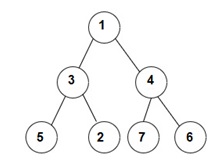
The Inorder traversal will be [5, 3, 2, 1, 7, 4, 6].
The Preorder traversal will be [1, 3, 5, 2, 4, 7, 6].
The Postorder traversal will be [5, 2, 3, 7, 6, 4, 1].
Problem approach
I made a tree and print all the traversal inorder preorder , post order traversals
3. Pair Sum
Easy
15m average time
90% success
0/40
Asked in companies



You are given an integer array 'ARR' of size 'N' and an integer 'S'. Your task is to return the list of all pairs of elements such that each sum of elements of each pair equals 'S'.
Note:
Each pair should be sorted i.e the first value should be less than or equals to the second value.

Return the list of pairs sorted in non-decreasing order of their first value. In case if two pairs have the same first value, the pair with a smaller second value should come first.
Problem approach
I solved it using standard HashMap approach
04
Round
Medium
Video Call
Duration60 minutes
Interview date17 Jul 2021
Coding problem3
Question asked from OS and system design
05
Round
Easy
HR Round
Duration30 minutes
Interview date14 Aug 2021
Coding problem1
1. Basic HR Questions
What are your regrets in life?
Smart work vs. Hard work
What is the ideal work place for you?
How do you match the job description?
How did you upgrade your skills during the pandemic?


Here's your problem of the day 
Solving this problem will increase your chance to get selected in this company
Skill covered: Programming
How do you remove whitespace from the start of a string?
Choose another skill to practice
Similar interview experiences
Software Engineer
3 rounds | 4 problems
Interviewed by Accolite
 Selected
1116 views

0 comments

0 upvotes
Software Engineer
3 rounds | 4 problems
Interviewed by Accolite
 Selected
 843 views
0 comments
0 upvotes
Software Engineer
5 rounds | 15 problems
Interviewed by Accolite
Selected 1450 views
0 comments
0 upvotes
Software Engineer
5 rounds | 7 problems
Interviewed by Accolite
Selected 393 views
0 comments
0 upvotes
Companies with similar interview experiences

Software Engineer
3 rounds | 7 problems
Interviewed by Optum
 Selected
 7977 views
1 comments
0 upvotes
Software Engineer
5 rounds | 5 problems
Interviewed by Microsoft
 Selected
 10148 views
1 comments
0 upvotes
Software Engineer
2 rounds | 4 problems
Interviewed by Amazon
Selected 4448 views
1 comments
0 upvotes