





Accolite interview experience Real time questions & tips from candidates to crack your interview

SDE - 1
Accolite


5 rounds | 6 Coding
problems

 Selected
 Interview preparation journey

Preparation
Duration: 6 months
Topics: DSA, Computer Networks, OOPS, DBMS, Operating System

Tip 1 : Cover all the topics of dsa and solve as many questions as possible.
Tip 2 : Get your core subjects strong as well as your dsa.
Tip 3 : Make good projects and make them live and get feedback from others and improve it on the basis of those feedbacks and mention that in your interview.
Application process
Where: Referral
Eligibility: Above 8 CGPA
Tip 1 : Make single column resume and explain your experience first and explain what kind of work you did, and what did you achieve.
Tip 2 : Explain your projects good enough so that by reading it once interviewer understands what you did in your projects so now, he/she can ask you questions accordingly.

Interview rounds
01
Round
Easy
Online Coding Interview
Duration30 minutes
Interview date5 Jan 2022
Coding problem0
30 min M.C.Q. round: 30 questions based on CS fundamentals (not hard and some questions are way too easy). I have given this easily.
02
Round
Hard
Online Coding Test
Duration60 Minute
Interview date10 Jan 2022
Coding problem1
There were two coding questions one was DP question and the other was string question.
1. Ways To Make Coin Change
Moderate
20m average time
80% success

0/80
Asked in companies



You are given an infinite supply of coins of each of denominations D = {D0, D1, D2, D3, ...... Dn-1}. You need to figure out the total number of ways W, in which you can make a change for value V using coins of denominations from D. Print 0, if a change isn't possible.
Problem approach
1) We have 2 choices for a coin of a particular denomination, either i) to include, or ii) to exclude.
2) If we are at coins[n-1], we can take as many instances as possible of that coin (unbounded inclusion) i.e count (coins, n, sum – coins[n-1]); then we move to coins[n-2].
3) After moving to coins[n-2], we can’t move back and can’t make choices for coins[n-1] i.e count (coins, n-1, sum).
4) Finally, as we have to find the total number of ways, so we will add these 2 possible choices, i.e count (coins, n, sum – coins[n-1]) + count (coins, n-1, ).
03
Round
Medium
Face to Face
Duration60 Minutes
Interview date25 Oct 2022
Coding problem1
The interviewer was very friendly, He first Introduce himself and then asked about my introduction and directly moved towards the Coding Question, it was from the linked list, and I was able to solve that Question. After that, He asked some DBMS questions as well as some questions related to OOPs.
The duration of the interview was around 60 mins. It went well and I receive my result next week.
1. Swap Nodes in Pairs
Moderate
40m average time
60% success
0/80
Asked in companies



You are given a singly linked list of integers.
Your task is to swap every two adjacent nodes, and return the head of the modified, linked list.
For Example:
We have a linked list 1->2->3->4->5->6->7 and so on. You are supposed to swap pairs of a linked list like swap (1,2), (3,4), (5,6), and so on.
Note:
1. You may not modify the data in the list’s nodes; only nodes themselves may be changed. Because imagine a case where a node contains many fields, so there will be too much unnecessary swap.

2. If a pair of a node does not exist, then leave the node as it is.
04
Round
Easy
Face to Face
Duration90 Minutes
Interview date31 Oct 2022
Coding problem3
She introduces herself and ask my introduction, then directly jump into the coding,
There were roughly 5 coding Questions:
1) Maximum height of the tree
2) The reverse of the linked list
3) The reverse of string (without using STL)
4) Top View of Binary tree.
5) Loop in the Linked list
1. Height of Binary Tree
Easy
15m average time
80% success
0/40
Asked in companies



The height of a tree is equal to the number of nodes on the longest path from the root to a leaf.
You are given an arbitrary binary tree consisting of 'n' nodes where each node is associated with a certain value.
Find out the height of the tree.
Example :
Input: Let the binary tree be:
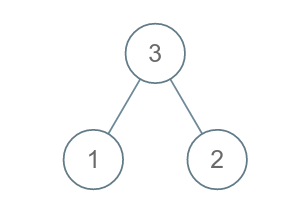
Output: 2

Explanation: The root node is 3, and the leaf nodes are 1 and 2.

There are two nodes visited when traversing from 3 to 1.
There are two nodes visited when traversing from 3 to 2.

Therefore the height of the binary tree is 2.
Problem approach
1) Recursively do a Depth-first search.
I2) f the tree is empty then return -1
3) Otherwise, do the following
a) Get the max depth of the left subtree recursively i.e., call maxDepth( tree->left-subtree)
b) Get the max depth of the right subtree recursively i.e., call maxDepth( tree->right-subtree)
c) Get the max of max depths of left and right subtrees and add 1 to it for the current node.
4) max_depth = max (max dept of left subtree, max depth of right subtree) + 1
5) Return max_depth.
2. Reverse Linked List
Moderate
15m average time
85% success
0/80
Asked in companies


Given a singly linked list of integers. Your task is to return the head of the reversed linked list.
For example:
The given linked list is 1 -> 2 -> 3 -> 4-> NULL. Then the reverse linked list is 4 -> 3 -> 2 -> 1 -> NULL and the head of the reversed linked list will be 4.
Follow Up :
Can you solve this problem in O(N) time and O(1) space complexity?
Problem approach
1) Divide the list in two parts - first node and
rest of the linked list.
2) Call reverse for the rest of the linked list.
3) Link rest to first.
4) Fix head pointer
3. Top View of the Binary Tree
Easy
0/40
Asked in companies


You have been given a Binary Tree of integers. You are supposed to return the top view of the given binary tree.
Top view of the binary tree is the set of nodes which are visible when we see the tree from the top.
For example:
For the given binary tree
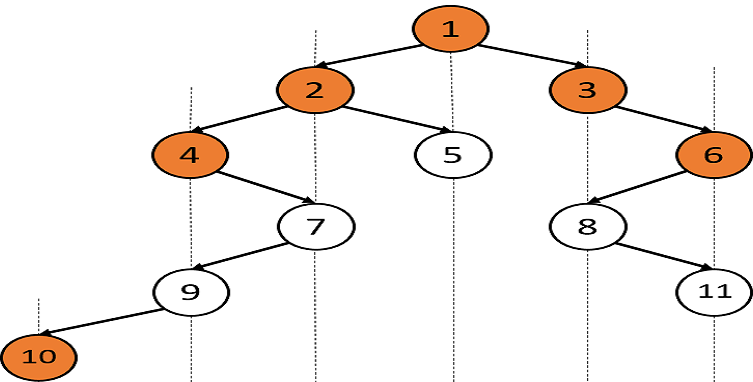
The top view of the tree will be {10, 4, 2, 1, 3, 6}.
Problem approach
1) we use the two variables, one for the vertical distance of the current node from the root and another for the depth of the current node from the root.
2) We use the vertical distance for indexing. If one node with the same vertical distance comes again, we check if the depth of the new node is lower or higher with respect to the current node with the same vertical distance in the map.
3) If depth of new node is lower, then we replace it.
05
Round
Easy
HR Round
Duration50 minutes
Interview date4 Feb 2022
Coding problem1
1. Basic HR Questions
Some usual HR questions like:
1) Introduce yourself.
2) preferred location.
3) any other offers I have?
4) Your Strength and weaknesses


Here's your problem of the day 
Solving this problem will increase your chance to get selected in this company
Skill covered: Programming
How do you remove whitespace from the start of a string?
Choose another skill to practice
Similar interview experiences
SDE - 1
3 rounds | 7 problems
Interviewed by Accolite
Rejected

703 views

0 comments

0 upvotes
SDE - 1
3 rounds | 6 problems
Interviewed by Accolite
Rejected
777 views
0 comments
0 upvotes
SDE - 1
3 rounds | 6 problems
Interviewed by Accolite
Rejected
677 views
0 comments
0 upvotes
SDE - 1
3 rounds | 8 problems
Interviewed by Accolite
Rejected
668 views
0 comments
0 upvotes
Companies with similar interview experiences

SDE - 1
5 rounds | 12 problems
Interviewed by Amazon
 Selected
 115097 views
24 comments
0 upvotes
SDE - 1
4 rounds | 5 problems
Interviewed by Microsoft
Selected 58238 views
5 comments
0 upvotes
SDE - 1
3 rounds | 7 problems
Interviewed by Amazon
 Selected
 35147 views
7 comments
0 upvotes