





Accolite interview experience Real time questions & tips from candidates to crack your interview

Senior Software Developer
Accolite


2 rounds | 6 Coding
problems

Rejected
Interview preparation journey

Preparation
Duration: 6 months
Topics: Data Structures, Algorithms, System Design, Springboot, OOPS

Tip 1 : Questions will be medium, prepare well basic DS, Algo and the top project and frameworks from CV.
Tip 2 : Go through all the previous interview experiences from Codestudio and Leetcode.
Tip 3 : Do at-least 2 good projects and you must know every bit of them.
Application process
Where: Referral
Eligibility: Above 7 CGPA
Tip 1 : Have at-least 2 good projects explained in short with all important points covered.
Tip 2 : Every skill must be mentioned.
Tip 3 : Focus on skills, projects and experiences more.

Interview rounds
01
Round
Medium
Video Call
Duration60 minutes
Interview date5 Jun 2020
Coding problem3
Technical interview round with questions on DSA, OS etc.
1. Left view of Binary Tree
Moderate
30m average time
60% success

0/80
Asked in companies



You have been given a Binary Tree of 'n' nodes, where the nodes have integer values
Print the left view of the binary tree.
Example :
If the input tree is as depicted in the picture:
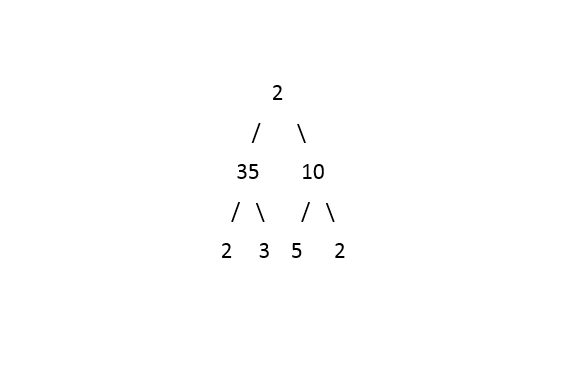
The Left View of the tree will be: 2 35 2
Problem approach
A level order traversal based solution can be presented here. For each level, we need to print the first node i.e. the leftmost node of that level.
Steps :
1. Make a queue of node type and push the root node in the queue.
2. While the queue is not empty, do :
2.1 Determine the current size of the queue.
2.2 Run a for loop to traverse all nodes of the current level and do :
2.2.1 Remove the topmost node from the queue.
2.2.2 If i==0 (first node of that level) , print it.
2.2.3 Push the left and right child of the node if they exist.
Time Complexity : O(n), where n is number of nodes in binary tree
2. Binary Array Sorting
Easy
20m average time
85% success
0/40
Asked in companies



A binary array is an array consisting of only 0s and 1s.
You are given a binary array "arr" of size ‘N’. Your task is to sort the given array and return this array after sorting.
Problem approach
A two-pointer approach can be used for this question. Maintain two indexes. Initialize the first index left as 0 and second index right as n-1, where n is size of the array .
While left < right , do the following :
a) Keep incrementing index left while arr[left] =0
b) Keep decrementing index right while arr[right]=1
c) If left < right then exchange arr[left] and arr[right]
3. OOPS Question
Comparable vs Comparator in Java
Problem approach
1) Comparable provides a single sorting sequence. In other words, we can sort the collection on the basis of a single element such as id, name, and price. The Comparator provides multiple sorting sequences. In other words, we can sort the collection on the basis of multiple elements such as id, name, and price etc.
2) Comparable affects the original class, i.e., the actual class is modified. Comparator doesn't affect the original class, i.e., the actual class is not modified.
3) Comparable provides compareTo() method to sort elements. Comparator provides compare() method to sort elements.
4) Comparable is present in java.lang package. A Comparator is present in the java.util package.
02
Round
Medium
Video Call
Duration60 minutes
Interview date5 Jun 2020
Coding problem3
Technical Interview round with questions on DSA.
1. Permutations of a String
Moderate
15m average time
85% success
0/80
Asked in companies



You are given a string 'STR' consisting of lowercase English letters. Your task is to return all permutations of the given string in lexicographically increasing order.
String A is lexicographically less than string B, if either A is a prefix of B (and A ≠ B), or there exists such i (1 <= i <= min(|A|, |B|)), that A[i] < B[i], and for any j (1 <= j < i) A[i] = B[i]. Here |A| denotes the length of the string A.
For example :
If the string is “bca”, then its permutations in lexicographically increasing order are { “abc”, “acb”, “bac”, “bca”, “cab”, “cba” }.
Note:
Given string contains unique characters.
Problem approach
We can use the concept of backtracking.
According to the backtracking algorithm:
o Fix a character in the first position and swap the rest of the character with the first character. Like in ABC, in the first iteration three strings are formed: ABC, BAC, and CBA by swapping A with A, B and C respectively.
o Repeat step 1 for the rest of the characters like fixing second character B and so on.
o Now swap again to go back to the previous position. E.g., from ABC, we formed ABC by fixing B again, and we backtrack to the previous position and swap B with C. So, now we got ABC and ACB.
o Repeat these steps for BAC and CBA, to get all the permutations.
Algorithm
1. Define a string.
2. Fix a character and swap the rest of the characters.
3. Call the generatePermutation() for rest of the characters.
4. Backtrack and swap the characters again.
2. Maximum Of All Subarrays Of Size k.
Moderate
20m average time
80% success
0/80
Asked in companies



You are given an array consisting of N non-negative integers, and an integer K denoting the length of a subarray, your task is to determine the maximum elements for each subarray of size K.
Note:
A subarray is a contiguous subset of an array.

The array may contain duplicate elements.

The given array follows 0-based indexing.

It is guaranteed that there exists at least one subarray of size K.
Problem approach
The problem can be solved using the concept of sliding window.
We scan the array from 0 to n-1, and maintain a deque to keep "promising" elements.
At each i, we keep "promising" elements, which are potassumally max number in window [i-(k-1),i] or any subsequent window. This means:
1. If an element in the deque and it is out of i-(k-1), we discard them. We just need to remove from the head, as we are using a deque and elements are ordered as the sequence in the array
2. Now only those elements within [i-(k-1),i] are in the deque. We then discard elements smaller than a[i] from the tail. This is because if a[x] 3.As a result, elements in the deque are ordered in both sequence in array and their value. At each step the head of the deque is the max element in [i-(k-1),i]
The algorithm is amortized O(n) as each element is pushed and removed once.
3. OS Question
Print even and odd numbers in increasing order using two threads in Java
Problem approach
The idea is to create two threads and print even numbers with one thread and odd numbers with another thread. Below are the steps:
Create two threads T1 and T2 using the below syntax, where T1 and T2 are used to print odd and even numbers respectively.
Thread T1 = new Thread(new Runnable() {
public void run() { mt.printEvenNumber(); }
});
Thread T2 = new Thread(new Runnable() {
public void run() { mt.printOddNumber(); }
});
where,
printOddNumber() is used to print all the odd numbers till N,
printEvenNumber() is used to print all the even numbers till N.
Maintain a global counter variable and start both threads using the below function:
T1.start();
T2.start();
If the counter is even in the Thread T1, then wait for the thread T2 to print that even number. Otherwise, print that odd number, increment the counter and notify to the Thread T2 using the function notify().
If the counter is odd in the Thread T2, then wait for the thread T1 to print that even number. Otherwise, print that even number, increment the counter and notify the Thread T1 using the function notify().


Here's your problem of the day 
Solving this problem will increase your chance to get selected in this company
Skill covered: Programming
How do you remove whitespace from the start of a string?
Choose another skill to practice
Similar interview experiences
SDE - Intern
4 rounds | 9 problems
Interviewed by Accolite

 Selected
855 views

0 comments

0 upvotes
Senior Software Developer
3 rounds | 6 problems
Interviewed by Accolite
Rejected
1002 views
0 comments
0 upvotes
SDE - 1
3 rounds | 5 problems
Interviewed by Accolite
Rejected
840 views
0 comments
0 upvotes
SDE - 1
3 rounds | 5 problems
Interviewed by Accolite
Rejected
1141 views
0 comments
0 upvotes
Companies with similar interview experiences
Senior Software Developer
4 rounds | 13 problems
Interviewed by SAP Labs
Selected 1864 views
0 comments
0 upvotes