





Adidas interview experience Real time questions & tips from candidates to crack your interview

Software Engineer
Adidas


3 rounds | 6 Coding
problems

 Selected
 Interview preparation journey

Journey
I was also learning web development and I made some good projects. Amazon was the first company that visited our campus. I left no stone unturned, went through the previous interview experiences, polished my skills and eventually cracked the very first interview that I sat down
Application story
This company visited to my campus for the placement. We just had to upload resume and fill all details in the form. First, they took the online assessment. Later, they called us for the interview rounds.
Why selected/rejected for the role?
The basic reason for my selection was my strong knowledge of core DSA fundamentals and my problem-solving ability. I was selected because I had developed skills like DSA, problem-solving, and Logical building abilities. I also prepared for the HR round because I all the questions asked in the HR round I was already familiar with them. I was able to pick the hints given by the interviewer and build my answers based on the hints provided.
Preparation
Duration: 3
Topics: Data Structures, Algorithms, oops(c++), dbms, operating systems.

Tip 1 : learn the graphs,dp,backtracking coding problem to pass the coding round
Tip 2 : brush upon your basics for the interview round
Tip 3 : linked list & tree coding questions are mainly asked in interview
Application process
Where: Campus
Eligibility: 7.5
Tip 1 : Be ready to explain your projects fluently
Tip 2 : Android development knowledge will be beneficial

Interview rounds
01
Round
Hard
Online Coding Test
Duration180 mins
Interview date5 Jan 2021
Coding problem1
1) 1 coding question need to be solved in 3 hours.there will be 50 test cases, need to pass all the test cases to go to the next rounds.STL in c++ cannot be used, we need to code anything we use from scratch
2) Coding questions will mainly be based on dynamic programming, graphs and backtracking, so prepare those topics well.
1. Rat in a Maze
Easy
15m average time
85% success

0/40
Asked in companies



You are given a starting position for a rat which is stuck in a maze at an initial point (0, 0) (the maze can be thought of as a 2-dimensional plane). The maze would be given in the form of a square matrix of order 'N' * 'N' where the cells with value 0 represent the maze’s blocked locations while value 1 is the open/available path that the rat can take to reach its destination. The rat's destination is at ('N' - 1, 'N' - 1). Your task is to find all the possible paths that the rat can take to reach from source to destination in the maze. The possible directions that it can take to move in the maze are 'U'(up) i.e. (x, y - 1) , 'D'(down) i.e. (x, y + 1) , 'L' (left) i.e. (x - 1, y), 'R' (right) i.e. (x + 1, y).
Note:
Here, sorted paths mean that the expected output should be in alphabetical order.
For Example:
Given a square matrix of size 4*4 (i.e. here 'N' = 4):
1 0 0 0
1 1 0 0
1 1 0 0
0 1 1 1
Expected Output:
DDRDRR DRDDRR
i.e. Path-1: DDRDRR and Path-2: DRDDRR

The rat can reach the destination at (3, 3) from (0, 0) by two paths, i.e. DRDDRR and DDRDRR when printed in sorted order, we get DDRDRR DRDDRR.
Problem approach
Solved using DP concept
02
Round
Medium
Video Call
Duration60 mins
Interview date6 Jan 2021
Coding problem2
The technical interview 1 has some questions based on basics of oops, Os and one/two coding questions.
Students who clear this round have to go for another technical round
1. Reverse Linked List
Moderate
15m average time
85% success
0/80
Asked in companies



Given a singly linked list of integers. Your task is to return the head of the reversed linked list.
For example:
The given linked list is 1 -> 2 -> 3 -> 4-> NULL. Then the reverse linked list is 4 -> 3 -> 2 -> 1 -> NULL and the head of the reversed linked list will be 4.
Follow Up :
Can you solve this problem in O(N) time and O(1) space complexity?
Problem approach
Use current and previous pointer concept
2. Delete Node In A Linked List
Easy
15m average time
80% success
0/40
Asked in companies



You are given a Singly Linked List of integers and a reference to the node to be deleted. Every node of the Linked List has a unique value written on it. Your task is to delete that node from the linked list.
A singly linked list is a linear data structure in which we can traverse only in one direction i.e. from Head to Tail. It consists of several nodes where each node contains some data and a reference to the next node.
Note:
• The reference to the head of the linked list is not given.
• The node to be deleted is not a tail node.
• The value of each node in the Linked List is unique.
• It is guaranteed that the node to be deleted is present in the linked list.
A sample Linked List-

Problem approach
Linearly traversed till previous node of that node to be deleted
03
Round
Easy
Video Call
Duration60
Interview date6 Jan 2021
Coding problem3
The interview again began with my resume but it was very exhaustive. While my friends were asked about both resume and DSA concepts, my interview focused entirely on my resume. I had done a project on distributed computing and the interviewer asked me an application question on multi-threading and synchronisation. It was quite difficult because I was trying to explain my approach and I couldn’t make out if the interviewer was happy with my approach or not. Then he asked to design a contact database without the actual use of DBMS in java. Again I tried to explain my approach but it was tough. The interview ended after asing one or more coding questions.
1. OOPs Questions
1) Concept of Dynamic Allocation of Memory
2) Pillars of OOPs
3) He also asks some computer networks questions like the difference between switches and routers, detailed discussion on DNS (Domain Name System), etc.
2. Spiral Order Traversal of a Binary Tree
Easy
20m average time
75% success
0/40
Asked in companies


You have been given a binary tree of 'N' nodes. Print the Spiral Order traversal of this binary tree.
For example
For the given binary tree [1, 2, 3, -1, -1, 4, 5, -1, -1, -1, -1]
    1
   / \
  2   3
     / \
    4   5

Output: 1 3 2 4 5
Problem approach
Solved using recursive approach
3. Cycle Detection in a Singly Linked List
Moderate
15m average time
80% success
0/80
Asked in companies



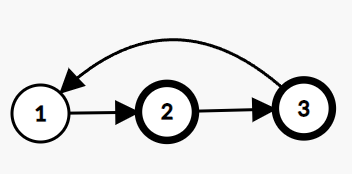
You are given a Singly Linked List of integers. Return true if it has a cycle, else return false.
A cycle occurs when a node's next points back to a previous node in the list.
Example:
In the given linked list, there is a cycle, hence we return true.
Problem approach
Solved using recursive approach


Here's your problem of the day 
Solving this problem will increase your chance to get selected in this company
Skill covered: Programming
How do you remove whitespace from the start of a string?
Choose another skill to practice
Similar interview experiences

SDE - 1
3 rounds | 7 problems
Interviewed by OYO
 Selected
6182 views

0 comments

0 upvotes

SDE - Intern
2 rounds | 3 problems
Interviewed by Amazon
Rejected
1566 views
0 comments
0 upvotes

SDE - 1
2 rounds | 5 problems
Interviewed by Meesho
Rejected
7245 views
0 comments
0 upvotes
SDE - 1
3 rounds | 9 problems
Interviewed by Salesforce
 Selected
 4552 views
0 comments
0 upvotes
Companies with similar interview experiences

Software Engineer
3 rounds | 7 problems
Interviewed by Optum
 Selected
 8607 views
1 comments
0 upvotes

Software Engineer
5 rounds | 5 problems
Interviewed by Microsoft
 Selected
 11120 views
1 comments
0 upvotes
Software Engineer
2 rounds | 4 problems
Interviewed by Amazon
Selected 5208 views
1 comments
0 upvotes