





Airtel interview experience Real time questions & tips from candidates to crack your interview
Software Developer
Airtel


2 rounds | 4 Coding
problems

 Selected
 Interview preparation journey

Preparation
Duration: 6 Months
Topics: Data structure and algorithms, Object Oriented Programming, Database, SQL, Coding Basics

Tip 1 : Practice problem solving as much as you can
Tip 2 : Try to solve online coding problem as much as possible to get good understanding of DSA
Tip 3 : Be confident with your Resume
Application process
Where: Hackerearth
Eligibility: Above 7 cgpa
Tip 1 : Should have some projects on resume
Tip 2 : Resume sections should be clear and no false information

Interview rounds
01
Round
Medium
Online Coding Interview
Duration60 Minutes
Interview date10 Apr 2021
Coding problem2
Online Technical Interview ( Coding Round) with 2 medium-hard problem
1. Trapping Rain Water
Moderate
15m average time
80% success

0/80
Asked in companies



You have been given a long type array/list 'arr’ of size 'n’.
It represents an elevation map wherein 'arr[i]’ denotes the elevation of the 'ith' bar.
Print the total amount of rainwater that can be trapped in these elevations.
Note :
The width of each bar is the same and is equal to 1.
Example:
Input: ‘n’ = 6, ‘arr’ = [3, 0, 0, 2, 0, 4].

Output: 10

Explanation: Refer to the image for better comprehension:

Note :
You don't need to print anything. It has already been taken care of. Just implement the given function.
Problem approach
First applied brute force to solve the problem then optimised the solution using stacks data structure.
2. Longest Consecutive Sequence
Moderate
40m average time
70% success
0/80
Asked in companies



You are given an unsorted array/list 'ARR' of 'N' integers. Your task is to return the length of the longest consecutive sequence.
The consecutive sequence is in the form ['NUM', 'NUM' + 1, 'NUM' + 2, ..., 'NUM' + L] where 'NUM' is the starting integer of the sequence and 'L' + 1 is the length of the sequence.
Note:
If there are any duplicates in the given array we will count only one of them in the consecutive sequence.
For example-
For the given 'ARR' [9,5,4,9,10,10,6].

Output = 3
The longest consecutive sequence is [4,5,6].
Follow Up:
Can you solve this in O(N) time and O(N) space complexity?
Problem approach
First explained brute force solution to the interviewer then interviewer asked me to optimise it
Applied dynamic programming concept to optimise the solution
02
Round
Medium
Online Coding Interview
Duration60 Minutes
Interview date16 Apr 2021
Coding problem2
Online Technical Coding Interview
1. Stack using queue
Moderate
25m average time
65% success
0/80
Asked in companies


Implement a Stack Data Structure specifically to store integer data using two Queues.
There should be two data members, both being Queues to store the data internally. You may use the inbuilt Queue.
Implement the following public functions :
1. Constructor:
It initializes the data members(queues) as required.

2. push(data) :
This function should take one argument of type integer. It pushes the element into the stack and returns nothing.

3. pop() :
It pops the element from the top of the stack and, in turn, returns the element being popped or deleted. In case the stack is empty, it returns -1.

4. top :
It returns the element being kept at the top of the stack. In case the stack is empty, it returns -1.

5. size() :
It returns the size of the stack at any given instance of time.

6. isEmpty() :
It returns a boolean value indicating whether the stack is empty or not.
Operations Performed on the Stack:
Query-1(Denoted by an integer 1): Pushes an integer data to the stack. (push function)

Query-2(Denoted by an integer 2): Pops the data kept at the top of the stack and returns it to the caller. (pop function)

Query-3(Denoted by an integer 3): Fetches and returns the data being kept at the top of the stack but doesn't remove it, unlike the pop function. (top function)

Query-4(Denoted by an integer 4): Returns the current size of the stack. (size function)

Query-5(Denoted by an integer 5): Returns a boolean value denoting whether the stack is empty or not. (isEmpty function)
Example
Operations:
1 5
1 10
2
3
4

Enqueue operation 1 5: We insert 5 at the back of the queue.
  Queue: [5]

Enqueue operation 1 10: We insert 10 at the back of the queue.
  Queue: [5, 10]

Dequeue operation 2: We remove the element from the front of the queue, which is 5, and print it.
  Output: 5
  Queue: [10]

Peek operation 3: We return the element present at the front of the queue, which is 10, without removing it.
  Output: 10
  Queue: [10]

IsEmpty operation 4: We check if the queue is empty.
  Output: False
  Queue: [10]
Problem approach
Interviewer asked easy question first to implement stack using queue and queue using stacks. Explained him the approach and worte psudo code for it
2. Left View Of Binary Tree
Moderate
30m average time
60% success
0/80
Asked in companies



You have been given a Binary Tree of 'n' nodes, where the nodes have integer values
Print the left view of the binary tree.
Example :
If the input tree is as depicted in the picture:
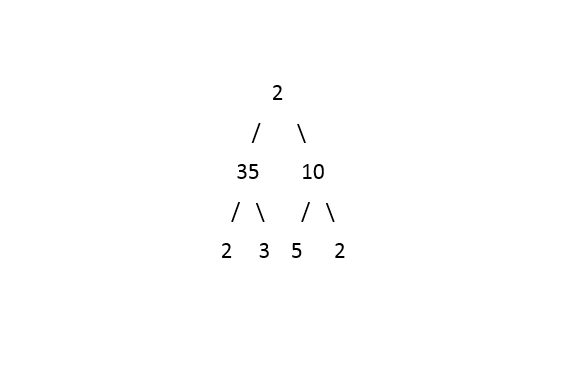
The Left View of the tree will be: 2 35 2
Problem approach
Used queue data structure to implement solution


Here's your problem of the day 
Solving this problem will increase your chance to get selected in this company
Skill covered: Programming
How do you remove whitespace from the start of a string?
Choose another skill to practice
Similar interview experiences
SDE - 1
3 rounds | 3 problems
Interviewed by Airtel
 Selected
2660 views

0 comments

0 upvotes
Lead Software Engineer
5 rounds | 4 problems
Interviewed by Airtel
Selected 1594 views
1 comments
0 upvotes
Software Engineer
2 rounds | 4 problems
Interviewed by Airtel
Selected 2979 views
0 comments
0 upvotes
SDE - 2
3 rounds | 11 problems
Interviewed by Airtel
 Selected
 2145 views
0 comments
0 upvotes
Companies with similar interview experiences
Software Developer
5 rounds | 14 problems
Interviewed by Microsoft
 Selected
 4397 views
1 comments
0 upvotes

Software Developer
6 rounds | 12 problems
Interviewed by SAP Labs
Selected 3272 views
0 comments
0 upvotes
Software Developer
3 rounds | 3 problems
Interviewed by Amazon
 Selected
 1720 views
0 comments
0 upvotes