





Ajio interview experience Real time questions & tips from candidates to crack your interview

Software Engineer
Ajio


3 rounds | 6 Coding
problems

 Selected
 Interview preparation journey

Journey
I was unaware of this coding stuff until my school life. I got to know about the field of computer science in my 11th grade. I found it interesting and decided that I would pursue my career in the field of computer science. I took admission in B.Tech CSE and learned various concepts like DSA and more.
Application story
I found out about this opening through a LinkedIn post. I applied to the post, reviewed important questions for the company, and started practicing. After a few days, I received an email informing me that I would have an assessment test, followed by the entire selection process.
Why selected/rejected for the role?
I provided correct explanations for my solutions in the coding round. I also developed the optimal solution, starting from the brute-force algorithm, which added to my points.
Preparation
Duration: 2 Months
Topics: Data Structures, Algorithm Design, DBMS, Object Oriented Design, Machine Learning

Tip 1: Practice the most frequently asked DSA questions from companies like Amazon and Microsoft.
Tip 2: Focus on solving questions on your own as much as possible.
Tip 3: Don’t waste time on the quantity of questions at the expense of quality.
Tip 4: If it’s been a while since your last interview, do mock interviews with a friend.
Tip 5: For virtual interviews, always have a backup data source (e.g., mobile data in case Wi-Fi fails). During the interview, try to maintain eye contact periodically.
Tip 6: Keep your resume concise (1 page) and have strong knowledge of the tech stack you’ve listed.
Application process
Where: Campus
Eligibility: 7 CGPA
Tip 1: Keep it short, to 1 page.
Tip 2: Prepare it well.
Tip 3: Focus more on the problem and the solution rather than on the tools used to solve the problem.

Interview rounds
01
Round
Medium
Online Coding Interview
Duration90 Minutes
Interview date14 Dec 2022
Coding problem2
A total of 8 questions:
4 MCQs (on OOP and expected output type questions) + 2 coding questions, one of which involved class implementation.
1. Count all sub-arrays having sum divisible by k
Moderate
15m average time
85% success

0/80
Asked in companies



Given an array ‘ARR’ and an integer ‘K’, your task is to find all the count of all sub-arrays whose sum is divisible by the given integer ‘K’.
Note:
If there exists no subarray in the given sequence whose sum is divisible by ‘K’ then simply return ‘0’.
Example:
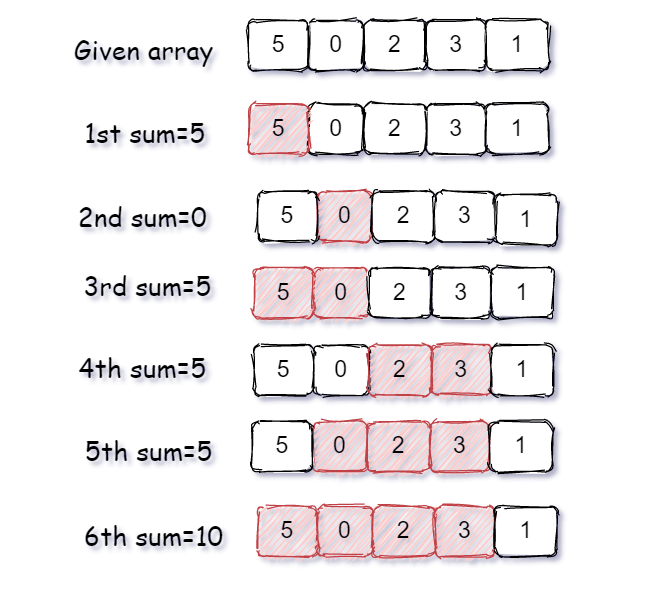
Suppose the given array is ‘ARR’ = { 5, 0, 2, 3, 1} and ‘K = 5’.
As we can see in below image, there are a total of 6 subarrays that have the total sum divisible by ‘K’
So we return the integer 6.
2. Equilibrium Index
Easy
0/40
Asked in companies



You are given an array Arr consisting of N integers. You need to find the equilibrium index of the array.
An index is considered as an equilibrium index if the sum of elements of the array to the left of that index is equal to the sum of elements to the right of it.
Note:
1. The array follows 0-based indexing, so you need to return the 0-based index of the element.
2. Note that the element at the equilibrium index won’t be considered for either left sum or right sum.
3. If there are multiple indices which satisfy the given condition, then return the left-most index i.e if there are indices i,j,k…. which are equilibrium indices, return the minimum among them
4. If no such index is present in the array, return -1.
02
Round
Medium
Video Call
Duration60 Minutes
Interview date14 Dec 2022
Coding problem2
This round was with the AJIO team; the panel consisted of two members and took place around 4 PM. The interviewer’s focus was on approach.
1. Sort an array in wave form
Easy
10m average time
85% success
0/40
Asked in companies


You have been given an unsorted array ‘ARR’.
Your task is to sort the array in such a way that the array looks like a wave array.
Example:
If the given sequence ‘ARR’ has ‘N’ elements then the sorted wave array looks like -
‘ARR[0] >= ARR[1]’ and ‘ARR[1] <= ARR[2]’
‘ARR[2] >= ARR[3]’ and ‘ARR[3] <= ARR[4]’
‘ARR[4] >= ARR[5]’ and ‘ARR[5] <= ARR[6]’  And so on.
Note:
1. ‘ARR[0]’ must be greater than or equal to ‘ARR[1]’.

2. There can be multiple arrays that look like a wave array but you have to return only one.

3. We have an internal function that will check your solution and return 'True' in case your array is one of the solutions otherwise return 'False'.
Explanation
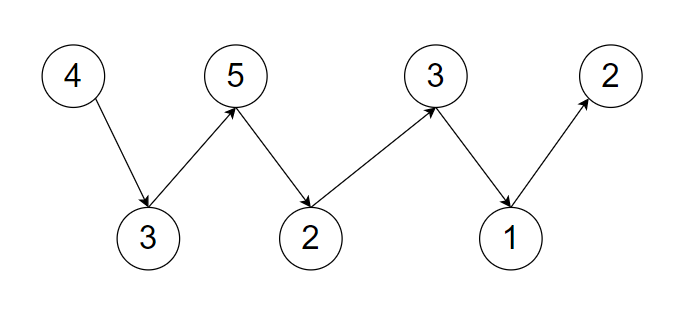
The given array ‘ ARR = { 4, 3, 5, 2, 3, 1, 2 } ’
The below figure is a visual representation of the given ‘ARR’ and you can see we can express ‘ARR’ in a waveform array because
4>3 and 3<5
5>2 and 2<3
3>1 and 1<2
And it follows the condition of wave array.
Follow up:
Try to solve this problem in linear time complexity.
2. Convert Number To Words
Hard
40m average time
75% success
0/120
Asked in companies


You are given an Integer ‘N’ you have to convert the integer to words.
For example you are given integer N = 2234 then you have to return the string “two thousand two hundred and thirty four”.
03
Round
Easy
Video Call
Duration30 Minutes
Interview date14 Dec 2022
Coding problem2
It was a managerial round. The person conducting the interview held the position of a technical architect. As informed by the recruiter, he was previously a technical architect at Amazon.
1. Technical Question
How does Facebook store comments?
2. Basic HR Questions
1. How do you tackle problems?
2. Your long-term goal?
3. Have you even worked under pressure ?


Here's your problem of the day 
Solving this problem will increase your chance to get selected in this company
Skill covered: Programming
What is the purpose of the return keyword?
Choose another skill to practice
Similar interview experiences

SDE - 1
3 rounds | 7 problems
Interviewed by OYO
 Selected
6059 views

0 comments

0 upvotes
SDE - Intern
2 rounds | 3 problems
Interviewed by Amazon
Rejected
1525 views
0 comments
0 upvotes

SDE - 1
2 rounds | 5 problems
Interviewed by Meesho
Rejected
7191 views
0 comments
0 upvotes

SDE - 1
3 rounds | 9 problems
Interviewed by Salesforce
 Selected
 4454 views
0 comments
0 upvotes
Companies with similar interview experiences

Software Engineer
3 rounds | 7 problems
Interviewed by Optum
 Selected
 8533 views
1 comments
0 upvotes
Software Engineer
5 rounds | 5 problems
Interviewed by Microsoft
 Selected
 11043 views
1 comments
0 upvotes
Software Engineer
2 rounds | 4 problems
Interviewed by Amazon
Selected 5156 views
1 comments
0 upvotes