





Amazon interview experience Real time questions & tips from candidates to crack your interview

SDE - 1
Amazon


3 rounds | 9 Coding
problems

Rejected
Interview preparation journey

Preparation
Duration: 5 months
Topics: Data Structures, Pointers, OOPS, System Design, Algorithms, Dynamic Programming , Recursion

Tip 1 : Practice at least 250 DS Questions
Tip 2 : Maintain consistency while doing questions
Tip 3 : Do some projects
Application process
Where: Campus
Eligibility: 7 CGPA
Tip 1 : Have some projects on resume.
Tip 2 : Do not put false things on resume.

Interview rounds
01
Round
Medium
Online Coding Interview
Duration90 minutes
Interview date12 Aug 2021
Coding problem3
The test consists of 20-30 MCQs and 3 coding questions
1. Maximum Product Subarray
Moderate
25m average time
75% success

0/80
Asked in companies


You are given an array “arr'' of integers. Your task is to find the contiguous subarray within the array which has the largest product of its elements. You have to report this maximum product.
An array c is a subarray of array d if c can be obtained from d by deletion of several elements from the beginning and several elements from the end.

For e.g.- The non-empty subarrays of an array [1,2,3] will be- [1],[2],[3],[1,2],[2,3],[1,2,3].
For Example:
If arr = {-3,4,5}.
All the possible non-empty contiguous subarrays of “arr” are {-3}, {4}, {5}, {-3,4}, {4,5} and {-3,4,5}.
The product of these subarrays are -3, 4, 5, -12, 20 and -60 respectively.
The maximum product is 20. Hence, the answer is 20.
Follow Up:
Can you solve this in linear time and constant space complexity?
Problem approach
The idea is to traverse over every contiguous subarrays, find the product of each of these subarrays and return the maximum product from these results.
2. Longest Sub-string With K Distinct Characters
Easy
15m average time
85% success
0/40
Asked in companies


You are given a string 'S' of length 'N' consisting of lowercase English alphabet letters. You are also given a positive integer 'K'.
Now, a substring of this string is good if it contains at most 'K' distinct characters. A string 'X' is a substring of string 'Y' if it can be obtained by deletion of several continuous elements(possibly zero) from the beginning and the end from the string 'Y'.
Your task is to return the maximum size of any good substring of the string 'S'.
Example:
‘S’ = “bacda” and ‘K’ = 3.

So, the substrings having at most ‘3’ distinct characters are called good substrings. Some possible good substrings are:
1. “bac”
2. “acd”
3. “acda”

The substring “acda” is the largest possible good substring, as we cannot get any other substring of length 5 or more having distinct characters less than or equal to ‘3’. Thus, you should return ‘4’ as the answer.
3. Missing and repeating numbers
Moderate
25m average time
75% success
0/80
Asked in companies



You are given an array of size ‘N’. The elements of the array are in the range from 1 to ‘N’.
Ideally, the array should contain elements from 1 to ‘N’. But due to some miscalculations, there is a number R in the range [1, N] which appears in the array twice and another number M in the range [1, N] which is missing from the array.
Your task is to find the missing number (M) and the repeating number (R).
For example:
Consider an array of size six. The elements of the array are { 6, 4, 3, 5, 5, 1 }.
The array should contain elements from one to six. Here, 2 is not present and 5 is occurring twice. Thus, 2 is the missing number (M) and 5 is the repeating number (R).
Follow Up
Can you do this in linear time and constant additional space?
Problem approach
Traverse the array. While traversing, use the absolute value of every element as an index and make the value at this index as negative to mark it visited. If something is already marked negative then this is the repeating element. To find missing, traverse the array again and look for a positive value.
02
Round
Medium
Video Call
Duration60 minutes
Interview date14 Aug 2021
Coding problem3
1. Partition Equal Subset Sum
Moderate
25m average time
65% success
0/80
Asked in companies


You are given an array 'ARR' of 'N' positive integers. Your task is to find if we can partition the given array into two subsets such that the sum of elements in both subsets is equal.
For example, let’s say the given array is [2, 3, 3, 3, 4, 5], then the array can be partitioned as [2, 3, 5], and [3, 3, 4] with equal sum 10.
Follow Up:
Can you solve this using not more than O(S) extra space, where S is the sum of all elements of the given array?
Problem approach
The problem can be solved using dynamic programming when the sum of the elements is not too big. We can create a 2D array part[][] of size (sum/2 + 1)*(n+1). And we can construct the solution in a bottom-up manner such that every filled entry has the following property
part[i][j] = true if a subset of {arr[0], arr[1], ..arr[j-1]} has sum
equal to i, otherwise false
2. Distance between two nodes of a Tree
Moderate
25m average time
60% success
0/80
Asked in companies



Given a binary tree and the value of two nodes, find the distance between the given two nodes of the Binary Tree.
Distance between two nodes is defined as the minimum number of edges in the path from one node to another.
3. Row with Maximum 1's
Easy
10m average time
90% success
0/40
Asked in companies


You have been given a non-empty grid ‘mat’ with 'n' rows and 'm' columns consisting of only 0s and 1s. All the rows are sorted in ascending order.
Your task is to find the index of the row with the maximum number of ones.
Note: If two rows have the same number of ones, consider the one with a smaller index. If there's no row with at least 1 zero, return -1.
Example:
Input: 'n' = 3, 'm' = 3, 'mat' = [[1, 1, 1], [0, 0, 1], [0, 0, 0]]

Output: 0

Explanation: The row with the maximum number of ones is 0 (0 - indexed).
Problem approach
A simple method is to do a row-wise traversal of the matrix, count the number of 1s in each row, and compare the count with max. Finally, return the index of the row with maximum 1s. The time complexity of this method is O(m*n) where m is the number of rows and n is the number of columns in the matrix.
03
Round
Easy
Video Call
Duration60-90 minutes
Interview date20 Aug 2021
Coding problem3
The interviewer starts with my introduction. Then He asks question on my projects. After that he asked some DS algo based theory questions like from trees , linked List . after that he game some problems to solve
1. Interleaving Two Strings
Moderate
45m average time
50% success
0/80
Asked in companies


You are given three strings 'A', 'B' and 'C'. Check whether 'C' is formed by an interleaving of 'A' and 'B'.
'C' is said to be interleaving 'A' and 'B', if the length of 'C' is equal to the sum of the length of 'A' and length of 'B', all the characters of 'A' and 'B' are present in 'C' and the order of all these characters remains the same in all three strings.
For Example:
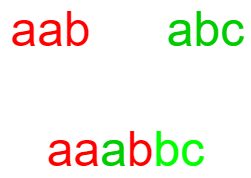
If A = “aab”, 'B' = “abc”, 'C' = “aaabbc”
Here 'C' is an interleaving string of 'A' and 'B'. because 'C' contains all the characters of 'A' and 'B' and the order of all these characters is also the same in all three strings.
If 'A' = “abc”, 'B' = “def”, 'C' = “abcdefg”
Here 'C' is not an interleaving string of 'A' and 'B'. 'B'ecause neither A nor 'B' contains the character ‘g’.
Problem approach
Make a matrix where rows and columns represent the characters of the string A and B. If C is the interleaved string of A and B then there exists a path from the top left of the Matrix to the bottom right. That is if we can go from index 0,0 to n,m while matching characters of all A and B with C then C is interleaved of A and B.
2. Convert a given Binary Tree to Doubly Linked List
Moderate
15m average time
80% success
0/80
Asked in companies


Given a Binary Tree, convert this binary tree to a Doubly Linked List.
A Binary Tree (BT) is a data structure in which each node has at most two children.
A Doubly Linked List contains a previous pointer, along with the next pointer and data.
The order of nodes in Doubly Linked List must be the same as Inorder of the given Binary Tree.
The doubly linked list should be returned by taking the next pointer as right and the previous pointer as left.
You need to return the head of the Doubly Linked List.
For the given binary tree :
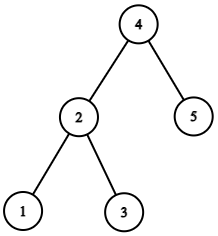
You need to return the head to the doubly linked list.
The doubly linked list would be: 1 2 3 4 5 and can be represented as:

Problem approach
Algorithm:
Traverse the tree in inorder fashion.
While visiting each node, keep track of DLL’s head and tail pointers, insert each visited node to the end of DLL using tail pointer.
Return head of the list.
3. N-ary tree Level Order Traversal
Moderate
20m average time
80% success
0/80
Asked in companies

You are given an N-ary tree where every node has at most ‘N’ child nodes. You need to find the level order traversal of this tree
Note:
Note that the level order traversal must not contain any null values, simply return the tree in level order.


Here's your problem of the day 
Solving this problem will increase your chance to get selected in this company
Skill covered: Programming
How do you remove whitespace from the start of a string?
Choose another skill to practice
Similar interview experiences
SDE - 1
3 rounds | 5 problems
Interviewed by Amazon
Rejected

3085 views

0 comments

0 upvotes
SDE - 1
4 rounds | 8 problems
Interviewed by Amazon
Rejected
2295 views
1 comments
0 upvotes
SDE - 1
3 rounds | 6 problems
Interviewed by Amazon
Rejected
1593 views
0 comments
0 upvotes
SDE - 1
4 rounds | 8 problems
Interviewed by Amazon
 Selected
 8962 views
0 comments
0 upvotes
Companies with similar interview experiences
SDE - 1
4 rounds | 5 problems
Interviewed by Microsoft
Selected 58238 views
5 comments
0 upvotes

SDE - 1
4 rounds | 8 problems
Interviewed by Samsung
Selected 12649 views
2 comments
0 upvotes
SDE - 1
4 rounds | 8 problems
Interviewed by Microsoft
Selected 5983 views
5 comments
0 upvotes