





Amazon interview experience Real time questions & tips from candidates to crack your interview

SDE - 1
Amazon


3 rounds | 6 Coding
problems

 Selected
 Interview preparation journey

Preparation
Duration: 6 months
Topics: Data Structures & Algorithms, Operating Systems, Amazon Services, OOPS, Dynamic Programming, Space & Time Complexity, Database Management Systems, and Machine Learning

Tip 1: The key thing that played a major role in getting the internship was practicing problems daily on various coding platforms. One should prioritize solving Medium & Hard difficulty level problems.
Tip 2: Try to get really good at hierarchical Data Structures (Graphs, Trees) & various algorithms based on them, as they are commonly asked in big tech companies.
Tip 3: Should have at least 2 projects and it would be a plus if that project has some application in real life, but it's not necessary. And the biggest tip for getting placed into Amazon would be - 'Be familiar with Amazon Leadership Principle'. There are 14 Amazon LP in total and they can be found easily online.
Application process
Where: Campus
Eligibility: 7 CGPA
Tip 1: Do not lie about anything on your resume
Tip 2: Just keep it clean and elegant, E.g. as it would not make an impact if you won some competition at the school level (It would just consume the precious space)
Tip 3: Mention the projects that you have worked on along with the tools & technologies

Interview rounds
01
Round
Medium
Online Coding Interview
Duration120 Minutes
Interview date21 Sep 2020
Coding problem2
Four parts were there in the Amcat Test.
The first part was the code debugging round.
The second part consisted of two medium difficulty level problems.
The third part was based on Amazon LP.
The fourth part consisted of basic aptitude questions.
1. Find Row K
Easy
15m average time
80% success

0/40
Asked in companies

Given a square binary matrix ‘mat[n][n]’, find ‘K’ such that all elements in the Kth row are ‘0’ and all elements in the Kth column are ‘1’. The value of mat[k][k] can be anything (either ‘0’ or ‘1’). If no such k exists, return ‘-1’.
For example
Consider the following matrix :
0 1 1
0 1 0
1 1 0

You can see that row 1 (0-based) contains all 0’s except mat[1][1] and column 1 contains all 1’s. Hence the answer for the above case is 1.
2. Clone Linked List with Random Pointer
Easy
10m average time
90% success
0/40
Asked in companies


Given a linked list having two pointers in each node. The first one points to the next node of the list, however, the other pointer is random and can point to any node of the list or null. The task is to create a deep copy of the given linked list and return its head. We will validate whether the linked list is a copy of the original linked list or not.
A deep copy of a Linked List means we do not copy the references of the nodes of the original Linked List rather for each node in the original Linked List, a new node is created.
For example,
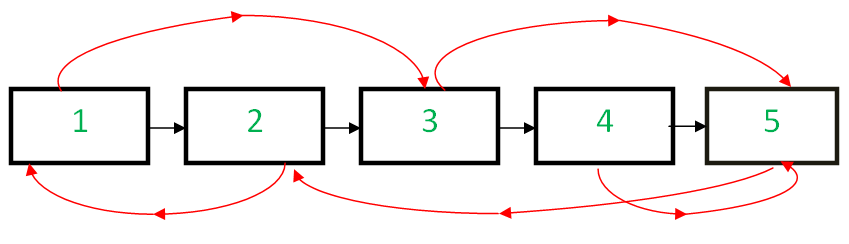
Random pointers are shown in red and next pointers in black.
02
Round
Medium
Video Call
Duration60 Minutes
Interview date25 Sep 2020
Coding problem2
This interview consisted of 2 technical problems and some behavioral questions. This interview was taken by an SDE-3.
1. Stream of Characters
Hard
50m average time
50% success
0/120
Asked in companies


You are given a list, ‘DICTIONARY[]’ containing a list of words and a stream of characters (queries). Your task is to choose a suitable data structure to implement ‘CharacterStreamChecker’ class described as follows:
1) ‘CharacterStreamChecker(dictionary)’: Constructor to initialize the data structure with given words present in ‘DICTIONARY[]’.
2) ‘solveQuery(character)’: Function to check whether the string formed by last ‘C’ (C >= 1) queried characters (in order from oldest to newest, including the character just queried) is present in the ‘DICTIONARY[]’. If yes, return true. Otherwise, return false.
Note :
The ‘DICTIONARY[]’ contains only distinct strings.
2. Check whether K is present or not
The second question was a mixture of OOP and Problem Solving. You are provided with a function that has two parameters Object of a class LIST and an integer 'k.' The LIST class has an endpoint valAtIndex() that can be used to access the value at the index provided and it returns IndexOutOfBoundException if the index is greater than the size of the length of the LIST. LIST class uses some DS to store integers internally. You do not know the size of the LIST. So we have to check whether the integer k is present in the LIST or not (Return 1 or 0.) The LIST stores the elements in sorted order.
03
Round
Easy
Video Call
Duration60 minutes
Interview date25 Sep 2020
Coding problem2
This round consisted of some behavioral questions and 2 technical problems. This round was conducted by and SDE-2.
1. Reverse DLL nodes in groups
Moderate
10m average time
90% success
0/80
Asked in companies


You are given a Doubly Linked List of integers and a positive integer 'K' representing the group size. Modify the linked list by reversing every group of 'K' nodes in the linked list.
A doubly linked list is a type of linked list that is bidirectional, that is, it can be traversed in both directions, forward and backward.
Note:
If the number of nodes in the list or in the last group is less than K, just reverse the remaining nodes.
Example:
Linked list: 8 9 10 11 12
K: 3

Output: 10 9 8 12 11

We reverse the first K (3) nodes. Now, since the number of nodes remaining in the list (2) is less than K, we just reverse the remaining nodes (11 and 12).
2. Maximum Subtree Sum
Moderate
15m average time
85% success
0/80
Asked in companies


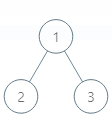
You are given an arbitrary binary tree consisting of N nodes. Your task is to find the largest subtree sum.
Note :
1. The value of any node will not be equal to zero.
2. Subtree of a node X is all the nodes that are below X and X itself.
3. For example in the tree given below, nodes 1, 2 and 3 are in subtree of 1.
4. Subtree sum of X is the sum value of all the nodes in subtree of X.
5. Binary tree is a tree wherein each node has at most two children.
6. Any two nodes may have the same value associated with it.


Here's your problem of the day 
Solving this problem will increase your chance to get selected in this company
Skill covered: Programming
What does dict.keys() return?
Choose another skill to practice
Similar interview experiences
SDE - 1
3 rounds | 5 problems
Interviewed by Amazon

Rejected

3689 views

0 comments

0 upvotes
SDE - 1
4 rounds | 8 problems
Interviewed by Amazon
Rejected
2647 views
1 comments
0 upvotes
SDE - 1
3 rounds | 6 problems
Interviewed by Amazon
Rejected
1835 views
0 comments
0 upvotes
SDE - 1
4 rounds | 8 problems
Interviewed by Amazon
Selected 11254 views
0 comments
0 upvotes
Companies with similar interview experiences
SDE - 1
4 rounds | 5 problems
Interviewed by Microsoft
Selected 60210 views
5 comments
0 upvotes
SDE - 1
4 rounds | 8 problems
Interviewed by Samsung
Selected 13010 views
2 comments
0 upvotes
SDE - 1
4 rounds | 8 problems
Interviewed by Microsoft
Selected 6331 views
5 comments
0 upvotes