





Amazon interview experience Real time questions & tips from candidates to crack your interview

SDE - 1
Amazon


4 rounds | 5 Coding
problems

 Selected
 Interview preparation journey

Preparation
Duration: 6 months
Topics: Dynamic programming, Graph, two pointer, greedy, tree, stack

Tip 1 : practice as many variety of question as you can from leetcode.
Tip 2 : make 2-3 project and prepare them as well.
Tip 3 : focus on behavioural round as well.
Application process
Where: Other
Eligibility: No
Tip 1 : make one page resume
Tip 2 : add your coding profiles and project links

Interview rounds
01
Round
Medium
Online Coding Test
Duration60 Minutes
Interview date20 Jul 2021
Coding problem2
the interview was taken around after noon.
environment was good.
the interviewer was very helping.
1. Trapping Rain Water
Moderate
15m average time
80% success

0/80
Asked in companies



You have been given a long type array/list 'arr’ of size 'n’.
It represents an elevation map wherein 'arr[i]’ denotes the elevation of the 'ith' bar.
Print the total amount of rainwater that can be trapped in these elevations.
Note :
The width of each bar is the same and is equal to 1.
Example:
Input: ‘n’ = 6, ‘arr’ = [3, 0, 0, 2, 0, 4].

Output: 10

Explanation: Refer to the image for better comprehension:

Note :
You don't need to print anything. It has already been taken care of. Just implement the given function.
Problem approach
Find maximum height of bar from the left end upto an index i in the array left_max\text{left\_max}left_max.
Find maximum height of bar from the right end upto an index i in the array right_max\text{right\_max}right_max.
Iterate over the height\text{height}height array and update ans:
Add min(left_max[i],right_max[i])−height[i]\min(\text{left\_max}[i],\text{right\_max}[i]) - \text{height}[i]min(left_max[i],right_max[i])−height[i] to ans\text{ans}ans
2. Min Stack
Easy
0/40
Asked in companies



Design a stack that supports push, pop, top, and retrieving the minimum element in constant time.
1. Push(num): Push the given number in the stack.
2. Pop: Remove and return the top element from the stack if present, else return -1.
3. Top: return the top element of the stack if present, else return -1.
4. getMin: Returns minimum element of the stack if present, else return -1.
For Example:
For the following input:
1
5
1 1
1 2
4
2
3

For the first two operations, we will just insert 1 and then 2 into the stack which was empty earlier. So now the stack is => [2,1]
In the third operation, we need to return the minimum element of the stack, i.e., 1. So now the stack is => [2,1]
For the fourth operation, we need to pop the topmost element of the stack, i.e., 2. Now the stack is => [1]
In the fifth operation, we return the top element of the stack, i.e. 1 as it has one element. Now the stack is => [1]

So, the final output will be:
1 2 1
02
Round
Medium
Online Coding Test
Duration60 Minutes
Interview date21 Jul 2021
Coding problem2
afternoon
interviewer was good.
1. Minimum steps to reach target by a Knight
Moderate
25m average time
60% success
0/80
Asked in companies



You have been given a square chessboard of size ‘N x N’. The position coordinates of the Knight and the position coordinates of the target are also given.
Your task is to find out the minimum steps a Knight will take to reach the target position.
Example:
knightPosition: {3,4}
targetPosition: {2,1}
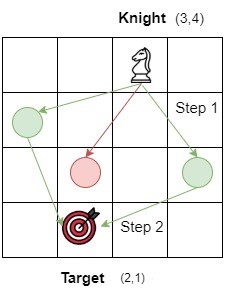
The knight can move from position (3,4) to positions (1,3), (2,2) and (4,2). Position (4,2) is selected and the ‘stepCount’ becomes 1. From position (4,2), the knight can directly jump to the position (2,1) which is the target point and ‘stepCount’ becomes 2 which is the final answer.
Note:
1. The coordinates are 1 indexed. So, the bottom left square is (1,1) and the top right square is (N, N).

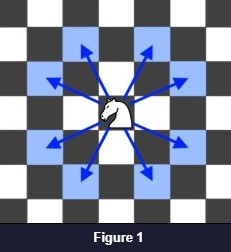
2. The knight can make 8 possible moves as given in figure 1.

3. A Knight moves 2 squares in one direction and 1 square in the perpendicular direction (or vice-versa).
2. Serialize/Deserialize The Binary Tree
Hard
15m average time
85% success
0/120
Asked in companies



You have been given a binary tree of integers. You are supposed to serialize and deserialize (refer to notes) the given binary tree.
You can choose any algorithm to serialize/deserialize the given binary tree. You only have to ensure that the serialized string can be deserialized to the original binary tree.
Note :
Serialization is the process of translating a data structure or object state into a format that can be stored or transmitted (for example, across a computer network) and reconstructed later. The opposite operation, that is, extracting a data structure from stored information, is deserialization.
03
Round
Easy
Face to Face
Duration60 Minutes
Interview date4 Aug 2021
Coding problem1
this was material round. the manager asked questions related to my previous internship and projects. it was good interview experience. then at the end he asked one question
1. Intersection of Linked List
Easy
25m average time
73% success
0/40
Asked in companies



You are given two Singly Linked Lists of integers, which may have an intersection point.
Your task is to return the first intersection node. If there is no intersection, return NULL.
Example:-
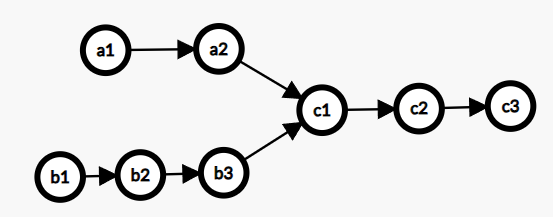
The Linked Lists, where a1, a2, c1, c2, c3 is the first linked list and b1, b2, b3, c1, c2, c3 is the second linked list, merging at node c1.
04
Round
Easy
Face to Face
Duration45 Minutes
Interview date19 Aug 2021
Coding problem0
this was bar raiser round. he asked behaviour and leadership question only.


Here's your problem of the day 
Solving this problem will increase your chance to get selected in this company
Skill covered: Programming
How do you remove whitespace from the start of a string?
Choose another skill to practice
Similar interview experiences
SDE - 1
3 rounds | 5 problems
Interviewed by Amazon

Rejected

3084 views

0 comments

0 upvotes
SDE - 1
4 rounds | 8 problems
Interviewed by Amazon
Rejected
2294 views
1 comments
0 upvotes
SDE - 1
3 rounds | 6 problems
Interviewed by Amazon
Rejected
1592 views
0 comments
0 upvotes
SDE - 1
4 rounds | 8 problems
Interviewed by Amazon
Selected 8962 views
0 comments
0 upvotes
Companies with similar interview experiences
SDE - 1
4 rounds | 5 problems
Interviewed by Microsoft
Selected 58237 views
5 comments
0 upvotes

SDE - 1
4 rounds | 8 problems
Interviewed by Samsung
Selected 12649 views
2 comments
0 upvotes
SDE - 1
4 rounds | 8 problems
Interviewed by Microsoft
Selected 5983 views
5 comments
0 upvotes