





Amazon interview experience Real time questions & tips from candidates to crack your interview

SDE - Intern
Amazon


2 rounds | 4 Coding
problems

 Selected
 Interview preparation journey

Journey
My journey began with learning core computer science fundamentals like DSA, OS, and backend basics, often struggling to connect theory with real-world systems. Over time, through consistent practice, projects, and internships, I learned how scalable software is built. Working on backend systems, cloud tools, and GenAI pipelines boosted my confidence. The key was staying consistent, learning from rejections, and focusing on strong fundamentals rather than shortcuts.
Application story
I applied through the college and tracked my application status via email updates. After shortlisting, the process proceeded smoothly with clear communication, scheduled interviews, and timely follow-ups, which helped me stay prepared and focused throughout the journey.
Why selected/rejected for the role?
I was selected because of my strong fundamentals, hands-on backend project experience, and ability to clearly explain my approach. Consistent preparation, practical exposure through internships, and a calm problem-solving mindset helped me perform confidently and learn effectively throughout the process.
Preparation
Duration: 6 Months
Topics: Data Structures, Algorithms, Object-Oriented Programming (OOP), Operating Systems, Database Management Systems (DBMS), System Design

Tip 1: Build real-world projects to apply concepts practically.
Tip 2: Revise fundamentals regularly and focus on consistent problem-solving.
Tip 3: Learn to explain your thought process clearly during interviews.
Application process
Where: Campus
Eligibility: No criteria (Salary: 1.1 Lakh/month)
Tip 1: Highlight impactful projects with clear problem statements and outcomes
Tip 2: Be honest about your skills and write only what you can explain confidently

Interview rounds
01
Round
Medium
Online Coding Test
Duration90 minutes
Interview date3 Oct 2025
Coding problem2
1. Longest Subarray With No Repetitions
Moderate
25m average time
75% success

0/80
Asked in companies


You are given an array ‘arr’. You are supposed to find the length of the longest subarray which does not contain any repeated numbers.
Problem approach
Step 1: I initially considered checking all possible subarrays and verifying uniqueness, but this approach was inefficient for large inputs.
Step 2: I optimized the solution using a sliding window approach.
Step 3: I used a hash set to track elements in the current window and adjusted the window whenever a duplicate appeared.
Step 4: This optimization reduced the solution to linear time complexity, which worked well within the coding round constraints.
2. Search In Rotated Sorted Array
Easy
12m average time
85% success
0/40
Asked in companies



You have been given a sorted array/list 'arr' consisting of ‘n’ elements. You are also given an integer ‘k’.
Now the array is rotated at some pivot point unknown to you.
For example, if 'arr' = [ 1, 3, 5, 7, 8], then after rotating 'arr' at index 3, the array will be 'arr' = [7, 8, 1, 3, 5].
Now, your task is to find the index at which ‘k’ is present in 'arr'.
Note :
1. If ‘k’ is not present in 'arr', then print -1.
2. There are no duplicate elements present in 'arr'.
3. 'arr' can be rotated only in the right direction.
Example:
Input: 'arr' = [12, 15, 18, 2, 4] , 'k' = 2

Output: 3

Explanation:
If 'arr' = [12, 15, 18, 2, 4] and 'k' = 2, then the position at which 'k' is present in the array is 3 (0-indexed).
Problem approach
Step 1: I first understood that although the array is rotated, one half of it is always sorted.
Step 2: I applied binary search by calculating the middle element and comparing it with the target.
Step 3: I checked whether the left half or the right half of the array was sorted.
Step 4: Based on which half was sorted, I determined whether the target lay in that range or in the other half.
Step 5: I eliminated the irrelevant half and continued the binary search until the element was found or the search space became empty.
02
Round
Hard
Video Call
Duration60 minutes
Interview date8 Jan 2026
Coding problem2
1. Cycle Detection In Undirected Graph
Moderate
0/80
Asked in companies



You have been given an undirected graph with 'N' vertices and 'M' edges. The vertices are labelled from 1 to 'N'.
Your task is to find if the graph contains a cycle or not.
A path that starts from a given vertex and ends at the same vertex traversing the edges only once is called a cycle.
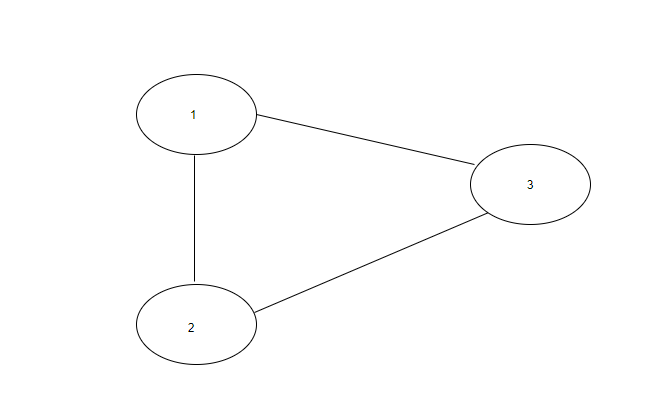
Example :
In the below graph, there exists a cycle between vertex 1, 2 and 3.
Note:
1. There are no parallel edges between two vertices.

2. There are no self-loops(an edge connecting the vertex to itself) in the graph.

3. The graph can be disconnected.
For Example :
Input: N = 3 , Edges =  [[1, 2], [2, 3], [1, 3]].
Output: Yes

Explanation : There are a total of 3 vertices in the graph. There is an edge between vertex 1 and 2, vertex 2 and 3 and vertex 1 and 3. So, there exists a cycle in the graph.
Problem approach
Step 1: I first determined whether the graph was directed or undirected and chose the appropriate approach.
Step 2: I initially explained a simple DFS traversal to explore the graph.
Step 3: For an undirected graph, I used DFS with parent tracking to detect cycles.
Step 4: For a directed graph, I used DFS with a recursion stack to identify back edges.
Step 5: I analyzed the time and space complexity and verified the solution using sample test cases.
2. Longest Increasing Subsequence
Moderate
30m average time
65% success
0/80
Asked in companies

For a given array with N elements, you need to find the length of the longest subsequence from the array such that all the elements of the subsequence are sorted in strictly increasing order.
Strictly Increasing Sequence is when each term in the sequence is larger than the preceding term.
For example:
[1, 2, 3, 4] is a strictly increasing array, while [2, 1, 4, 3] is not.
Problem approach
Step 1: I first discussed the brute-force recursive approach of generating all subsequences and explained why it was inefficient.
Step 2: I introduced a dynamic programming solution where dp[i] represents the length of the LIS ending at index i.
Step 3: I used two nested loops to update dp[i] by checking all previous elements smaller than the current one.
Step 4: I took the maximum value from the dp array as the final answer.
Step 5: I explained the time complexity as O(N²) and briefly mentioned the optimized O(N log N) approach.


Here's your problem of the day 
Solving this problem will increase your chance to get selected in this company
Skill covered: Programming
What's the main risk of a "Chat with Your Codebase" public API tool?
Choose another skill to practice
Similar interview experiences
SDE - Intern
3 rounds | 3 problems
Interviewed by Amazon

Rejected

2541 views

0 comments

0 upvotes
SDE - Intern
3 rounds | 7 problems
Interviewed by Amazon
Rejected
1377 views
0 comments
0 upvotes
SDE - Intern
2 rounds | 3 problems
Interviewed by Amazon
Rejected
1599 views
0 comments
0 upvotes
SDE - Intern
1 rounds | 3 problems
Interviewed by Amazon
Selected 4498 views
0 comments
0 upvotes
Companies with similar interview experiences

SDE - Intern
4 rounds | 7 problems
Interviewed by Microsoft
 Selected
 16273 views
1 comments
0 upvotes
SDE - Intern
3 rounds | 6 problems
Interviewed by Microsoft
Selected 8460 views
0 comments
0 upvotes
SDE - Intern
2 rounds | 4 problems
Interviewed by Microsoft
 Selected
 5208 views
2 comments
0 upvotes