





Amdocs interview experience Real time questions & tips from candidates to crack your interview

SDE - 1
Amdocs


4 rounds | 5 Coding
problems
 Selected
 Interview preparation journey

Preparation
Duration: 4 Months
Topics: Data Structures, Algorithms, OS, CN, DBMS, Unix, SQL, Machine Learning, Deep Learning

Tip 1 : Prepare Data Structures and Algorithms very well , Practice basic questions on implementation of various DS along with some minor variations. You should be aware of the basic algorithms as well and should be able to write clean production grade code.
Tip 2 : Prepare some good projects , based on your skillset...be it Web Dev , Android , Machine Learning , Blockchain , etc.
Tip 3 : Try giving mock interviews before your actual interviews , this will help you when you try to speak out/explain your approach in the interview.
Application process
Where: Campus
Eligibility: 6.5
Tip 1 : Try to have 1 page resume highlighting your skillset as comprehensive as possible.
Tip 2 : Try to add keywords mentioned in the Job Description in your resume(if you are good in those tech stack)

Interview rounds
01
Round
Medium
Online Coding Interview
Duration90
Interview date30 Sep 2020
Coding problem2
It was having medium kind of difficulty , involved two question , first one was simple array problem , and the second one was quite hard DP problem.
1. Occurrence of X in a Sorted Array
Moderate
26m average time

0/80
Asked in companies



You have been given a sorted array/list of integers 'arr' of size 'n' and an integer 'x'.
Find the total number of occurrences of 'x' in the array/list.
Example:
Input: 'n' = 7, 'x' = 3
'arr' = [1, 1, 1, 2, 2, 3, 3]

Output: 2

Explanation: Total occurrences of '3' in the array 'arr' is 2.
Problem approach
Step 1 : the array was sorted
Step 2 : so I applied Binary Search to find the leftmost index of the target item in the array
Step 3 : and then rightmost index of the target item in the array
Step 4 : and then returned (right-left +1) as answer.
2. Subset Sum Equal To K
Moderate
30m average time
65% success
0/80
Asked in companies


You are given an array/list ‘ARR’ of ‘N’ positive integers and an integer ‘K’. Your task is to check if there exists a subset in ‘ARR’ with a sum equal to ‘K’.
Note: Return true if there exists a subset with sum equal to ‘K’. Otherwise, return false.
For Example :
If ‘ARR’ is {1,2,3,4} and ‘K’ = 4, then there exists 2 subsets with sum = 4. These are {1,3} and {4}. Hence, return true.
Problem approach
we will create a 2D array of size (arr.size() + 1) * (target + 1) of type boolean. The state DP[i][j] will be true if there exists a subset of elements from A[0….i] with sum value = ‘j’. The approach for the problem is:
if (A[i-1] > j)
DP[i][j] = DP[i-1][j]
else
DP[i][j] = DP[i-1][j] OR DP[i-1][j-A[i-1]]
This means that if current element has value greater than ‘current sum value’ we will copy the answer for previous cases
And if the current sum value is greater than the ‘ith’ element we will see if any of previous states have already experienced the sum=’j’ OR any previous states experienced a value ‘j – A[i]’ which will solve our purpose.
02
Round
Medium
Online Coding Test
Duration60 Minutes
Interview date2 Oct 2020
Coding problem2
It was a medium round.
1. Detect and Remove Loop
Moderate
10m average time
90% success
0/80
Asked in companies



Given a singly linked list, you have to detect the loop and remove the loop from the linked list, if present. You have to make changes in the given linked list itself and return the updated linked list.
Expected Complexity: Try doing it in O(n) time complexity and O(1) space complexity. Here, n is the number of nodes in the linked list.
Problem approach
Step 1 : I first told him the brute force approach of using the hashmap and then told it's T.C.
Step 2 : Then I told him the slow and fast pointers approach. He was satisfied with my approach.
Step 3 : I wrote the optimized code.
2. Maximum Depth Of A Binary Tree
Easy
15m average time
85% success
0/40
Asked in companies



You are given the root node of a binary tree with N nodes, whose nodes have integer values. Your task is to find the maximum depth of the given Binary tree.
Depth of a binary tree is the same as its height. In simpler terms, you have to find the total number of nodes encountered while moving from the root node to the farthest leaf node, along the longest path of the binary tree.
Example:-
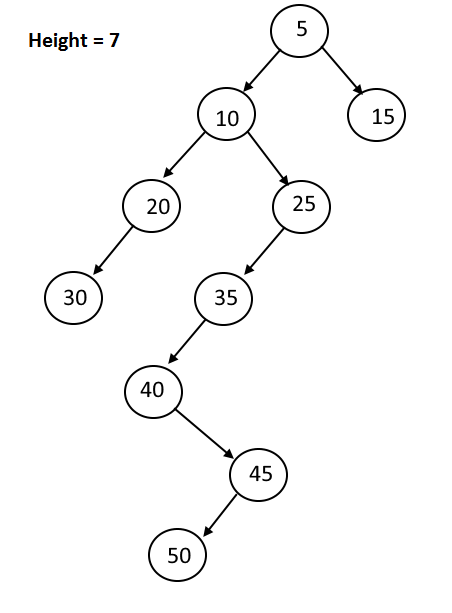
If we are given the above binary tree as input then moving from root node(5) to the farthest leaf node(50), the path formed will be [ 5->10->25->35->40->45->50 ]. The total number of nodes encountered is 7, therefore the maximum depth of the binary tree is 7.
Problem approach
1. If tree is empty then return -1
2. Else
(a) Get the max depth of left subtree recursively i.e.,
call maxDepth( tree->left-subtree)
(a) Get the max depth of right subtree recursively i.e.,
call maxDepth( tree->right-subtree)
(c) Get the max of max depths of left and right
subtrees and add 1 to it for the current node.
max_depth = max(max dept of left subtree,
max depth of right subtree)
+ 1
(d) Return max_depth
03
Round
Medium
Video Call
Duration25 Minutes
Interview date5 Oct 2020
Coding problem1
It was a basic round to check computer fundamentals.
1. Operating System Questions
Scheduling algorithms
Dispatcher
Mutex , Semaphores
Banker's Algorithm
Problem approach
Tip 1 : Read Galvin for OS thoroughly and Navathe for DBMS.
Tip 2 : Make your own notes and try to revise them before the interview.
Tip 3 : Try running unix commands and SQL queries
04
Round
Easy
HR Round
Duration15 Minutes
Interview date6 Oct 2020
Coding problem0
Basic HR questions


Here's your problem of the day 
Solving this problem will increase your chance to get selected in this company
Skill covered: Programming
How do you remove whitespace from the start of a string?
Choose another skill to practice
Similar interview experiences
SDE - 1
3 rounds | 4 problems
Interviewed by Amdocs
 Selected
2059 views

0 comments

0 upvotes
SDE - 1
1 rounds | 2 problems
Interviewed by Amdocs

Rejected
1308 views
0 comments
0 upvotes
SDE - 1
3 rounds | 4 problems
Interviewed by Amdocs
Selected 1906 views
0 comments
0 upvotes
SDE - 1
3 rounds | 5 problems
Interviewed by Amdocs
Selected 1411 views
0 comments
0 upvotes
Companies with similar interview experiences
SDE - 1
5 rounds | 12 problems
Interviewed by Amazon
 Selected
 115097 views
24 comments
0 upvotes

SDE - 1
4 rounds | 5 problems
Interviewed by Microsoft
Selected 58238 views
5 comments
0 upvotes
SDE - 1
3 rounds | 7 problems
Interviewed by Amazon
 Selected
 35147 views
7 comments
0 upvotes