





Blue Yonder Private Limited interview experience Real time questions & tips from candidates to crack your interview
Associate Software Engineer
Blue Yonder Private Limited


3 rounds | 5 Coding
problems

 Selected
 Interview preparation journey

Preparation
Duration: 12 months
Topics: Data Structures, Algorithms, Database, System Design, Operating Systems

Tip 1 : Practice Data Structure questions as much as you can. Also, be confident during the interview about your solution. For practice, you can prefer internet.
Tip 2 : Read About Previously asked questions by the company.
Application process
Where: Email Approach
Eligibility: No criteria
Tip 1 : Keep it short. Mention the academic and professional projects you've done. Add your educational details properly with the percentage or CGPA obtained.
Tip 2 : Only write those things in the resume which you are confident of and keep practicing.

Interview rounds
01
Round
Easy
Video Call
Duration60 minutes
Interview date14 Jun 2022
Coding problem2
This round was taken by a senior engineer working there. he asked a lot of questions about my work and projects in my resume. He asked 2 coding questions.
1. Letter Combinations of a Phone Number
Moderate
35m average time
65% success

0/80
Asked in companies



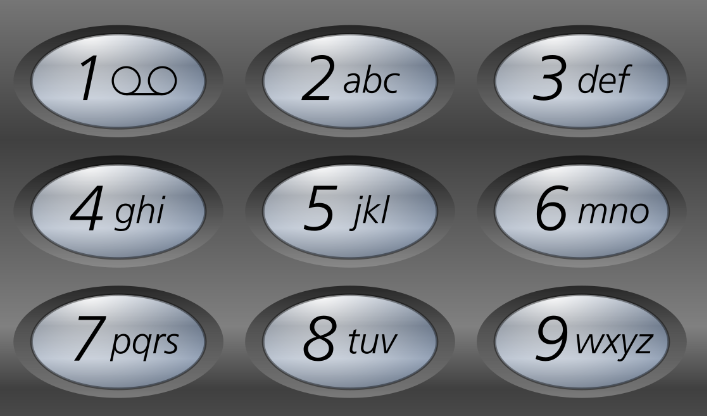
Given a string S containing digits from 2 to 9 inclusive. Your task is to find all possible letter combinations that the number could represent.
A mapping from Digits to Letters (just like in Nokia 1100) is shown below. Note that 1 does not map to any letter.
Problem approach
Used backtracking to generate all possible combinations.
2. Find All Anagrams in a String
Easy
15m average time
85% success
0/40
Asked in companies



You have been given a string STR and a non-empty string PTR. Your task is to find all the starting indices of PTR’s anagram in STR.
An anagram of a string is another string which contains the same characters and is obtained by rearranging the characters.
For example: ‘SILENT’ and ‘LISTEN’ are anagrams of each other. ‘ABA’ and ‘ABB’ are not anagram because we can’t convert ‘ABA’ to ‘ABB’ by rearranging the characters of particular strings.
Note:
1. Both STR and PTR consist of English uppercase letters.
2. Length of string 'STR' will always be greater than or equal to the length of string ‘PTR’.
3. In case, there is no anagram substring, then return an empty sequence.
4. In case of more than one anagrams, return the indices in increasing order.
Problem approach
Maintain a window of len(p) in s, and slide to right until finish. Time complexity is O(len(s)).
02
Round
Easy
Video Call
Duration60 minutes
Interview date16 Jun 2022
Coding problem2
This round was held in the evening and was taken by an engineering lead. He asked a lot of Conceptual questions on Java. and 2 coding questions.
1. Regular Expression Matching
Hard
25m average time
80% success
0/120
Asked in companies


Given an input string 'S' and a pattern 'P', implement a regular expression matching with the support of two special characters ‘.’ (dot) and ‘*’(asterisk) where
1. ‘.’ matches to any single character.
2. ‘*’ matches to zero or more of the preceding element.
If the input string 'S' matches the pattern 'P', then return true else, return false.
Note:
1. You have to match the entire string with the pattern given.

2. Both the strings, 'S' and 'P' contain only lower-case alphabets.

3. Only the pattern will contain additional characters ‘*’ and ‘.’ along with alphabets.
Problem approach
Search from left to right and maintain a max height of left and right separately, which is like a one-side wall of partial container. Fix the higher one and flow water from the lower part. For example, if current height of left is lower, we fill water in the left bin. Until left meets right, we filled the whole container.
2. Longest Valid Parentheses
Moderate
10m average time
90% success
0/80
Asked in companies


You are given a string ‘S’ containing only the characters ‘)’ and ‘(‘. You need to find the length of the longest valid i.e. well-formed parentheses substring.
For example:
Let the given string be “(()())((”.

Here the valid parentheses substrings are: “()”, “()” and “(()())”. Out of these the longest valid string is “(()())” which has a length 6.
Problem approach
Scan the string from beginning to end.
If current character is '(',
push its index to the stack. If current character is ')' and the
character at the index of the top of stack is '(', we just find a
matching pair so pop from the stack. Otherwise, we push the index of
')' to the stack.
After the scan is done, the stack will only
contain the indices of characters which cannot be matched. Then
let's use the opposite side - substring between adjacent indices
should be valid parentheses.
If the stack is empty, the whole input
string is valid. Otherwise, we can scan the stack to get longest
valid substring as described in step 3.
03
Round
Easy
HR Round
Duration20 minutes
Interview date20 Jun 2022
Coding problem1
This round was primariily to discuss about Work, location, compensation and some basic questions.
1. Basic HR Questions
Formal Introduction about myself.
What do you know about Blue yonder?
Why do you want to work here?
Weakness and strengths?
Are you able to relocate to Noida?
Problem approach
Tip 1 : Practice Hr questions
Tip 2 : Be confident.
Tip 3 : Ask all your doubts about the company and compensation.


Here's your problem of the day 
Solving this problem will increase your chance to get selected in this company
Skill covered: Programming
How do you remove whitespace from the start of a string?
Choose another skill to practice
Similar interview experiences

SDE - 1
3 rounds | 7 problems
Interviewed by OYO
Selected 
6182 views

0 comments

0 upvotes
SDE - 1
4 rounds | 9 problems
Interviewed by Blue Yonder Private Limited
Selected 4827 views
0 comments
0 upvotes

SDE - 1
2 rounds | 5 problems
Interviewed by Meesho
Rejected
7246 views
0 comments
0 upvotes

SDE - 1
3 rounds | 9 problems
Interviewed by Salesforce
 Selected
 4552 views
0 comments
0 upvotes
Companies with similar interview experiences

Associate Software Engineer
3 rounds | 10 problems
Interviewed by Amdocs
Selected 2609 views
0 comments
0 upvotes
Associate Software Engineer
3 rounds | 4 problems
Interviewed by Amdocs
 Selected
 2242 views
0 comments
0 upvotes

Associate Software Engineer
3 rounds | 5 problems
Interviewed by Optum
Selected 2520 views
0 comments
0 upvotes