





BNY Mellon interview experience Real time questions & tips from candidates to crack your interview

SDE - 1
BNY Mellon


3 rounds | 7 Coding
problems

 Selected
 Interview preparation journey

Journey
I was unaware of this coding stuff till my school life. I got to know about the field of computer science in my class 11th. I found it intresting and decided that I will pursue my career in the field of computer science. I took admission in B.Tech CSE and learned the various concepts like DSA and all.
Application story
I got a message in my telegram group about the company visiting our campus for the hiring of SDE-1. As, I was in the fourth year, it was sure that I am going to apply for it. I started preparing accordingly and got selected at last.
Why selected/rejected for the role?
I think I was on point with my coding solutions to the questions asked in the interviews. I provided the optimal solutions and I was giving correct explanations to some theory questions asked.
Preparation
Duration: 1 month
Topics: DSA, OOPS, Projects, Leadership Principles, Java

Tip 1 : The interviewer will not only look at your technical skills but also your team-building and leadership qualities
Tip 2 : It's okay if you don't have an optimal solution in one go. Try to break the problem, and don't give up.
Tip 3 : Practice at least 150 Questions on Leetcode covering all topics. Chances of asking tough topics like DP, greed are less.
Tip 4 : Make sure you have at least one project to discuss in depth. Be prepared for all the challenges you had while doing the project and how you overcame them.
Tip 5 : If you ever participated in/organized a hackathon/college event, make sure you highlight that. This will make you shine from the rest of the candidates.
Tip 6 : The interviewer might also give you a couple of leadership/team-based scenarios and what you will do in that situation.
Tip 7 : Lastly make sure to read about BNY Mellon and what it does.
Application process
Where: Campus
Eligibility: CGPA > 7 and above AND No current/active backlogs
Tip 1 : Try to add Experience at the top with a detailed explanation of work done by you
Tip 2 : If No projects and Experience, Try to add Coding profiles, Achievements (Hackathons and Coding Competitions )
Tip 3: Make sure to highlight any competition/hackathon that you won.

Interview rounds
01
Round
Hard
Online Coding Interview
Duration180 minutes
Interview date22 Feb 2020
Coding problem4
There will be 4 programming questions( 3 medium, 1 hard)
Participants can attempt as many questions as they can within the test duration. The more the number of questions they attempt and get correct, the better their chances of getting shortlisted for interviews.
It was camera monitored. Don't change the tab while attempting the test.
1. Ways To Make Coin Change
Moderate
20m average time
80% success

0/80
Asked in companies



You are given an infinite supply of coins of each of denominations D = {D0, D1, D2, D3, ...... Dn-1}. You need to figure out the total number of ways W, in which you can make a change for value V using coins of denominations from D. Print 0, if a change isn't possible.
2. Pattern Matching
Moderate
15m average time
85% success
0/80
Asked in companies


You are given a pattern in the form of a string and a collection of words. Your task is to determine if the pattern string and the collection of words have the same order.
Note :
The strings are non-empty.

The strings only contain lowercase English letters.
3. Count Ways To Reach The N-th Stairs
Moderate
30m average time
80% success
0/80
Asked in companies



You have been given a number of stairs. Initially, you are at the 0th stair, and you need to reach the Nth stair.
Each time, you can climb either one step or two steps.
You are supposed to return the number of distinct ways you can climb from the 0th step to the Nth step.
Note:
Note: Since the number of ways can be very large, return the answer modulo 1000000007.
Example :
N=3

We can climb one step at a time i.e. {(0, 1) ,(1, 2),(2,3)} or we can climb the first two-step and then one step i.e. {(0,2),(1, 3)} or we can climb first one step and then two step i.e. {(0,1), (1,3)}.
4. Merge Two Sorted Linked Lists
Moderate
15m average time
80% success
0/80
Asked in companies


You are given two sorted linked lists. You have to merge them to produce a combined sorted linked list. You need to return the head of the final linked list.
Note:
The given linked lists may or may not be null.
For example:
If the first list is: 1 -> 4 -> 5 -> NULL and the second list is: 2 -> 3 -> 5 -> NULL

The final list would be: 1 -> 2 -> 3 -> 4 -> 5 -> 5 -> NULL
02
Round
Easy
Face to Face
Duration75 minutes
Interview date25 Mar 2020
Coding problem2
This round was held online over Webex and CodePair (a screen-sharing code editor ).
The interviewer made it clear initially that he wanted to know me as a person, what my interests are, and how well I am as a problem solver. The interview started with my introduction, my interests, the coding languages I am comfortable with, my previous internship experiences, and my projects. He then asked some questions about OOPS and data structures. After judging my problem-solving skills and thought process from previous questions, he gave me 2 coding questions to solve. I was able to solve both of them.
1. Minimum Operations
Easy
20m average time
82% success
0/40
Asked in companies


You are given an array 'ARR' of 'N' positive integers. You need to find the minimum number of operations needed to make all elements of the array equal. You can perform addition, multiplication, subtraction or division with any element on an array element.
Addition, Subtraction, Multiplication or Division on any element of the array will be considered as a single operation.
Example:
If the given array is [1,2,3] then the answer would be 2. One of the ways to make all the elements of the given array equal is by adding 1 to the array element with value 1 and subtracting 1 from the array element with value 3. So that final array would become [2,2,2].
Problem approach
Step 1 : I used the inbuilt sort function
Step 2 : To optimize this, I used a priority queue
2. Cycle Detection in a Singly Linked List
Moderate
15m average time
80% success
0/80
Asked in companies



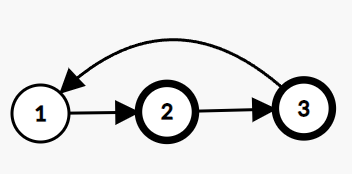
You are given a Singly Linked List of integers. Return true if it has a cycle, else return false.
A cycle occurs when a node's next points back to a previous node in the list.
Example:
In the given linked list, there is a cycle, hence we return true.
Problem approach
I used 2 pointers approach
03
Round
Medium
Face to Face
Duration60 minutes
Interview date17 Apr 2020
Coding problem1
It was a bar raiser round. The interviewer asked me about the coding challenge and the first interview. Then he dove into my resume and asked me about my summer internships and projects. He was more interested in the candidate’s practical knowledge. The questions he asked revolved around the real-life use of OOPS concepts, how I overcome the challenges I face, real-life scenarios, and how I solve them.
1. Basic HR Questions
Tell me about yourself.
Explain your projects.
How do you overcome the challenges in the project?
Some real-life scenarios where you showed leadership skills?


Here's your problem of the day 
Solving this problem will increase your chance to get selected in this company
Skill covered: Programming
How do you remove whitespace from the start of a string?
Choose another skill to practice
Similar interview experiences
SDE - 1
2 rounds | 3 problems
Interviewed by BNY Mellon
 Selected
6786 views

3 comments

0 upvotes
SDE - 1
3 rounds | 6 problems
Interviewed by BNY Mellon
 Selected
 0 views
0 comments
0 upvotes
SDE - 1
3 rounds | 6 problems
Interviewed by BNY Mellon
Selected 2222 views
0 comments
0 upvotes
SDE - 1
2 rounds | 8 problems
Interviewed by BNY Mellon
Rejected
1523 views
0 comments
0 upvotes
Companies with similar interview experiences

SDE - 1
3 rounds | 5 problems
Interviewed by CIS - Cyber Infrastructure
Selected 2419 views
0 comments
0 upvotes

SDE - 1
3 rounds | 4 problems
Interviewed by HashedIn
 Selected
 2797 views
0 comments
0 upvotes

SDE - 1
1 rounds | 9 problems
Interviewed by HCL Technologies
Rejected
2013 views
0 comments
0 upvotes