





BNY Mellon interview experience Real time questions & tips from candidates to crack your interview

SDE - Intern
BNY Mellon


2 rounds | 4 Coding
problems

Rejected
Interview preparation journey

Preparation
Duration: 3 months
Topics: Data Structures, Pointers, OOPS, System Design, Algorithms, Dynamic Programming.

Tip 1 : You must have a grip over Data Structures and algorithms. Your concepts must be crystal clear. Pick one coding platform and try to practice at least 7-10 coding questions everyday. I completed around 200+ questions on Leetcode, 200+ questions on Geek For Geeks and around 30-40 questions on InterviewBit.
Tip 2 : After attempting any coding problem, analyze its time and space complexity. See, if you can further optimize your solution. You can always check the editorials and compare your solution with it.
Tip 3 : Apart from coding questions keep studying concepts of Operating Systems, databases and object oriented programming. You can always refer to Geeks For Geeks articles for it. Also, Coding Ninja's Data Structures and algorithms course in C++ helped me a lot in improving my OOPS concepts specifically.
Application process
Where: Campus
Eligibility: Above 7 CGPA
Tip 1 : You do not need to have a long list of projects on your resume. One good project with proper knowledge of it will do good. Similarly, do not list down several number of skills. Few skills but roper knowledge of them are enough.
Tip 2 : Do not fake anything on your resume. The interviewer gets to know about it by asking questions. If you aren't able to answer, it leaves a negative impact.

Interview rounds
01
Round
Easy
Video Call
Duration45 minutes
Interview date13 Aug 2021
Coding problem2
1. Best Time to Buy and Sell Stock
Moderate
20m average time
80% success

0/80
Asked in companies



You are given an array/list 'prices' where the elements of the array represent the prices of the stock as they were yesterday and indices of the array represent minutes. Your task is to find and return the maximum profit you can make by buying and selling the stock. You can buy and sell the stock only once.
Note:
You can’t sell without buying first.
For Example:
For the given array [ 2, 100, 150, 120],
The maximum profit can be achieved by buying the stock at minute 0 when its price is Rs. 2 and selling it at minute 2 when its price is Rs. 150.
So, the output will be 148.
Problem approach
You are given an array/list 'prices' where the elements of the array represent the prices of the stock as they were yesterday and indices of the array represent minutes. Your task is to find and return the maximum profit you can make by buying and selling the stock. You can buy and sell the stock only once.
2. Minimum Number Of Taps To Water Garden
Hard
15m average time
85% success
0/120
Asked in companies



The gardener wants to water the garden by opening the minimum number of taps. The garden is one-dimensional along the x-axis of length N i.e. the garden starts from point 0 and ends at point N. There are N + 1 tap located at points [0, 1, 2, …, N] in the garden.
You are given an integer N, and an array named “ranges” of size N + 1(0-indexed). The ith tap, if opened, can water the gardener from point (i - ranges[i]) to (i + ranges[i]) including both. The task is to find the minimum number of taps that should be open to water the whole garden, return -1 if the garden can not be watered.
Example :
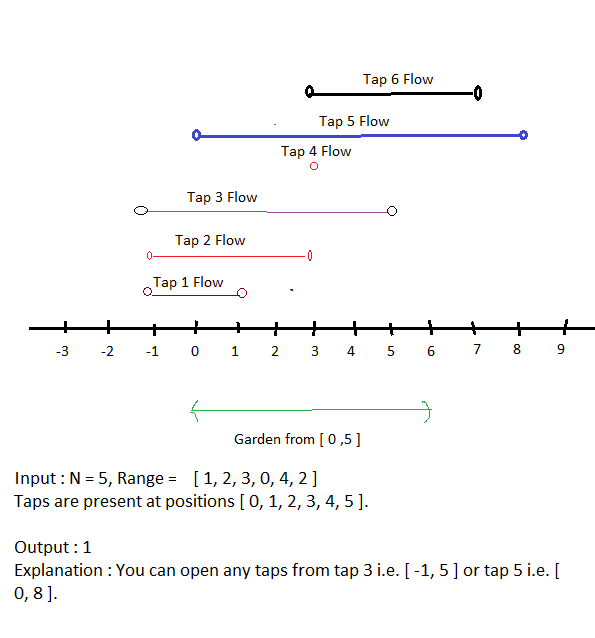
Follow Up:
Can you solve the problem in O(N) time?
Problem approach
The gardener wants to water the garden by opening the minimum number of taps. The garden is one-dimensional along the x-axis of length N i.e. the garden starts from point 0 and ends at point N. There are N + 1 tap located at points [0, 1, 2, …, N] in the garden.
You are given an integer N, and an array named “ranges” of size N + 1(0-indexed). The ith tap, if opened, can water the gardener from point (i - ranges[i]) to (i + ranges[i]) including both. The task is to find the minimum number of taps that should be open to water the whole garden, return -1 if the garden can not be watered.
02
Round
Easy
Video Call
Duration45 minutes
Interview date13 Aug 2021
Coding problem2
1. System Design Question
Let's say you are buying to shops to buy some fruits at different prices, and any time you go to checkout, they tell you what the price of what you bought is.
But variations like you are giving off on the three items of the same type if a person is getting. And so many other variations too.
2. Cycle Detection in a Singly Linked List
Moderate
15m average time
80% success
0/80
Asked in companies



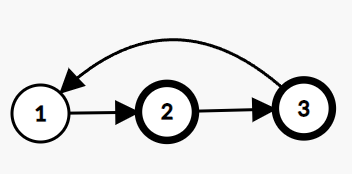
You are given a Singly Linked List of integers. Return true if it has a cycle, else return false.
A cycle occurs when a node's next points back to a previous node in the list.
Example:
In the given linked list, there is a cycle, hence we return true.
Problem approach
You have given a Singly Linked List of integers, determine if it forms a cycle or not.
A cycle occurs when a node's next points back to a previous node in the list. The linked list is no longer linear with a beginning and end—instead, it cycles through a loop of nodes.
Note: Since, it is binary problem, there is no partial marking. Marks will only be awarded if you get all the test cases correct.


Here's your problem of the day 
Solving this problem will increase your chance to get selected in this company
Skill covered: Programming
How do you remove whitespace from the start of a string?
Choose another skill to practice
Similar interview experiences
SDE - Intern
3 rounds | 5 problems
Interviewed by BNY Mellon

 Selected
2484 views

0 comments

0 upvotes
SDE - Intern
4 rounds | 6 problems
Interviewed by BNY Mellon
Selected 0 views
0 comments
0 upvotes
SDE - Intern
3 rounds | 3 problems
Interviewed by BNY Mellon
Selected 0 views
1 comments
0 upvotes
SDE - Intern
3 rounds | 6 problems
Interviewed by BNY Mellon
Selected 1492 views
0 comments
0 upvotes
Companies with similar interview experiences

SDE - Intern
2 rounds | 4 problems
Interviewed by Arcesium
 Selected
 3915 views
0 comments
0 upvotes
SDE - Intern
3 rounds | 5 problems
Interviewed by Arcesium
Selected 2888 views
0 comments
0 upvotes

SDE - Intern
4 rounds | 8 problems
Interviewed by NCR Corporation
Selected 2420 views
0 comments
0 upvotes