





BookMyShow interview experience Real time questions & tips from candidates to crack your interview
SDE - 1
BookMyShow


3 rounds | 5 Coding
problems

Rejected
Interview preparation journey

Journey
I was not exceptionally good at coding at the start then I solved more than 400+ questions on code studio. Now I can crack most of the interviews I give.
Application story
I got a Referral from my LinkedIn connection friend then they sent me a link which have questions to solve.
Why selected/rejected for the role?
I was rejected because I do not have good projects in my resume and do not have that much good knowledge of the Data structure and Algorithm.
Preparation
Duration: 6 months
Topics: Data Structures, Pointers, OOPS, System Design, Algorithms, Dynamic Programming

Tip 1 : Must do Previously asked Interview as well as Online Test Questions.
Tip 2 : Go through all the previous interview experiences.
Tip 3 : Do at-least 2 good projects and you must know every bit of them.
Application process
Where: Referral
Eligibility: No criteria
Tip 1: Highlight 2 Key Projects
Here are brief overviews of two notable projects I've worked on:
Sentiment Analysis Tool for Customer Feedback:
- Project Role: Lead Developer
- Description: Developed a sentiment analysis tool using NLP techniques to process customer feedback. Utilized Python and the NLTK library for text preprocessing and sentiment classification.
- Impact: Improved customer satisfaction by identifying negative feedback promptly, leading to a 20% reduction in customer complaints.
Sales Data Analysis for Revenue Optimization:
- Project Role: Data Analyst
- Description: Conducted in-depth data analysis on sales trends, using Pandas and Matplotlib for data manipulation and visualization. Presented actionable insights to management for strategic decision-making.
- Impact: Contributed to a 15% increase in revenue through optimized pricing strategies and targeted marketing campaigns.
Tip 2: Comprehensive Skills List
My proficiency lies in the following areas:
- Natural Language Processing (NLP): Leveraged NLP techniques for sentiment analysis, text generation, and language translation.
- Data Analysis: Proficient in using Python libraries like Pandas for data manipulation and analysis.
- Data Visualization: Skilled in creating informative visualizations using tools such as Matplotlib and Seaborn.
- Machine Learning: Experienced in implementing machine learning algorithms for classification and regression tasks.
- Software Development: Proficient in languages like Python and Java, with a focus on writing clean and efficient code.
Tip 3: Skills, Projects, and Experiences
My experience centers around projects that demonstrate my skills effectively. For example, leading the development of a sentiment analysis tool empowered me to enhance customer satisfaction through better feedback management. Additionally, my data analysis expertise came into play while optimizing sales strategies, contributing directly to revenue growth.

Interview rounds
01
Round
Medium
Video Call
Duration60 minutes
Interview date13 Jan 2023
Coding problem2
This round was scheduled in the morning hours from 10:30 to 11:15 AM. I was informed about the round 2 days earlier through an e-mail and a phone call both.
1. Minimum Cost
Easy
15m average time
85% success

0/40
Asked in companies



There are ‘N’ numbers of balls in a room that are placed in a row. You are given an array ‘location’ where location[ i ] denotes the location of the ‘i-th’ ball.
You have to move all the balls at the same location, and it is given that you can move a ball from position [ i ] to
1. position[i] + 2 with cost = 0.
2. position[i] + 1 with cost = 1.
Your task is to find the minimum cost required to move all the balls at the same location.
For Example :
If we have three balls placed at [ 1, 3, 4 ]
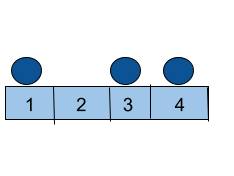
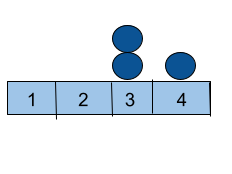
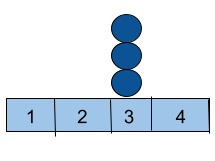
At first, move the ball from position ‘1’ to position ‘3’ with cost = 0.
Then move the ball from position ‘4’ to position ‘3’ with cost =1.
As the minimum cost = 1, so you need to print 1.
Problem approach
You are given an array of ‘N’ integers, and your task is to sort the array using the following operations.
2. Longest Increasing Subsequence
Moderate
30m average time
65% success
0/80
Asked in companies



For a given array with N elements, you need to find the length of the longest subsequence from the array such that all the elements of the subsequence are sorted in strictly increasing order.
Strictly Increasing Sequence is when each term in the sequence is larger than the preceding term.
For example:
[1, 2, 3, 4] is a strictly increasing array, while [2, 1, 4, 3] is not.
Problem approach
For a given array with N elements, you need to find the length of the longest subsequence such that all the elements of the subsequence are sorted in strictly increasing order. A strictly increasing sequence is one where each term in the sequence is larger than the preceding term.
02
Round
Medium
Video Call
Duration60 minutes
Interview date14 Jan 2023
Coding problem2
This was the DSA round. The interviewer asked 2 questions which are of medium level and asked up to optimal solution
1. Word Ladder
Hard
10m average time
90% success
0/120
Asked in companies


You are given two strings BEGIN and END and an array of strings DICT. Your task is to find the length of the shortest transformation sequence from BEGIN to END such that in every transformation you can change exactly one alphabet and the word formed after each transformation must exist in DICT.
Note:
1. If there is no possible path to change BEGIN to END then just return -1.
2. All the words have the same length and contain only lowercase english alphabets.
3. The beginning word i.e. BEGIN will always be different from the end word i.e. END (BEGIN != END).
Problem approach
You are given two strings, BEGIN and END, and an array of strings, DICT. Your task is to find the length of the shortest transformation sequence from BEGIN to END such that in every transformation you can change exactly one letter, and the word formed after each transformation must exist in DICT.
2. Permutations of a String
Moderate
15m average time
85% success
0/80
Asked in companies

You are given a string 'STR' consisting of lowercase English letters. Your task is to return all permutations of the given string in lexicographically increasing order.
String A is lexicographically less than string B, if either A is a prefix of B (and A ≠ B), or there exists such i (1 <= i <= min(|A|, |B|)), that A[i] < B[i], and for any j (1 <= j < i) A[i] = B[i]. Here |A| denotes the length of the string A.
For example :
If the string is “bca”, then its permutations in lexicographically increasing order are { “abc”, “acb”, “bac”, “bca”, “cab”, “cba” }.
Note:
Given string contains unique characters.
Problem approach
You are given a string 'STR' consisting of lowercase English letters. Your task is to return all permutations of the given string in lexicographical increasing order.
03
Round
Easy
HR Round
Duration30 minutes
Interview date17 Jan 2023
Coding problem1
1. Basic HR Questions
Introduce Yourself.
Why do you want to join us?
Where do you see yourself in 5 years?


Here's your problem of the day 
Solving this problem will increase your chance to get selected in this company
Skill covered: Programming
How do you remove whitespace from the start of a string?
Choose another skill to practice
Similar interview experiences

SDE - 1
3 rounds | 7 problems
Interviewed by OYO
 Selected
6182 views

0 comments

0 upvotes
SDE - Intern
2 rounds | 3 problems
Interviewed by Amazon
Rejected
1566 views
0 comments
0 upvotes

SDE - 1
2 rounds | 5 problems
Interviewed by Meesho
Rejected
7246 views
0 comments
0 upvotes
SDE - 1
3 rounds | 9 problems
Interviewed by Salesforce
 Selected
 4552 views
0 comments
0 upvotes
Companies with similar interview experiences
SDE - 1
5 rounds | 12 problems
Interviewed by Amazon
 Selected
 117552 views
24 comments
0 upvotes
SDE - 1
4 rounds | 5 problems
Interviewed by Microsoft
Selected 60143 views
5 comments
0 upvotes
SDE - 1
3 rounds | 7 problems
Interviewed by Amazon
 Selected
 36138 views
7 comments
0 upvotes