





BYJUS interview experience Real time questions & tips from candidates to crack your interview

Software Engineer
BYJUS


4 rounds | 6 Coding
problems
 Selected
 Interview preparation journey

Preparation
Duration: 12 Months
Topics: Data Structure, DBMS, Algorithms, OOPS, Pointers, Array, LinkedList, Computer Networks, Normalization, C++/Java

Tip 1 : Do a Project with respect to company which helps you to easily explain and more weightage.
Tip 2 : Practice atleast 250 question of DSA with any programming language
Tip 3 : Prepare computer fundamentals strongly
Tip 4: Practice previously asked question.
Tip 5 : Be confident.
Tip 6 : Don't be discouraged if you do not get the job.
Application process
Where: Campus
Eligibility: 6 CGPA
Tip 1 : Make it short and bold the important points
Tip 2 : You have strong knowledge on what you mentioned in your resume
Tip 3 : Know all the basic concept of your project which you will going to put in your resume
Tip 4 : Double check and include your contact information.
Tip 5 : Don't include reasons for leaving previous jobs.
Tip 6 : Don't include references.

Interview rounds
01
Round
Medium
Online Coding Interview
Duration55 minutes
Interview date14 Dec 2021
Coding problem1
Timing:14th December, 2021, 10:00 AM to 14th December 2021, 2:00 PM
Environment is very good all the questions was clearly visible and camera is also on
No an such significant activity
1. Delete Kth node From End
Moderate
15m average time
95% success

0/80
Asked in companies



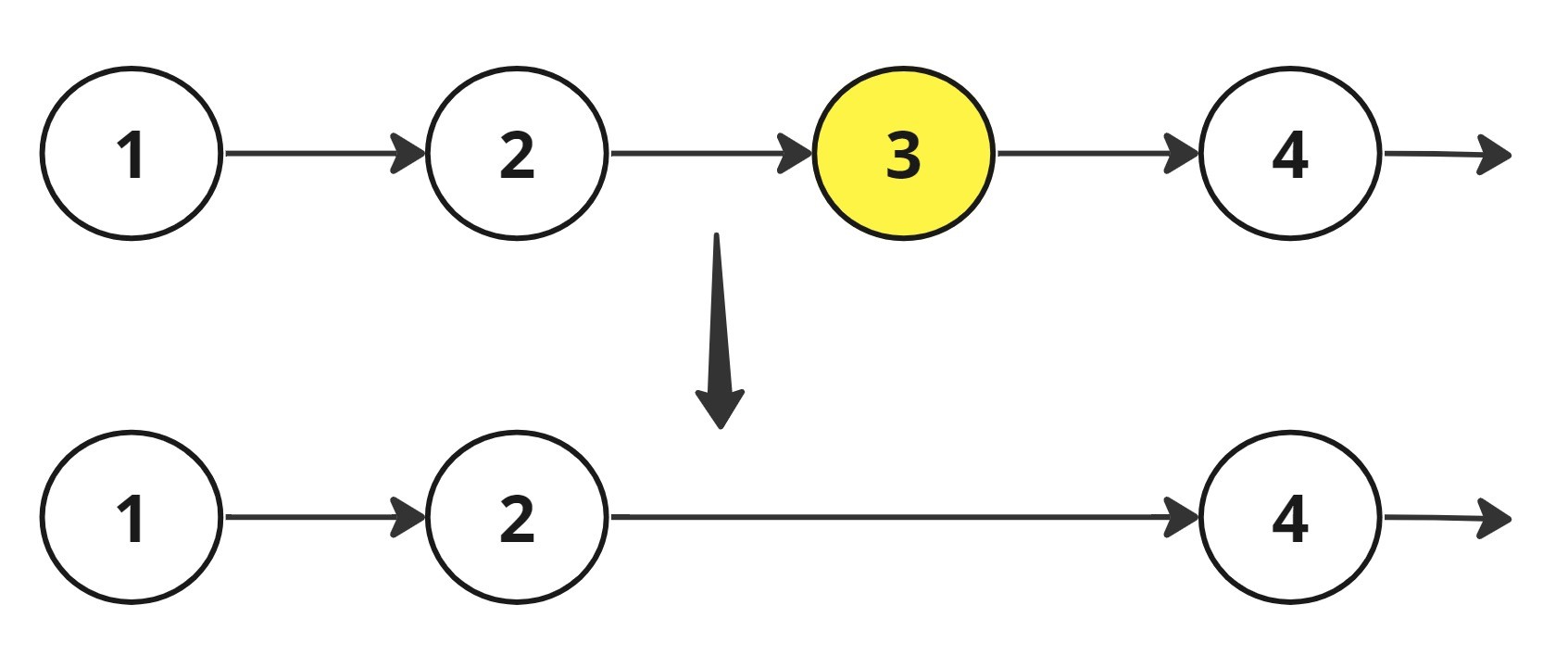
You have been given a singly Linked List of 'N' nodes with integer data and an integer 'K'.
Your task is to remove the 'K'th node from the end of the given Linked List and return the head of the modified linked list.
Example:
Input : 1 -> 2 -> 3 -> 4 -> 'NULL'  and  'K' = 2
Output: 1 -> 2 -> 4 -> 'NULL'
Explanation:
After removing the second node from the end, the linked list become 1 -> 2 -> 4 -> 'NULL'.
Problem approach
Step 1 : Create an another arraylist(ans) and also a boolean visited array.
Step 2 : Traverse from 0 to n.check every ith element that it is kth element of array or not then,Mark every (i+1)th as true in visited array and insert that ith element from given araylist into the ans.
Step 3 : Again Traverse from 0 to n,add every non visited ith element (vis[i]==false) from the given araylist into ans
Step 4 : convert the ans araylist into Linkedlist and return the head of Linkedlist.
02
Round
Medium
Video Call
Duration80 minutes
Interview date9 Dec 2021
Coding problem2
Interview Started From 4pm and ended on approx. 5.20pm.
Interviewer was Friendly and working in byjus from 1 year.
1. Merge overlapping intervals
Easy
10m average time
90% success
0/40
Asked in companies



Given 'N' number of intervals, where each interval contains two integers denoting the boundaries of the interval. The task is to merge all the overlapping intervals and return the list of merged intervals sorted in ascending order.
Two intervals will be considered to be overlapping if the starting integer of one interval is less than or equal to the finishing integer of another interval, and greater than or equal to the starting integer of that interval.
Example:
for the given 5 intervals - [1,4], [3,5], [6,8], [10,12], [8,9].
Since intervals [1,4] and [3,5] overlap with each other, we will merge them into a single interval as [1,5].

Similarly [6,8] and [8,9] overlaps, we merge them into [6,9].

Interval [10,12] does not overlap with any interval.

Final List after merging overlapping intervals: [1,5], [6,9], [10,12]
Problem approach
STEPS:
1)I sort the vector intervals.
2)I initialize low and high integers to store the first value and then assign them to the new vector V.
3) then I maintain another pointer j which is used to input the values in our vector V.
4) Traverse the whole intervals vector and I stumble upon 2 cases:
first: if the value of the element in intervals[i][0] is higher than the value of high I add them to vector V and update high.
second: if value of intervals[i][1] is higher than high but value of intervals[i][0] is less than or equal to high, then I update the element at V[j-1][1].
5)At the end we remove/erase the excess elements from vector V.
2. Partition List
Easy
15m average time
85% success
0/40
Asked in companies



You are given a Singly Linked List of integers with a head pointer. Every node of the Linked List has a value written on it.
A sample Linked List
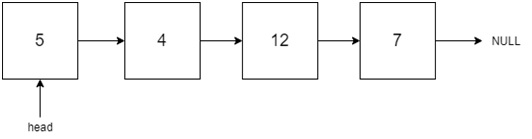
Now you have been given an integer value ‘K’. Your task is to rearrange this linked list such that the following conditions hold true :
1. All nodes that have a value less than ‘K’ must come before the nodes that have a value greater than equal to ‘K’.
2. All nodes must maintain the original relative order as they have present in the original linked list after rearrangement.
Problem approach
Step 1 : The easiest thing to do here is to create separate linked lists for the front and back portions of list i want to return.
Step 2 : In order to accomplish that ,I first created some dummy heads (fdum, bdum), then created pointers for the current nodes each of the front, back, and main lists (front, back, curr).
Step 3 : Then I simply iterate through the main list and stitch together each node to either front or back, depending on the node's value.
Step 4 : Once I reached the end, I just need to stitch together the two sub-lists, making sure to cap off the end of back, and then return new list, minus the dummy head.
03
Round
Medium
Video Call
Duration50 minutes
Interview date10 Dec 2021
Coding problem2
Interview Started From 12pm and ended on approx. 12.50pm.
Interviewer was Friendly.
1. OS Questions
Their start from basic and went to medium level in OS. They start from to define what is OS and why we use OS, the difference between Process and thread, What are the different kinds of operations that are possible on semaphore,
What is different between main memory and secondary memory, What do you mean by FCFS, What is the difference between paging and segmentation and some more questions also.
Problem approach
Tip 1 : Go through each and every definition in OS
Tip 2 : Answer the question to the point don't talk about irrelevant points
Tip 3 : Prefer Interviewbit, GFG, and any other question and answer pages on internet
2. DBMS Questions
Their start from basic and went to medium level in DBMS. What is DBMS, What are the advantages of DBMS, What is RDBMS, Define a Relation Schema and a Relation, What are the three levels of data abstraction, What is Relational Algebra, What is the E-R model, What are the integrity rules in DBMS and some more questions also.
Problem approach
Tip 1 : Go through each and every definition in DBMS
Tip 2 : Answer the question to the point don't talk about irrelevant points
Tip 3 : Prefer Interviewbit, GFG, and any other question and answer pages on internet
04
Round
Easy
HR Round
Duration30 minutes
Interview date10 Dec 2021
Coding problem1
This round started from 4pm and ended on 4.30pm
HR was very friendly and he told me about the life in Byjus and more talk on our lives
1. Basic HR Questions
-> Tell me about yourself.
-> What are your strengths and weaknesses
-> What are your career options right now
-> Explain how would be an asset to this organization
-> Would you lie for the company?
-> On a scale of one to ten, rate me as an interviewer.
-> Do you have any questions for me?
and many more question in between.
Problem approach
Tip 1 : Research the company you’re interviewing with. Take in as much information as you can about the business, read their entire website, look at all their social media platforms, and look up the latest news about them. You can’t be too thorough here.
Tip 2 : Research the person who is interviewing you. Look at their LinkedIn and understand their path to the company, as well as their past experience. Be prepared to ask them questions about their role and their time at the company.
Tip 3 : Carefully read the job description and understand every point, as well as how your own skills fulfil all the requirements. If there is a gap, don’t worry, just be prepared to explain and use some of your soft skills or other applicable experience to fill it.
Tip 4 : Review your CV and be prepare to answer questions about it, as well. From why you want to leave your current role or what you did and didn’t enjoy about past roles, it’s good to have a handle on your career progression.
Tip 5 : Prepare answers to any questions you think you might be asked. More on that in the next section


Here's your problem of the day 
Solving this problem will increase your chance to get selected in this company
Skill covered: Programming
How do you remove whitespace from the start of a string?
Choose another skill to practice
Similar interview experiences
Senior Software Engineer
3 rounds | 6 problems
Interviewed by BYJUS
 Selected
1584 views

0 comments

0 upvotes
Software Engineer
3 rounds | 5 problems
Interviewed by BYJUS
Selected 1189 views
1 comments
0 upvotes
Software Engineer
3 rounds | 5 problems
Interviewed by BYJUS
Selected 0 views
0 comments
0 upvotes
SDE - Intern
3 rounds | 8 problems
Interviewed by BYJUS
Selected 785 views
0 comments
0 upvotes
Companies with similar interview experiences

Software Engineer
3 rounds | 7 problems
Interviewed by Optum
 Selected
 8607 views
1 comments
0 upvotes

Software Engineer
5 rounds | 5 problems
Interviewed by Microsoft
 Selected
 11120 views
1 comments
0 upvotes
Software Engineer
2 rounds | 4 problems
Interviewed by Amazon
Selected 5208 views
1 comments
0 upvotes