





C2FO interview experience Real time questions & tips from candidates to crack your interview
Software Engineer
C2FO


5 rounds | 10 Coding
problems

 Selected
 Interview preparation journey

Journey
I started my DSA journey in my second year. Firstly, I began practising on coding platforms. Then, in my third year, I started with the MERN stack. I also completed the Striver sheet before my placement season. The Striver sheet helped me clear my interview.
Application story
This was an on-campus placement, with more than 600 students applying for the job. The process consisted of 1 OA, 3 technical interviews, and 1 HR round in total.
Why selected/rejected for the role?
I got selected because my DSA and problem-solving skills are good. I have solved more than 1000 problems. I am also a Guardian on the coding platform (Rating 2200+).
Preparation
Duration: 6 months
Topics: Data structures, OOPS, CN, Operating System, DBMS.

Tip 1: Complete the Striver sheet before your placement starts.
Tip 2: Watch all previous year interview experiences.
Application process
Where: Campus
Eligibility: Above 7 CGPA, No backlog
Tip 1: Include some good projects on your resume.
Tip 2: Avoid putting false information on your resume because the interviewer can ask you about anything you mention.

Interview rounds
01
Round
Easy
Online Coding Interview
Duration90 minutes
Interview date1 Nov 2022
Coding problem3
There was 3 coding question and you need to solve at least 2 to clear this round.
1. Sort an Array According to the Relative Order of Another Array
Moderate
30m average time
45% success

0/80
Asked in companies


You are given two arrays, ‘P’ and ‘Q’ of length ‘N’ and ‘M’, sort ‘P’ so that the relative order of the elements is the same as it is in ‘Q’. Append the elements that are missing from ‘Q’ at last, sorted in non-decreasing order.
Note: If elements are repeated in the second array, consider their first occurrence only.
Example:
Input: ‘N’ = 5, ‘M’ = 3,  ‘P’ = {1, 2, 4, 5, 3} ‘Q’ = {2, 1, 3}.

Output: {2, 1, 3, 4, 5}.

Since the array ‘P’ should be sorted such that the relative order of ‘Q’  is maintained so, 2 comes before 1 in ‘P’, then 1 comes before 3 and after 2 and then 3 comes before 1 and 2. Finally, all the remaining elements are appended at last in sorted order.
2. Bursting Balloons
Moderate
40m average time
60% success
0/80
Asked in companies



You are given an array 'ARR' of N integers. Each integer represents the height of a balloon. So, there are N balloons lined up.
Your aim is to destroy all these balloons. Now, a balloon can only be destroyed if the player shoots its head. So, to do the needful, he/ she shoots an arrow from the left to the right side of the platform, from an arbitrary height he/she chooses. The arrow moves from left to right, at a chosen height ARR[i] until it finds a balloon. The moment when an arrow touches a balloon, the balloon gets destroyed and disappears and the arrow continues its way from left to right at a height decreased by 1. Therefore, if the arrow was moving at height ARR[i], after destroying the balloon it travels at height ARR[i]-1. The player wins this game if he destroys all the balloons in minimum arrows.
You have to return the minimum arrows required to complete the task.
3. Longest Common Subsequence
Moderate
40m average time
60% success
0/80
Asked in companies
You are given an array 'ARR' of N integers. Each integer represents the height of a balloon. So, there are N balloons lined up.
Your aim is to destroy all these balloons. Now, a balloon can only be destroyed if the player shoots its head. So, to do the needful, he/ she shoots an arrow from the left to the right side of the platform, from an arbitrary height he/she chooses. The arrow moves from left to right, at a chosen height ARR[i] until it finds a balloon. The moment when an arrow touches a balloon, the balloon gets destroyed and disappears and the arrow continues its way from left to right at a height decreased by 1. Therefore, if the arrow was moving at height ARR[i], after destroying the balloon it travels at height ARR[i]-1. The player wins this game if he destroys all the balloons in minimum arrows.
You have to return the minimum arrows required to complete the task.
02
Round
Easy
Face to Face
Duration60 minutes
Interview date5 Jul 2023
Coding problem2
The interviewer asked me two coding questions. The first was a very standard problem, and I solved it in around 10-15 minutes. The second question was new to me. Initially, I started with a brute force approach, but the interviewer asked me to optimize it. Eventually, I managed to solve it using DP
1. Longest Increasing Subsequence
Moderate
30m average time
65% success
0/80
Asked in companies



For a given array with N elements, you need to find the length of the longest subsequence from the array such that all the elements of the subsequence are sorted in strictly increasing order.
Strictly Increasing Sequence is when each term in the sequence is larger than the preceding term.
For example:
[1, 2, 3, 4] is a strictly increasing array, while [2, 1, 4, 3] is not.
Problem approach
Use recursion with memoization.
2. Unique Paths II
Moderate
25m average time
70% success
0/80
Asked in companies


Given a ‘N’ * ’M’ maze with obstacles, count and return the number of unique paths to reach the right-bottom cell from the top-left cell. A cell in the given maze has a value '-1' if it is a blockage or dead-end, else 0. From a given cell, we are allowed to move to cells (i+1, j) and (i, j+1) only. Since the answer can be large, print it modulo 10^9 + 7.
For Example :
Consider the maze below :
0 0 0
0 -1 0
0 0 0

There are two ways to reach the bottom left corner -

(1, 1) -> (1, 2) -> (1, 3) -> (2, 3) -> (3, 3)
(1, 1) -> (2, 1) -> (3, 1) -> (3, 2) -> (3, 3)

Hence the answer for the above test case is 2.
Problem approach
Create a dp array and also create a parent array to trace the path.
03
Round
Easy
Face to Face
Duration45 minutes
Interview date7 Jul 2023
Coding problem2
In this round, again, two coding questions were asked.
1. Maximum Product Subarray
Moderate
25m average time
75% success
0/80
Asked in companies

You are given an array “arr'' of integers. Your task is to find the contiguous subarray within the array which has the largest product of its elements. You have to report this maximum product.
An array c is a subarray of array d if c can be obtained from d by deletion of several elements from the beginning and several elements from the end.

For e.g.- The non-empty subarrays of an array [1,2,3] will be- [1],[2],[3],[1,2],[2,3],[1,2,3].
For Example:
If arr = {-3,4,5}.
All the possible non-empty contiguous subarrays of “arr” are {-3}, {4}, {5}, {-3,4}, {4,5} and {-3,4,5}.
The product of these subarrays are -3, 4, 5, -12, 20 and -60 respectively.
The maximum product is 20. Hence, the answer is 20.
Follow Up:
Can you solve this in linear time and constant space complexity?
2. Longest Path in Tree
Moderate
25m average time
70% success
0/80
Asked in companies

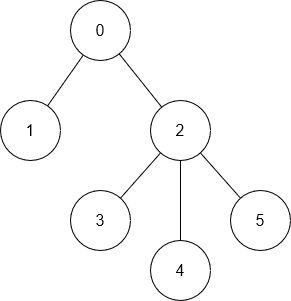
You are given an undirected tree. Your task is to find the longest path in the tree.
The longest path in a tree is defined as the maximum number of edges between any two nodes. You are given a 2-dimensional array ‘Edges’ in which ‘Edges[i][0]’ and ‘Edges[i][1]’ contains an edge.
For Example:
In the example below, the longest path is between nodes 1 and 3. The length of the path is 3 since the number of edges between node 1 and node 3 is 3. Hence, the answer is 3.
Problem approach
Use DFS to count all valid paths.
04
Round
Easy
Video Call
Duration25 minutes
Interview date12 Jul 2023
Coding problem2
No coding questions were asked. The interview asked me about my project and some counter questions.
Also asked questions about Normalization with example, SQL queries etc.
05
Round
Easy
HR Round
Duration15 minutes
Interview date18 Jul 2023
Coding problem1
General HR questions were asked like why you want to join the company, your hobbies, etc.
1. Basic HR Questions
1. Why do you want to join the company?
2. What are your hobbies?


Here's your problem of the day 
Solving this problem will increase your chance to get selected in this company
Skill covered: Programming
How do you remove whitespace from the start of a string?
Choose another skill to practice
Similar interview experiences

SDE - 1
3 rounds | 7 problems
Interviewed by OYO
Selected 
6183 views

0 comments

0 upvotes
SDE - Intern
2 rounds | 3 problems
Interviewed by Amazon
Rejected
1566 views
0 comments
0 upvotes

SDE - 1
2 rounds | 5 problems
Interviewed by Meesho
Rejected
7246 views
0 comments
0 upvotes

SDE - 1
3 rounds | 9 problems
Interviewed by Salesforce
 Selected
 4552 views
0 comments
0 upvotes
Companies with similar interview experiences

Software Engineer
3 rounds | 7 problems
Interviewed by Optum
 Selected
 8607 views
1 comments
0 upvotes
Software Engineer
5 rounds | 5 problems
Interviewed by Microsoft
 Selected
 11120 views
1 comments
0 upvotes
Software Engineer
2 rounds | 4 problems
Interviewed by Amazon
Selected 5208 views
1 comments
0 upvotes