





Capillary Technologies interview experience Real time questions & tips from candidates to crack your interview
SDE - 1
Capillary Technologies


3 rounds | 7 Coding
problems

 Selected
 Interview preparation journey

Journey
My journey to becoming an SDE-1 at Capillary commenced with a passion for coding and problem-solving. Through internships, hackathons, and open-source contributions, I gained practical experience and honed my skills. Captivated by Capillary's innovative work culture, I tailored my application to match their values and requirements. The rigorous interview process tested my technical knowledge and collaborative abilities. With determination and well-structured solutions, I navigated the challenges. Receiving the offer filled me with joy and humility, as I look forward to contributing my skills to impactful projects and learning from experienced mentors at Capillary, a company I deeply admire.
Application story
I applied for the SDE-1 post at Capillary during an on-campus recruitment drive. With thorough preparation in data structures, algorithms, and coding skills, I impressed the interviewers during the interviews. Eventually, I was offered the position, and I am now thriving in a dynamic and fulfilling role at Capillary.
Why selected/rejected for the role?
I believe I was selected because I showcased strong programming skills, problem-solving abilities, and a good understanding of data structures and algorithms. Additionally, my enthusiasm for learning and researching Capillary's projects showed my genuine interest in the company, which contributed to my selection.
Preparation
Duration: 6 months
Topics: Programming Languages: Python, Java, C++, Problem-Solving Skills, Software Development Lifecycle, Object-Oriented Programming (OOP), Data Structures and Algorithms, Web Technologies: HTML, CSS, JavaScript, Version Control Systems: Git, Database Management: SQL

Tip 1: Master Data Structures and Algorithms.
Tip 2: Build Coding Skills.
Tip 3: Research Capillary and Their Projects.
Application process
Where: Campus
Eligibility: 7 CGPA
Tip 1: Highlight Relevant Skills and Experience.
Tip 2: Showcase Achievements and Projects.
Tip 3: Keep the Resume Concise and Well-Formatted.

Interview rounds
01
Round
Medium
Online Coding Interview
Duration80 minutes
Interview date15 Jun 2021
Coding problem3
1. Maximum of minimum for every Window Size
Hard
45m average time
50% success

0/120
Asked in companies



You are given an array of ‘N’ integers, you need to find the maximum of minimum for every window size. The size of the window should vary from 1 to ‘N’ only.
For example:
ARR = [1,2,3,4]
Minimums of window size 1 = min(1), min(2), min(3), min(4) = 1,2,3,4
Maximum among (1,2,3,4)  is 4

Minimums of window size 2 = min(1,2), min(2,3),   min(3,4) = 1,2,3
Maximum among (1,2,3) is 3

Minimums of window size 3 = min(1,2,3), min(2,3,4) = 1,2
Maximum among (1,2) is 2

Minimums of window size 4 = min(1,2,3,4) = 1
Maximum among them is 1
The output array should be [4,3,2,1].
2. Colorful Knapsack
Hard
45m average time
0/120
Asked in companies

You are given 'N' stones labeled from 1 to 'N'. The 'i-th' stone has the weight W[i]. There are 'M' colors labeled by integers from 1 to 'M'. The 'i-th' stone has the color C[i] which is an integer between 1 to 'M', both inclusive.
You have been required to fill a Knapsack with these stones. The Knapsack can hold a total weight of 'X'.
You are required to select exactly 'M' stones; one of each color. The sum of the weights of the stones must not exceed 'X'. Since you paid a premium for a Knapsack with capacity 'X', you are required to fill the Knapsack as much as possible.
Write a program to calculate the best way to fill the Knapsack - that is, the unused capacity should be minimized.
3. Decode String
Easy
15m average time
85% success
0/40
Asked in companies



You have been given an encoded string. Your task is to decode it back to the original string.
- An encoded string will be of the form <count>[encoded_string], where the 'encoded_string' inside the square brackets is being repeated exactly 'count' times. Note that 'count' is guaranteed to be a positive integer and can be greater than 9.
- There are no extra white spaces and square brackets are well-formed.
For example -
Input: 2[a]
“a” is encoded 2 times, hence the decoded string will be "aa".

Input: 3[a2[b]]
“b” is encoded 2 times, which decodes as 3[abb]. Now, "abb" is encoded 3 times, hence decoded string will be "abbabbabb".
02
Round
Medium
Face to Face
Duration60 minutes
Interview date24 Jun 2021
Coding problem3
1. Check Bipartite Graph
Moderate
50m average time
50% success
0/80
Asked in companies


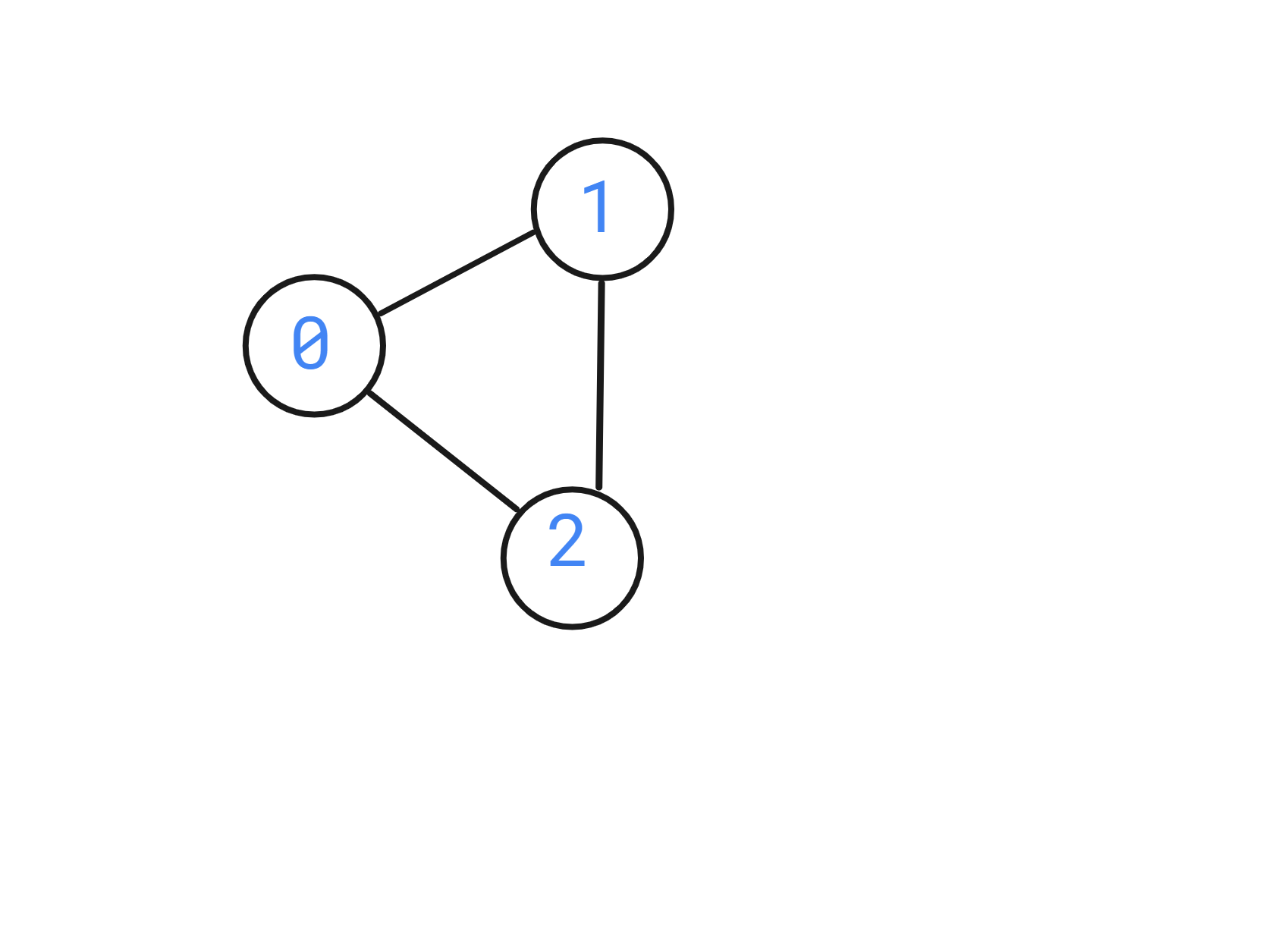
Given a graph, check whether the graph is bipartite or not. Your function should return true if the given graph's vertices can be divided into two independent sets, ‘U’ and ‘V’ such that every edge (‘u’, ‘v’) either connects a vertex from ‘U’ to ‘V’ or a vertex from ‘V’ to ‘U’.
You are given a 2D array ‘edges’ which contains 0 and 1, where ‘edges[i][j]’ = 1 denotes a bi-directional edge from ‘i’ to ‘j’.
Note:
If edges[i][j] = 1, that implies there is a bi-directional edge between ‘i’ and ‘j’, that means there exists both edges from ‘i’ to ‘j’ and to ‘j’ to ‘i’.
For example
Given:
‘N’ = 3
‘edges’ = [[0, 1, 1], [0, 0, 1], [0,0,0]].
2. Tiling Problem
Hard
45m average time
0/120
Asked in companies



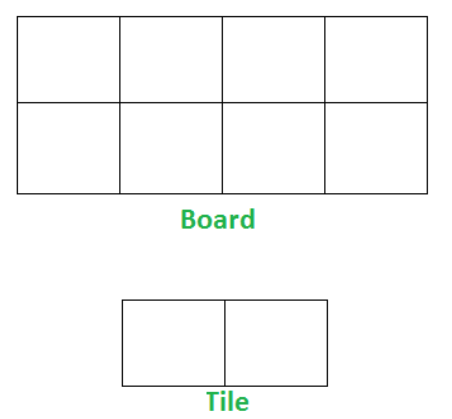
You have been given a board where there are '2' rows and 'N' columns. You have an infinite supply of 2x1 tiles, and you can place a tile in the following ways:
1. Horizontally as 1x2 tile
2. Vertically as 2x1 tile
Count the number of ways to tile the given board using the available tiles.
Note :
The number of ways might be large so output your answer modulo 10^9 + 7.
Here an example of tile and board for 'N' = 4 :
3. DBMS
What is the difference between a database and a DBMS? (Learn)
Explain the ACID properties in the context of database transactions. (Learn)
Describe the various types of database normalization and their importance. (Learn)
How does indexing work in a database, and why is it essential for performance? (Learn)
What are the different types of joins in SQL, and when would you use each one? (Learn)
03
Round
Easy
HR Round
Duration20 minutes
Interview date28 Jun 2021
Coding problem1
1. Basic HR Questions
Can you tell me about yourself?
What are your strengths and weaknesses?
How do you handle stress and pressure in the workplace?
Where do you see yourself in 5 years?
How do you handle conflicts or disagreements with colleagues?
Why do you want to work for our company?
Describe a challenging situation you faced and how you overcame it.


Here's your problem of the day 
Solving this problem will increase your chance to get selected in this company
Skill covered: Programming
How do you remove whitespace from the start of a string?
Choose another skill to practice
Similar interview experiences

SDE - 1
3 rounds | 7 problems
Interviewed by OYO
Selected 
6182 views

0 comments

0 upvotes
SDE - 1
6 rounds | 7 problems
Interviewed by Capillary Technologies
Selected 2574 views
0 comments
0 upvotes
SDE - 1
2 rounds | 4 problems
Interviewed by Capillary Technologies
Selected 1677 views
0 comments
0 upvotes

SDE - 1
3 rounds | 9 problems
Interviewed by Salesforce
 Selected
 4552 views
0 comments
0 upvotes
Companies with similar interview experiences
SDE - 1
5 rounds | 12 problems
Interviewed by Amazon
 Selected
 117552 views
24 comments
0 upvotes
SDE - 1
4 rounds | 5 problems
Interviewed by Microsoft
Selected 60143 views
5 comments
0 upvotes
SDE - 1
3 rounds | 7 problems
Interviewed by Amazon
 Selected
 36138 views
7 comments
0 upvotes