





CargoFlash Info Tech interview experience Real time questions & tips from candidates to crack your interview
SDE - 1
CargoFlash Info Tech


3 rounds | 5 Coding
problems

Rejected
Interview preparation journey

Journey
I started preparing in my first year of college. Then, I started practicing the DSA regularly from the coding Ninjas platform CodeStudio.
Application story
This was an on-campus opportunity. The company visited my college for the placement and then took an OA exam, after which they scheduled the interview.
Why selected/rejected for the role?
I was rejected because my answers were unclear to the HR in the HR round.
Preparation
Duration: 4 months
Topics: Data Structures, Pointers, OOPS, System Design, Algorithms, Dynamic Programming, System Design

Tip 1: Practice at Least 250 Questions:
Practice is essential for mastering any skill or subject. When it comes to subjects involving problem-solving, such as mathematics, programming, or even certain sciences, practice helps solidify concepts and improve problem-solving abilities. By solving a minimum of 250 questions, learners can expose themselves to various scenarios, thereby enhancing their understanding of different problem types and their corresponding solutions.
Tip 2: Do at Least 2 Projects:
Projects are a great way to apply theoretical knowledge in a practical context. They help individuals develop a deeper understanding of concepts, learn to work through challenges, and gain experience in real-world scenarios. Undertaking at least two projects ensures that learners engage with different aspects of the subject matter. This can include working individually or in a team, managing project timelines, and dealing with unexpected issues that may arise during project development.
Application process
Where: Campus
Eligibility: Above 8 CGPA
Tip 1: Have Some Projects on Your Resume: Including projects on your resume showcases your practical skills and demonstrates your ability to apply theoretical knowledge to real-world scenarios. Projects can highlight your problem-solving skills, creativity, and your capacity to complete tasks from start to finish. They can also provide talking points during interviews, allowing you to discuss your experiences, challenges faced, and solutions implemented. Whether personal projects, open-source contributions, or coursework-related assignments, projects can make your resume more appealing to potential employers.
Tip 2: Do Not Put False Information on Your Resume: Honesty is vital when crafting a resume. Falsifying information, such as skills, experiences, or qualifications, can have serious consequences, damaging your reputation and credibility. Employers may discover discrepancies during background checks or interviews, which can lead to immediate disqualification from job opportunities. Instead of exaggerating or fabricating credentials, focus on presenting your actual achievements, skills, and experiences. If there are gaps in your resume, address them honestly and highlight your willingness to learn and grow.

Interview rounds
01
Round
Easy
Video Call
Duration60 minutes
Interview date21 Oct 2022
Coding problem2
There was 2 problem solving question based on tree and LinkList
1. Lowest Common Ancestor of a Binary Tree III
Moderate
25m average time
75% success

0/80
Asked in companies



The node structure of a binary tree is modified such that each node has the reference to its parent node.
You are given two nodes: ‘N1’ and ‘N2’, of the above binary tree. Your task is to return the lowest common ancestor (LCA) of the given nodes.
Note:
Let ‘TREE’ be a binary tree. The lowest common ancestor of two nodes, ‘N1’ and ‘N2’, is defined as the lowest node in ‘TREE’ with ‘N1’ and ‘N2’ as descendants (where we allow a node to be a descendant of itself).
Problem approach
The idea is to traverse the tree starting from the root. If any of the given keys (n1 and n2) matches with the root, then the root is LCA (assuming that both keys are present). If the root doesn’t match with any of the keys, we recur for the left and right subtree.
The node which has one key present in its left subtree and the other key present in the right subtree is the LCA.
If both keys lie in the left subtree, then the left subtree has LCA also,
Otherwise, LCA lies in the right subtree.
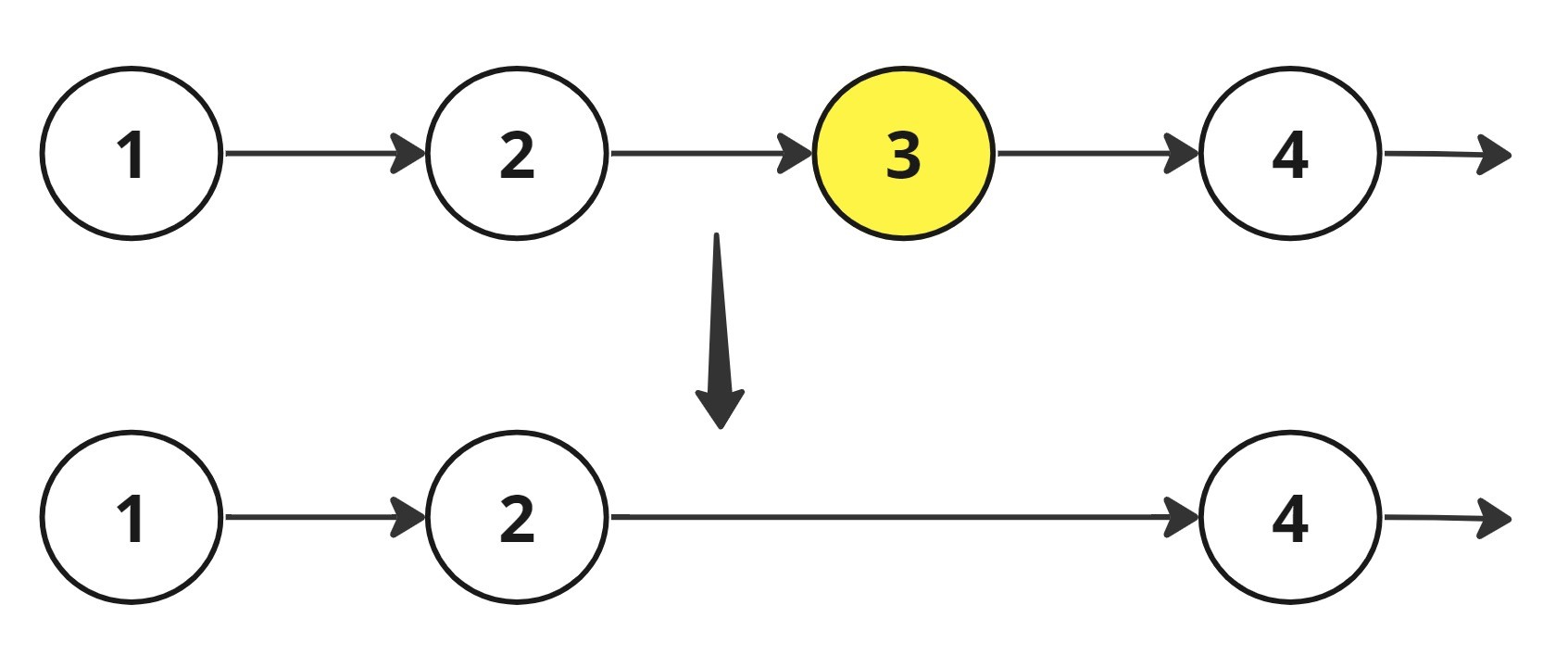
2. Delete Kth node From End
Moderate
15m average time
95% success
0/80
Asked in companies


You have been given a singly Linked List of 'N' nodes with integer data and an integer 'K'.
Your task is to remove the 'K'th node from the end of the given Linked List and return the head of the modified linked list.
Example:
Input : 1 -> 2 -> 3 -> 4 -> 'NULL'  and  'K' = 2
Output: 1 -> 2 -> 4 -> 'NULL'
Explanation:
After removing the second node from the end, the linked list become 1 -> 2 -> 4 -> 'NULL'.
02
Round
Easy
Video Call
Duration60 minutes
Interview date22 Oct 2022
Coding problem2
The interviewer started with basic introduction and then moved to discussing 2 coding problems.
1. Right View
Moderate
35m average time
65% success
0/80
Asked in companies



You have been given a Binary Tree of integers.
Your task is to print the Right view of it.
The right view of a Binary Tree is a set of nodes visible when the tree is viewed from the Right side and the nodes are printed from top to bottom order.
Problem approach
The problem can be solved using simple recursive traversal. We can keep track of level of a node by passing a parameter to all recursive calls. The idea is to keep track of maximum level also. And traverse the tree in a manner that right subtree is visited before left subtree. Whenever, we see a node whose level is more than maximum level so far, we print the node because this is the last node in its level
2. Find K-th smallest Element in BST
Easy
15m average time
85% success
0/40
Asked in companies


Given a binary search tree and an integer ‘K’. Your task is to find the ‘K-th’ smallest element in the given BST( binary search tree).
BST ( binary search tree) -
If all the smallest nodes on the left side and all the greater nodes on the right side of the node current node.
Example -

Order of elements in increasing order in the given BST is - { 2, 3, 4, 5, 6, 7, 8, 10 }
Suppose given ‘K = 3’ then 3rd smallest element is ‘4’.
Suppose given ‘K = 8’ then 8th smallest element is ‘10’.
Note:
1. You are not required to print the output explicitly, it has already been taken care of. Just implement the function and return the ‘K-th’ smallest element of BST.
2. You don’t need to return ‘K-th’ smallest node, return just value of that node.
3. If ‘K-th’ smallest element is not present in BST then return -1.
Problem approach
The Inorder Traversal of a BST traverses the nodes in increasing order. So, the idea is to traverse the tree in Inorder. While traversing, keep track of the count of the nodes visited. If the count becomes k, print the node.
03
Round
Easy
HR Round
Duration60 minutes
Interview date23 Oct 2022
Coding problem1
1. Basic HR Questions
How do you feel about working nights and weekends?
Can you work under pressure?
Are you willing to relocate or travel?
What are your goals?


Here's your problem of the day 
Solving this problem will increase your chance to get selected in this company
Skill covered: Programming
How do you remove whitespace from the start of a string?
Choose another skill to practice
Similar interview experiences

SDE - 1
3 rounds | 7 problems
Interviewed by OYO
 Selected
6182 views

0 comments

0 upvotes
SDE - 1
3 rounds | 5 problems
Interviewed by CargoFlash Info Tech
Rejected
426 views
0 comments
0 upvotes
Associate Software Engineer
3 rounds | 6 problems
Interviewed by CargoFlash Info Tech
Rejected
510 views
0 comments
0 upvotes
SDE - 1
3 rounds | 9 problems
Interviewed by Salesforce
 Selected
 4552 views
0 comments
0 upvotes
Companies with similar interview experiences
SDE - 1
5 rounds | 12 problems
Interviewed by Amazon
 Selected
 117552 views
24 comments
0 upvotes

SDE - 1
4 rounds | 5 problems
Interviewed by Microsoft
Selected 60143 views
5 comments
0 upvotes
SDE - 1
3 rounds | 7 problems
Interviewed by Amazon
 Selected
 36138 views
7 comments
0 upvotes