





Chaayos interview experience Real time questions & tips from candidates to crack your interview
SDE - 1
Chaayos


4 rounds | 7 Coding
problems
 Selected
 Interview preparation journey

Journey
The whole Recruitment process comprised of Resume Shortlisting, A coding Round consisting of 2 Coding Questions and some MCQs, then 3 Online Interviews were Conducted.
Application story
I applied on Calaxypod Platform on Campus , from Applying to Getting Result it took only 1 month.Chaayos came with the second Tier i.e the CTC was 12LPA , it was 1 year internship then Performance based Pre Placement Offer and also there was 2 year Bond.
Why selected/rejected for the role?
I had my Core Subjects Concept cleared and 2 Good Projects , Portfolio Website and a blog Website.
Also by that time I had solved nearly 250-300 Love Babbar DSA Sheet.
Preparation
Duration: 2 Months
Topics: Data Structure and Algorithms , OOPs , Operating System , DBMS , JAVA , Computer Networks

Tip 1 : Have your Concepts of Core Subjects Cleared.
Tip 2 : Keep atleast 1 good Project Ready (MERN is Preffered) with complete understanding.
Tip 3 :Solve Atleast 200 DSA questions(200 because by solving 200 questions you are more than capable to crack Company).
Application process
Where: Campus
Eligibility: Above 6.00 CGPA
Tip 1: Have atleast 1 Good Project.
Tip 2:Mention about your previous Internships and Certifications.

Interview rounds
01
Round
Medium
Online Coding Interview
Duration120 Minutes
Interview date20 Jun 2022
Coding problem2
It was in the Afternoon from 2.30PM to 5.00 PM. It comprised of MCQs and 2 Coding Questions. The first question was Medium level (Stack & Queues, Hashmap) and the Second one was Hard Level (Trees).
1. Roman Numeral To Integer
Easy
15m average time
85% success

0/40
Asked in companies



You are given a string 's' that represents a Roman number. Convert the Roman number to an integer and return it.
Roman numerals are represented by seven different symbols: I, V, X, L, C, D, and M.
Table of values:
Symbol       Value
I             1
V             5
X             10
L             50
C             100
D             500
M             1000
For example:
3 is written as III in Roman numeral, just three ones added together. 13 is written as XIII, which is simply X + III. The number 25 is written as XXV, which is XX + V
Problem approach
A number in Roman Numerals is a string of these symbols written in descending order(e.g. M's first, followed by D's, etc.)
2. Convert A Given Binary Tree To Doubly Linked List
Moderate
15m average time
80% success
0/80
Asked in companies



Given a Binary Tree, convert this binary tree to a Doubly Linked List.
A Binary Tree (BT) is a data structure in which each node has at most two children.
A Doubly Linked List contains a previous pointer, along with the next pointer and data.
The order of nodes in Doubly Linked List must be the same as Inorder of the given Binary Tree.
The doubly linked list should be returned by taking the next pointer as right and the previous pointer as left.
You need to return the head of the Doubly Linked List.
For the given binary tree :
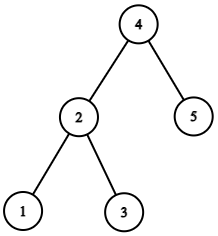
You need to return the head to the doubly linked list.
The doubly linked list would be: 1 2 3 4 5 and can be represented as:

Problem approach
The idea is to do in-order traversal of the binary tree. While doing inorder traversal, keep track of the previously visited node in a variable, say prev. For every visited node, make it next to the prev and set previous of this node as prev.
02
Round
Medium
Video Call
Duration50 Minutes
Interview date22 Jun 2022
Coding problem2
It was in afternoon. The interviewer asked me to introduce myself and then jump directly to the questions. Interviewer asked me about my preferred language I said Java. He asked OOPs Concepts and OS. Then Interviewer asked me to solve basic questions of Linked list such as Reverse of Linked List, Find Loops in Linked List etc. Interviewer asked me different approaches and asked me to optimize them.
1. Reverse Linked List
Moderate
15m average time
85% success
0/80
Asked in companies



Given a singly linked list of integers. Your task is to return the head of the reversed linked list.
For example:
The given linked list is 1 -> 2 -> 3 -> 4-> NULL. Then the reverse linked list is 4 -> 3 -> 2 -> 1 -> NULL and the head of the reversed linked list will be 4.
Follow Up :
Can you solve this problem in O(N) time and O(1) space complexity?
Problem approach
The idea is to reverse the link between nodes to reverse the list. This is done by changing the connections directions in reverse order. We just need to change the direction of the links using three pointers curr, prev, and next.
Initialize three pointers prev as NULL, curr as head and next as NULL.
Iterate through the linked list. In loop, do following.
Before changing next of current, store next node
next = curr->next
Now change next of current, This is where actual reversing happens
curr->next = prev
Move prev and curr one step forward
prev = curr
curr = next
2. Cycle Detection in a Singly Linked List
Moderate
15m average time
80% success
0/80
Asked in companies



You are given a Singly Linked List of integers. Return true if it has a cycle, else return false.
A cycle occurs when a node's next points back to a previous node in the list.
Example:
In the given linked list, there is a cycle, hence we return true.
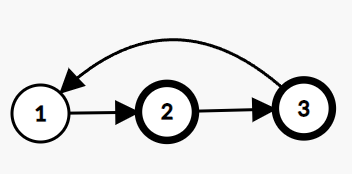
Problem approach
This algorithm is used to find a loop in a linked list. It uses two pointers one moving twice as fast as the other one. The faster one is called the faster pointer and the other one is called the slow pointer.
Traverse linked list using two pointers.
Move one pointer(slow_p) by one and another pointer(fast_p) by two.
If these pointers meet at the same node then there is a loop. If pointers do not meet then the linked list doesn’t have a loop.
03
Round
Medium
Video Call
Duration45-60 Minutes
Interview date25 May 2023
Coding problem2
The Interviewer ansked me to Introduce myself and then he directly jumped to Questions. The round was all about Problem Solving Skills.
1. Maximum Subarray Sum
Moderate
25m average time
75% success
0/80
Asked in companies



Given an array of numbers, find the maximum sum of any contiguous subarray of the array.
For example, given the array [34, -50, 42, 14, -5, 86], the maximum sum would be 137, since we would take elements 42, 14, -5, and 86.
Given the array [-5, -1, -8, -9], the maximum sum would be -1.
Follow up: Do this in O(N) time.
Problem approach
Initialize the variables max_so_far = arr[0](stores the maximum sum of contiguous subarray found so far) and max_ending_here = 0(that stores the maximum sum contiguous subarray ending at current index)
Run a for loop from 0 to N-1 and for each index i:
Add the arr[i] to max_ending_here.
If max_so_far is less than max_ending_here then update max_so_far to max_ending_here.
If max_ending_here < 0 then update max_ending_here = 0
Return max_so_far
2. Intersection of Two Linked Lists
Easy
25m average time
73% success
0/40
Asked in companies


You are given two Singly Linked Lists of integers, which may have an intersection point.
Your task is to return the first intersection node. If there is no intersection, return NULL.
Example:-
The Linked Lists, where a1, a2, c1, c2, c3 is the first linked list and b1, b2, b3, c1, c2, c3 is the second linked list, merging at node c1.
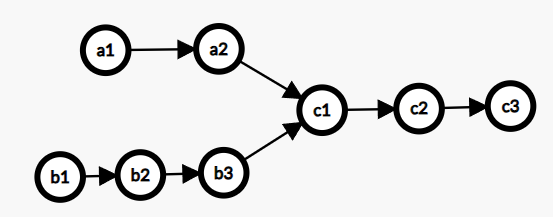
Problem approach
1. Traverse the first linked list(count the elements) and make a circular linked list. (Remember the last node so that we can break the circle later on).
2. Now view the problem as finding the loop in the second linked list. So the problem is solved.
3. Since we already know the length of the loop(size of the first linked list) we can traverse those many numbers of nodes in the second list, and then start another pointer from the beginning of the second list. we have to traverse until they are equal, and that is the required intersection point.
4. remove the circle from the linked list.
04
Round
Medium
HR Round
Duration60 Minutes
Interview date28 Jun 2022
Coding problem1
This was the Final round and it was with the Cheif Technical Officer. It Comprised mainly of Project Discussion which I had mentioned in my resume.
1. Basic HR Questions
Introduce yourself
Explain your projects.
What technologies you used in your projects


Here's your problem of the day 
Solving this problem will increase your chance to get selected in this company
Skill covered: Programming
How do you remove whitespace from the start of a string?
Choose another skill to practice
Similar interview experiences

SDE - 1
4 rounds | 8 problems
Interviewed by Amazon
 Selected
11210 views

0 comments

0 upvotes
Analytics Consultant
3 rounds | 10 problems
Interviewed by ZS
Selected 1253 views
0 comments
0 upvotes
SDE - Intern
1 rounds | 3 problems
Interviewed by Amazon
Selected 4456 views
0 comments
0 upvotes

SDE - 2
4 rounds | 6 problems
Interviewed by Expedia Group
 Selected
 3373 views
0 comments
0 upvotes
Companies with similar interview experiences
SDE - 1
5 rounds | 12 problems
Interviewed by Amazon
 Selected
 117552 views
24 comments
0 upvotes

SDE - 1
4 rounds | 5 problems
Interviewed by Microsoft
Selected 60143 views
5 comments
0 upvotes
SDE - 1
3 rounds | 7 problems
Interviewed by Amazon
 Selected
 36138 views
7 comments
0 upvotes