





CIS - Cyber Infrastructure interview experience Real time questions & tips from candidates to crack your interview

Software Developer
CIS - Cyber Infrastructure


3 rounds | 10 Coding
problems

 Selected
 Interview preparation journey

Preparation
Duration: 4 months
Topics: Data Structures, Algorithms, DBMS, OS, Aptitude, OOPS

Tip 1 : Must do Previously asked Interview as well as Online Test Questions.
Tip 2 : Go through all the previous interview experiences from Codestudio and Leetcode.
Tip 3 : Do at-least 2 good projects and you must know every bit of them.
Application process
Where: Campus
Eligibility: Above 7 CGPA
Tip 1 : Have at-least 2 good projects explained in short with all important points covered.
Tip 2 : Every skill must be mentioned.
Tip 3 : Focus on skills, projects and experiences more.

Interview rounds
01
Round
Medium
Online Coding Test
Duration75 minutes
Interview date15 Aug 2019
Coding problem2
This was an online coding round where we had 2 questions to solve under 75 minutes. I found both the questions to be of Easy to Medium level of difficulty.
1. Line Reflection
Moderate
10m average time
90% success

0/80
Asked in companies

Ninja found ‘N’ points on a 2D plane. The points are given in the form of a “N ✕ 2” size array “POINTS”. Ninja wants to find if there is a line such that it is parallel to the Y-axis and it reflects the given set of points. Your task is to help Ninja in this process.
Problem approach
Approach :
1) First, iterate through the array “points” and find the minimum and maximum X coordinates over the array and store them in "minimumX" and "maximumX".
2) Find the X coordinate of the reflection line and store it in variable 'reflectionX'. reflectionX = (minimumX + maximumX) / 2.
3) Store X coordinate of all the points into the set that have the same Y coordinate. To do so, create a map that stores the Y coordinate as the key and the set of X coordinates as the value.
4) Now, iterate over the array "points"
4.1) For each point, consider value [X1, Y1], find its reflection of the point in the set containing the same Y coordinate, which means find the set whose key is Y1 in the map and then find value (2 * reflectionX) - X1 in the set.
4.2) If the set does not contain the value, there is no reflection of the point [X1, Y1].
5) If we find at least one reflection for each point, Return true
6) Else, Return false.
TC : O(N * log(N)), where N = number of points.
SC : O(N)
2. Find Number Of Islands
Moderate
34m average time
60% success
0/80
Asked in companies



You are given a 2-dimensional array/list having N rows and M columns, which is filled with ones(1) and zeroes(0). 1 signifies land, and 0 signifies water.
A cell is said to be connected to another cell, if one cell lies immediately next to the other cell, in any of the eight directions (two vertical, two horizontal, and four diagonals).
A group of connected cells having value 1 is called an island. Your task is to find the number of such islands present in the matrix.
Problem approach
Approach (Using Flood-Fill Algo) :
1) We create two arrays, dx, and dy, in which we store the unit vectors for all eight directions. Thus, when we are at a given cell, we can easily check for all its adjacent cells by simply looping over the two arrays, adding their values to the current position, and checking for this new position recursively.
2) We will also create a 2D boolean array of the same size as the input array that will keep track of whether a cell has been visited. Initialize an ans variable as 0.
3) Iterate through the input array. For every cell that is equal to 1 and not visited, first increase ans by 1 and use the flood fill algorithm to mark that cell and every other connected cell that is equal to 1 as visited so we don't count them again.
4) Return the ans variable.
TC : O(N*M), where N and M are the dimensions of the matrix.
SC : O(N*M)
02
Round
Medium
Face to Face
Duration60 minutes
Interview date15 Aug 2019
Coding problem4
This round had 2 coding questions followed by some questions from DBMS.
1. Largest rectangle in a histogram
Hard
25m average time
75% success
0/120
Asked in companies


You have been given an array/list 'HEIGHTS' of length ‘N. 'HEIGHTS' represents the histogram and each element of 'HEIGHTS' represents the height of the histogram bar. Consider that the width of each histogram is 1.
You are supposed to return the area of the largest rectangle possible in the given histogram.
For example :
In the below histogram where array/list elements are {2, 1, 5, 6, 2, 3}.
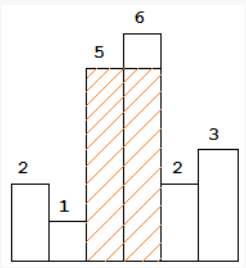
The area of largest rectangle possible in the given histogram is 10.
Problem approach
Approach (Using Stack) :
1) Create an empty stack.
2) Start from the first histogram bar, and do the following for every bar ‘heights[i]’ where ‘I’ varies from 0 to ‘N’-1.
3) If the stack is empty or heights[i] is higher than the bar at top of the stack, then push ‘I’ to the stack.
4) If this bar is smaller than the top of the stack, then keep removing the top of the stack while the top of the stack is greater. Let the removed bar be heights[tp]. Calculate the area of the rectangle with heights[tp] as the smallest bar. For heights[tp], the ‘left index’ is the previous (previous to tp) item in the stack and the ‘RIGHT_INDEX' is ‘I’ (current index).
5) If the stack is not empty, then one by one remove all bars from the stack and do step 4 for every removed bar.
TC : O(N), where N = size of the array
SC : O(N)
2. Valid Parentheses
Easy
10m average time
80% success
0/40
Asked in companies


You're given a string 'S' consisting of "{", "}", "(", ")", "[" and "]" .
Return true if the given string 'S' is balanced, else return false.
For example:
'S' = "{}()".

There is always an opening brace before a closing brace i.e. '{' before '}', '(' before ').
So the 'S' is Balanced.
Problem approach
Approach :
1) Declare a character stack.
2) Now traverse the expression string
2.1) If the current character is a starting bracket ( ‘(‘ or ‘{‘ or ‘[‘ ) then push it to stack .
2.2) If the current character is a closing bracket ( ‘)’ or ‘}’ or ‘]’ ) then pop from stack and if the popped character is the matching starting bracket then fine else parenthesis are not balanced.
3) After complete traversal, if there is some starting bracket left in the stack then “not balanced”.
4) Otherwise, the string is balanced.
TC : O(N), where N = length of the string
SC : O(N)
3. DBMS Question
Explain the concept of ACID properties in DBMS?
Problem approach
ACID properties is the combination of Atomicity, Consistency, Isolation, and Durability properties. These properties are very helpful in allowing a safe and secure way of sharing the data among multiple users.
1) Atomicity: This is based on the concept of “either all or nothing” which basically means that if any update occurs inside the database then that update should either be available to all the others beyond user and application program or it should not be available to anyone beyond the user and application program.
2) Consistency: This ensures that the consistency is maintained in the database before or after any transaction that takes place inside the database.
3) Isolation: As the name itself suggests, this property states that each transaction that occurs is in isolation with others i.e. a transaction which has started but not yet completed should be in isolation with others so that the other transaction does not get impacted with this transaction.
4) Durability: This property states that the data should always be in a durable state i.e. any data which is in the committed state should be available in the same state even if any failure or restart occurs in the system.
4. DBMS Question
Explain different levels of data abstraction in a DBMS.
Problem approach
The process of hiding irrelevant details from users is known as data abstraction. Data abstraction can be divided into 3 levels :
1) Physical Level : It is the lowest level and is managed by DBMS. This level consists of data storage descriptions and the details of this level are typically hidden from system admins, developers, and users.
2) Conceptual or Logical level : It is the level on which developers and system admins work and it determines what data is stored in the database and what is the relationship between the data points.
3) External or View level : It is the level that describes only part of the database and hides the details of the table schema and its physical storage from the users. The result of a query is an example of View level data abstraction. A view is a virtual table created by selecting fields from one or more tables present in the database.
03
Round
Medium
Face to Face
Duration60 minutes
Interview date15 Aug 2019
Coding problem4
Standard DS/Algo round with 2 coding questions followed by 2 interesting puzzles.
1. Cycle Detection In Undirected Graph
Moderate
0/80
Asked in companies


You have been given an undirected graph with 'N' vertices and 'M' edges. The vertices are labelled from 1 to 'N'.
Your task is to find if the graph contains a cycle or not.
A path that starts from a given vertex and ends at the same vertex traversing the edges only once is called a cycle.
Example :
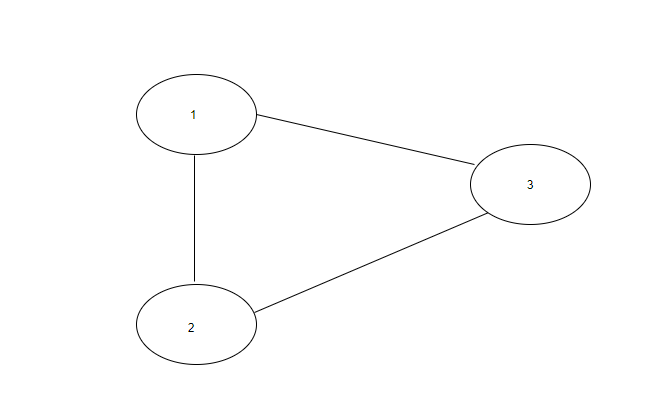
In the below graph, there exists a cycle between vertex 1, 2 and 3.
Note:
1. There are no parallel edges between two vertices.

2. There are no self-loops(an edge connecting the vertex to itself) in the graph.

3. The graph can be disconnected.
For Example :
Input: N = 3 , Edges =  [[1, 2], [2, 3], [1, 3]].
Output: Yes

Explanation : There are a total of 3 vertices in the graph. There is an edge between vertex 1 and 2, vertex 2 and 3 and vertex 1 and 3. So, there exists a cycle in the graph.
Problem approach
Approach (Using Union-Find Algo) :
1) We initialise two arrays ‘PARENT’ and ‘RANK’ to keep track of the parent and rank of the subsets. Here rank denotes the depth of the tree (subset).
2) Now we will iterate through all edges of the graph:
2.1) Find the parent of both vertices (say ‘PARENT1’ and ‘PARENT2’).
2.2) If ‘PARENT1’ == ‘PARENT2’
Return “Yes”. Here, ‘PARENT1’ == ‘PARENT2’ represents that both subsets are initially connected and now we have another edge connecting them. Hence a cycle exists.
2.3) Else If ‘PARENT1’ != ‘PARENT2’
Union both subsets into a single set. We are doing this because we have two subsets and an edge connecting them. Now both subsets combine and become a single subset.
3) Finally, return “No”.
TC : O(M * logN), where N is the number of vertices and M is the number of edges in the graph.
SC : O(N)
2. Maximum 1s
Easy
10m average time
90% success
0/40
Asked in companies
You are given a matrix ‘ARR’ with dimensions ‘N’ * ‘M’ and containing only 0s and 1s where each row is sorted.
Your task is to find the index of the row with a maximum number of 1s in it. Rows and columns are 0-indexed based.
Problem approach
Approach :
1) Create a variable currentColum initialized to M-1.
2) Create another variable row initialized to -1.
3) Now traverse for every row from i = 0 to i = N, and for each row, perform the following steps:
3.1) Till the value of currentColumn is greater than or equal to 0 and ARR[i][currentColumn] = 1 then perform following steps:
i) Decrement currentColumn by 1.
ii) Update the row with i.
4) Finally, return row as the answer.
TC : O(N+M), where N = number of rows and M = number of columns
SC : O(1)
3. Puzzle
Two wire burning puzzle
Problem approach
If we light a stick, it takes 60 minutes to burn completely. What if we light the stick from both sides? It will take exactly half the original time, i.e. 30 minutes to burn completely.
1) 0 minutes – Light stick 1 on both sides and stick 2 on one side.
2) 30 minutes – Stick 1 will be burnt out. Light the other end of stick 2.
3) 45 minutes – Stick 2 will be burnt out. Thus 45 minutes is completely measured.
4. Puzzle
3 Ants and Triangle
Problem approach
Collision doesn’t happen only in following two cases
1) All ants move in counterclockwise direction.
2) All ants move in clockwise direction.
Since every ant has two choices (pick either of two edges going through the corner on which ant is initially sitting), there are total 23 possibilities.
Out of 23 possibilities, only 2 don’t cause collision. So, the probability of collision is 6/8 or 3/4 and the probability of non-collision is 2/8 or 1/4.


Here's your problem of the day 
Solving this problem will increase your chance to get selected in this company
Skill covered: Programming
How do you remove whitespace from the start of a string?
Choose another skill to practice
Similar interview experiences
Junior Associate: Marketing Strategy and Analysis
3 rounds | 5 problems
Interviewed by CIS - Cyber Infrastructure
Rejected

903 views

0 comments

0 upvotes
Associate Technology
3 rounds | 4 problems
Interviewed by CIS - Cyber Infrastructure
Selected 1058 views
0 comments
0 upvotes
Associate Software Engineer
2 rounds | 3 problems
Interviewed by CIS - Cyber Infrastructure
Selected 599 views
0 comments
0 upvotes
SDE - 1
3 rounds | 3 problems
Interviewed by CIS - Cyber Infrastructure
Selected 581 views
1 comments
0 upvotes
Companies with similar interview experiences

Software Developer
3 rounds | 3 problems
Interviewed by HCL Technologies
 Selected
 3598 views
1 comments
0 upvotes

Software Developer
3 rounds | 6 problems
Interviewed by Arcesium
Selected 1749 views
0 comments
0 upvotes
Software Developer
3 rounds | 5 problems
Interviewed by HCL Technologies
 Selected
 4294 views
0 comments
0 upvotes