





Cisco interview experience Real time questions & tips from candidates to crack your interview

SDE - 1
Cisco


3 rounds | 6 Coding
problems

Rejected
Interview preparation journey

Journey
I started my coding journey on youtube, where I first learned the data structure and Algorithm. Then I started my preparation of Data Structure on the LinkedIn.
Application story
I applied through referral .
Why selected/rejected for the role?
I was rejected because I could not give precise and optimized solutions to the questions asked .
Preparation
Duration: 4 months
Topics: Data Structures, Pointers, OOPS, System Design, Algorithms, Dynamic Programming,System Design, Link List and Graphs

Tip 1 : Practice Atleast 250 Questions
Tip 2 : Do atleast 2 projects
Application process
Where: Referral
Eligibility: Above 6 CGPA
Tip 1 : Have some projects on resume.
Tip 2 : Do not put false things on resume
Interview rounds
01
Round
Easy
Video Call
Duration60 minutes
Interview date29 Nov 2022
Coding problem2
1. Maximum Subarray Sum
Moderate
25m average time
75% success

0/80
Asked in companies



Given an array of numbers, find the maximum sum of any contiguous subarray of the array.
For example, given the array [34, -50, 42, 14, -5, 86], the maximum sum would be 137, since we would take elements 42, 14, -5, and 86.
Given the array [-5, -1, -8, -9], the maximum sum would be -1.
Follow up: Do this in O(N) time.
Problem approach
I used the Kadane algorithm to solve this question and wrote a clean code with which could work on negative numbers also.
2. Left View of Binary Tree
Moderate
30m average time
60% success
0/80
Asked in companies



You have been given a Binary Tree of 'n' nodes, where the nodes have integer values
Print the left view of the binary tree.
Example :
If the input tree is as depicted in the picture:
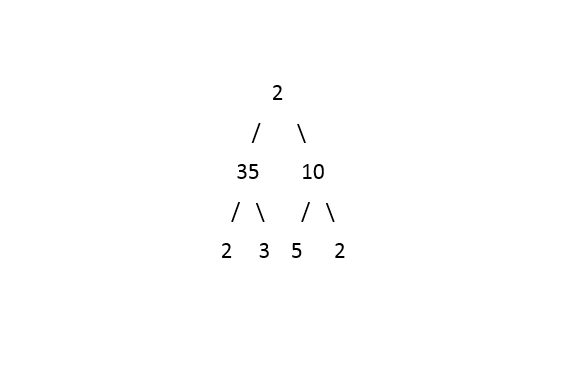
The Left View of the tree will be: 2 35 2
Problem approach
This was again a very standard question and solved it using recursion.
02
Round
Medium
Video Call
Duration60 minutes
Interview date29 Nov 2022
Coding problem2
1. House Robber
Moderate
26m average time
0/80
Asked in companies



A thief wants to loot houses. He knows the amount of money in each house. He cannot loot two consecutive houses. Find the maximum amount of money he can loot.
Problem approach
I told the interviewer dynamic programming based solution on either including the current element to current sum or excluding the current element and then he asked me to write its code and I gave properly commented code for this.
2. Minimum Cost Path
Moderate
25m average time
70% success
0/80
Asked in companies



You have been given a matrix of ‘N’ rows and ‘M’ columns filled up with integers. Find the minimum sum that can be obtained from a path which from cell (x,y) and ends at the top left corner (1,1).
From any cell in a row, we can move to the right, down or the down right diagonal cell. So from a particular cell (row, col), we can move to the following three cells:
Down: (row+1,col)
Right: (row, col+1)
Down right diagonal: (row+1, col+1)
Problem approach
It was a standard DP question
03
Round
Medium
Video Call
Duration60 minutes
Interview date29 Nov 2022
Coding problem2
1. DFS Traversal
Moderate
35m average time
65% success
0/80
Asked in companies

Given an undirected and disconnected graph G(V, E), containing 'V' vertices and 'E' edges, the information about edges is given using 'GRAPH' matrix, where i-th edge is between GRAPH[i][0] and GRAPH[i][1]. print its DFS traversal.
V is the number of vertices present in graph G and vertices are numbered from 0 to V-1.

E is the number of edges present in graph G.
Note :
The Graph may not be connected i.e there may exist multiple components in a graph.
Problem approach
As I have to find a number of connected components in an undirected graph so I simply use Depth-first search to solve this question by visiting each element and mapped it to the number of component in which it belongs. At last, I print the vertices of each component.
2. Binary Tree Pruning
Moderate
20m average time
80% success
0/80
Asked in companies

You have been given a Binary Tree where the value of each node is either 0 or 1. Your task is to return the same Binary Tree but all of its subtrees that don't contain a 1 have been removed.
Note :
A subtree of a node X is X, plus every node that is a descendant of X.
For Example :
Look at the below example to see a Binary Tree pruning.
Input: [1, 1, 1, 0, 1, 0, 1, 0, 0, -1, -1, -1, -1, -1, -1, -1, -1, -1, -1]
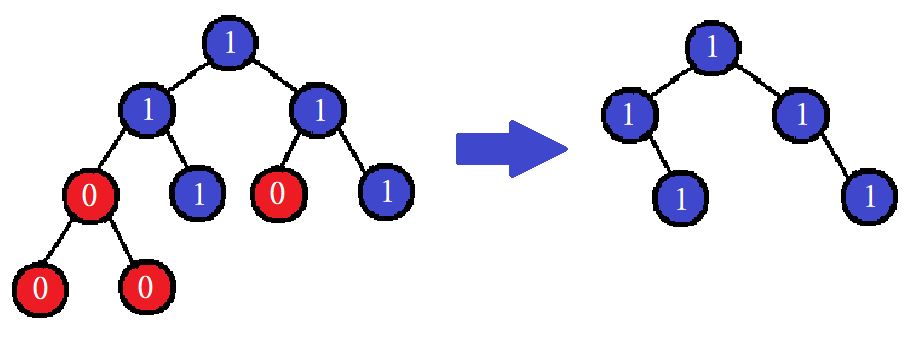
Output: [1, 1, 1, -1, 1, -1, 1, -1, -1, -1, -1]

For example, the input for the tree depicted in the below image would be :
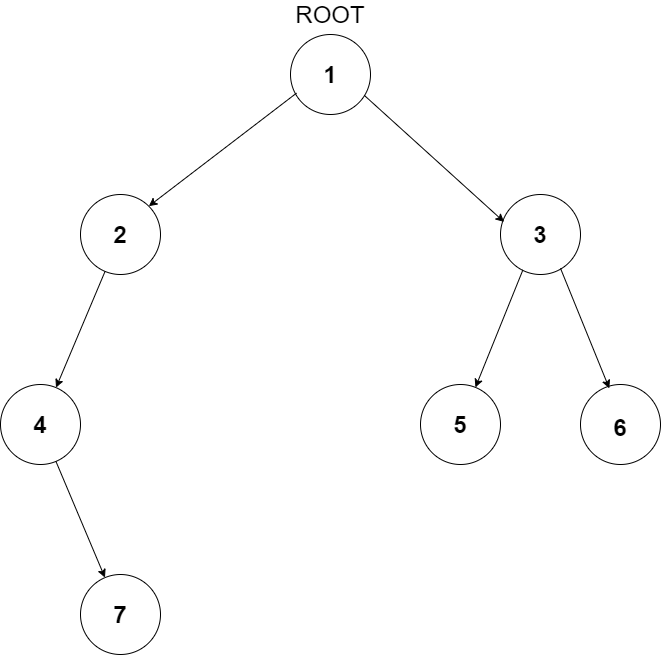
1
2 3
4 -1 5 6
-1 7 -1 -1 -1 -1
-1 -1
Explanation :
Level 1 :
The root node of the tree is 1

Level 2 :
Left child of 1 = 2
Right child of 1 = 3

Level 3 :
Left child of 2 = 4
Right child of 2 = null (-1)
Left child of 3 = 5
Right child of 3 = 6

Level 4 :
Left child of 4 = null (-1)
Right child of 4 = 7
Left child of 5 = null (-1)
Right child of 5 = null (-1)
Left child of 6 = null (-1)
Right child of 6 = null (-1)

Level 5 :
Left child of 7 = null (-1)
Right child of 7 = null (-1)

The first not-null node (of the previous level) is treated as the parent of the first two nodes of the current level. The second not-null node (of the previous level) is treated as the parent node for the next two nodes of the current level and so on.
The input ends when all nodes at the last level are null (-1).
Note :
The above format was just to provide clarity on how the input is formed for a given tree.

The sequence will be put together in a single line separated by a single space. Hence, for the above-depicted tree, the input will be given as:
1 2 3 4 -1 5 6 -1 7 -1 -1 -1 -1 -1 -1


Here's your problem of the day 
Solving this problem will increase your chance to get selected in this company
Skill covered: Programming
To make an AI less repetitive in a long paragraph, you should increase:
Choose another skill to practice
Similar interview experiences
SDE - 1
2 rounds | 4 problems
Interviewed by Cisco
Rejected

2369 views

0 comments

0 upvotes
SDE - 1
2 rounds | 4 problems
Interviewed by Cisco
Rejected
1557 views
0 comments
0 upvotes
SDE - 1
3 rounds | 5 problems
Interviewed by Cisco
Rejected
835 views
0 comments
0 upvotes
SDE - 1
3 rounds | 5 problems
Interviewed by Cisco
 Selected
 968 views
0 comments
0 upvotes
Companies with similar interview experiences
SDE - 1
5 rounds | 12 problems
Interviewed by Amazon
 Selected
 114453 views
24 comments
0 upvotes
SDE - 1
4 rounds | 5 problems
Interviewed by Microsoft
Selected 57719 views
5 comments
0 upvotes
SDE - 1
3 rounds | 7 problems
Interviewed by Amazon
 Selected
 34914 views
7 comments
0 upvotes