





Cisco interview experience Real time questions & tips from candidates to crack your interview

SDE - Intern
Cisco


5 rounds | 6 Coding
problems

 Selected
 Interview preparation journey

Preparation
Duration: 5 Months
Topics: Data Structures, Algorithms, System Design, Aptitude, OOPS

Tip 1 : Must do Previously asked Interviews as well as Online Test Questions.
Tip 2 : Must do Previously asked Interviews as well as Online Test Questions.
Tip 3 : Do at least 2 good projects and you must know every bit of them.
Application process
Where: Other
Eligibility: Above 8 CGPA
Tip 1 : Have at-least 2 good projects explained in short with all important points covered.
Tip 2 : Every skill must be mentioned.
Tip 3 : Focus on skills, projects and experiences more.
Interview rounds
01
Round
Medium
Online Coding Interview
Duration90 minutes
Interview date9 Jan 2022
Coding problem2
Part -1 : MCQs
There were 15 MCQs related to Networks, Troubleshooting, DBMS and other Core CS subjects
Part-2 : Coding Questions
1. Concatenated Words
Hard

0/120
Asked in companies

Ninja has given a list of unique words 'WORDS' of size 'N' and he wants to find all the words in the list formed after concatenating two or more words in the same list.
As Ninja's best friend, he asked you to help him with the above problem. So, your task is to find all words in the list which are formed after concatenating two or more words in the same list.
Print words in any order.
Note: One word can be concatenated multiple times. It is guaranteed that there is at least one word in the list, which is formed after concatenating two or more words.
Example:
Input: 'WORDS' = ["ninjas", "coding", "codingninjas"]
Output: ["codingninjas"]

Only word "codingninjas' is formed after concatenating two or more words in the list i.e "coding" and "ninjas".
2. Maximum Points
Easy
10m average time
90% success
0/40
Asked in companies

You are playing a video game, which contains an N x N grid. You start on the top left cell of the grid, and are free to move anywhere through the grid, any number of times.
Each cell in the grid has some number of points that you can collect from it and you can collect points at most once from each cell. Furthermore, it is possible to collect points from a cell, if and only if the cell lies on one of the two diagonals of the grid. Print the maximum number of points you can collect, given the grid.
For example:
If the grid is:
1 2
3 4
We can collect points from all cells as each cell lies on a diagonal. So, the maximum points will be 1+2+3+4 = 10.
02
Round
Easy
Online Coding Test
Duration30 minutes
Interview date16 Jan 2022
Coding problem1
Those candidates who solved both the coding questions got a Interview call. ( guessing it )
They organized a 30 minutes Coding Test ( Pre-Assessment ) before interviews.
It was not an elimination round.
1. Letter Combinations of a Phone Number
Moderate
35m average time
65% success
0/80
Asked in companies

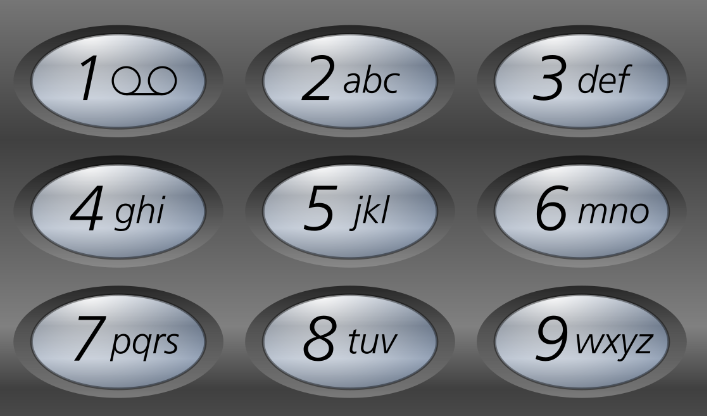
Given a string S containing digits from 2 to 9 inclusive. Your task is to find all possible letter combinations that the number could represent.
A mapping from Digits to Letters (just like in Nokia 1100) is shown below. Note that 1 does not map to any letter.
03
Round
Easy
Video Call
Duration90 Minutes
Interview date19 Jan 2022
Coding problem1
HR facilitators had created a Webex Space and they invited the candidate for the Interviews.
There were two interviewers, both Software engineers from the looks of it.
Tell me about your yourself (the general icebreaker).
Tell me about time when you faced a difficult challenge.
Tell me about a time when you needed help from someone during a project.
Tell me your favorite Data Structures.
Arrays vs LinkedList ( Pros and Cons )
set of questions were from Core CS subjects like :
What happens when you type "www.google.com" in your browser. Explain the complete workflow
Difference between router and switch
TCP vs UDP in depth. What to prefer for Video Streaming online ?
Indexing Questions from DBMS
1. Intersection of Two Linked Lists
Easy
25m average time
73% success
0/40
Asked in companies



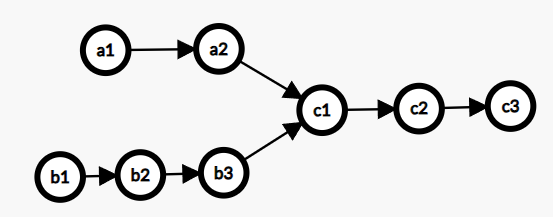
You are given two Singly Linked Lists of integers, which may have an intersection point.
Your task is to return the first intersection node. If there is no intersection, return NULL.
Example:-
The Linked Lists, where a1, a2, c1, c2, c3 is the first linked list and b1, b2, b3, c1, c2, c3 is the second linked list, merging at node c1.
Problem approach
1, Get the length of the two lists.
2, Align them to the same start point.
3, Move them together until finding the intersection point, or the end null
04
Round
Easy
Video Call
Duration45 Minutes
Interview date19 Jul 2022
Coding problem1
Round 2 happened after 2 hours and was taken by an Engineering Manager. He was very Friendly.
He asked almost everything i mentioned in ,my resume.
Again started with the questions :
Tell me about your yourself.
What work you did in your past Internships.
Explain your projects.
Moved on to Coding Question.
Asked me If I was aware about Dynammic Programming.
Explain the approaches of DP ( Memoization , Tabulation )
Time Complexity in each of the approaches.
Which would be the better approach with proper explanation.
some general manager questions at the end.
1. Ways To Make Coin Change
Moderate
20m average time
80% success
0/80
Asked in companies



You are given an infinite supply of coins of each of denominations D = {D0, D1, D2, D3, ...... Dn-1}. You need to figure out the total number of ways W, in which you can make a change for value V using coins of denominations from D. Print 0, if a change isn't possible.
Problem approach
For the iterative solution, we think in bottom-up manner. Before calculating F(i)F(i), we have to compute all minimum counts for amounts up to ii. On each iteration ii of the algorithm F(i)F(i) is computed as \min_{j=0 \ldots n-1}{F(i -c_j)} + 1min
j=0…n−1
F(i−c * j)+1
Time complexity : O(S*n)
Space complexity: O(S). We use extra space for the memoization table.
05
Round
Easy
HR Round
Duration15 Minutes
Interview date19 Jan 2022
Coding problem1
So this round was pure HR round Interviewer was very friendly.
1. Basic HR Questions
Why do you want to join Cisco ?
What motivates you the most ?
Discussion About location, any other offers and compensation
Problem approach
Tip 1 : Be confident
Tip 2 : Read what the Company is working on and it's products
Tip 3 : Prepare Standard Hr questions


Here's your problem of the day 
Solving this problem will increase your chance to get selected in this company
Skill covered: Programming
To make an AI less repetitive in a long paragraph, you should increase:
Choose another skill to practice
Similar interview experiences
SDE - Intern
4 rounds | 8 problems
Interviewed by Cisco
Selected 
0 views

0 comments

0 upvotes
SDE - Intern
3 rounds | 3 problems
Interviewed by Cisco
Selected 779 views
0 comments
0 upvotes
SDE - Intern
2 rounds | 4 problems
Interviewed by Cisco
Rejected
868 views
0 comments
0 upvotes
SDE - Intern
3 rounds | 3 problems
Interviewed by Cisco
Selected 881 views
0 comments
0 upvotes
Companies with similar interview experiences
SDE - Intern
3 rounds | 6 problems
Interviewed by Amazon

Rejected
15447 views
4 comments
0 upvotes

SDE - Intern
4 rounds | 7 problems
Interviewed by Microsoft
 Selected
 15307 views
1 comments
0 upvotes
SDE - Intern
2 rounds | 4 problems
Interviewed by Amazon
Selected 10120 views
2 comments
0 upvotes