





Codenation interview experience Real time questions & tips from candidates to crack your interview

SDE - Intern
Codenation


3 rounds | 5 Coding
problems

 Selected
 Interview preparation journey

Preparation
Duration: 6 months
Topics: Data Structures, Pointers, OOPS, System Design, Algorithms, Dynamic Programming, OS, DBMS

Tip 1 - Practice Atleast 250 Questions from geeks from geeks and coding ninjas
Tip 2 - Ex- Do atleast 2 good projects
Application process
Where: Campus
Eligibility: Above 7 CGPA
Tip 1 : Have some projects on resume.
Tip 2 : Do not put false things on resume and be confident.

Interview rounds
01
Round
Medium
Online Coding Test
Duration60 minutes
Interview date29 Oct 2020
Coding problem2
2 coding questions
1. Smallest Window
Moderate
10m average time
90% success

0/80
Asked in companies



You are given two strings S and X containing random characters. Your task is to find the smallest substring in S which contains all the characters present in X.
Example:
Let S = “abdd” and X = “bd”.

The windows in S which contain all the characters in X are: 'abdd', 'abd', 'bdd', 'bd'.
Out of these, the smallest substring in S which contains all the characters present in X is 'bd'.
All the other substring have a length larger than 'bd'.
Problem approach
1- Generate all substrings of string1 (“this is a test string”)
2- For each substring, check whether the substring contains all characters of string2 (“tist”)
3- Finally, print the smallest substring containing all characters of string2.
2. Count Triplets
Easy
15m average time
85% success
0/40
Asked in companies



You have been given an integer ‘X’ and a non-decreasing sorted doubly linked list with distinct nodes.
Your task is to return the number of triplets in the list that sum up to the value ‘X’.
02
Round
Medium
Video Call
Duration60 minutes
Interview date30 Oct 2020
Coding problem2
1. Box Stacking
Hard
25m average time
65% success
0/120
Asked in companies



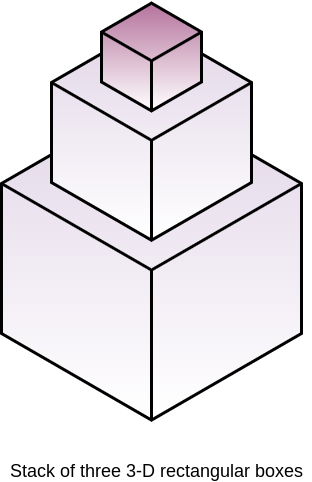
You are given a set of ‘n’ types of rectangular 3-D boxes. The height, width, and length of each type of box are given by arrays, ‘height’, ‘width’, and ‘length’ respectively, each consisting of ‘n’ positive integers. The height, width, length of the i^th type box is given by ‘height[i]’, ‘width[i]’ and ‘length[i]’ respectively.
You need to create a stack of boxes that is as tall as possible using the given set of boxes.
Below are a few allowances:
You can only stack a box on top of another box if the dimensions of the 2-D base of the lower box ( both length and width ) are strictly larger than those of the 2-D base of the higher box.

You can rotate a box so that any side functions as its base. It is also allowed to use multiple instances of the same type of box. This means, a single type of box when rotated, will generate multiple boxes with different dimensions, which may also be included in stack building.
Return the height of the highest possible stack so formed.
Note:
The height, Width, Length of the type of box will interchange after rotation.

No two boxes will have all three dimensions the same.

Don’t print anything, just return the height of the highest possible stack that can be formed.
Problem approach
) Generate all 3 rotations of all boxes. The size of rotation array becomes 3 times the size of the original array. For simplicity, we consider width as always smaller than or equal to depth.
2) Sort the above generated 3n boxes in decreasing order of base area.
3) After sorting the boxes, the problem is same as LIS with following optimal substructure property.
MSH(i) = Maximum possible Stack Height with box i at top of stack
MSH(i) = { Max ( MSH(j) ) + height(i) } where j < i and width(j) > width(i) and depth(j) > depth(i).
If there is no such j then MSH(i) = height(i)
4) To get overall maximum height, we return max(MSH(i)) where 0 < i < n
2. Clone a Linked List with random pointers
Easy
0/40
Asked in companies


You are given a linked list containing 'n' nodes, where every node in the linked list contains two pointers:
(1) ‘next’ which points to the next node in the list
(2) ‘random’ which points to a random node in the list or 'null'.
Your task is to create a 'deep copy' of the given linked list and return its head.
Note:
A 'deep copy' of a linked list means we do not copy the references of the nodes of the original linked list, rather for each node in the original linked list, a new node is created.
Problem approach
1) Create all nodes in copy linked list using next pointers.
2) Store the node and its next pointer mappings of original linked list.
3) Change next pointer of all nodes in original linked list to point to the corresponding node in copy linked list.
03
Round
Easy
HR Round
Duration30 minutes
Interview date2 Nov 2020
Coding problem1
This was an HR round with the CEO which went on for about 25 mins. For me this was the most fun round. Firstly he asked normal questions like, describe a tough situation you have faced, describe your most interesting project etc. When he got to know I play the guitar, he asked me a design question – how would you detect the raga in a song, which led to a less-technical and more music based discussion. In the end he asked why I wanted to join CodeNation. This interview ended with me asking him 2 questions about CodeNation.
1. Basic Hr Questions
Firstly he asked normal questions like, describe a tough situation you have faced, describe your most interesting project etc. When he got to know I play the guitar, he asked me a design question – how would you detect the raga in a song, which led to a less-technical and more music based discussion. In the end he asked why I wanted to join CodeNation. This interview ended with me asking him 2 questions about CodeNation.
Problem approach
Believe in yourself.
Keep calm and get placed.


Here's your problem of the day 
Solving this problem will increase your chance to get selected in this company
Skill covered: Programming
How do you remove whitespace from the start of a string?
Choose another skill to practice
Similar interview experiences
SDE - Intern
3 rounds | 3 problems
Interviewed by Codenation
 Selected
1565 views

0 comments

0 upvotes
SDE - Intern
4 rounds | 6 problems
Interviewed by Codenation

Rejected
3539 views
1 comments
0 upvotes
SDE
4 rounds | 8 problems
Interviewed by Codenation
Rejected
872 views
0 comments
0 upvotes

SDE - 1
3 rounds | 9 problems
Interviewed by Salesforce
 Selected
 4552 views
0 comments
0 upvotes
Companies with similar interview experiences
SDE - Intern
3 rounds | 6 problems
Interviewed by Amazon

Rejected
16213 views
4 comments
0 upvotes

SDE - Intern
4 rounds | 7 problems
Interviewed by Microsoft
 Selected
 16224 views
1 comments
0 upvotes
SDE - Intern
2 rounds | 4 problems
Interviewed by Amazon
Selected 10541 views
2 comments
0 upvotes