





ConsultAdd Inc interview experience Real time questions & tips from candidates to crack your interview
System Engineer
ConsultAdd Inc


2 rounds | 12 Coding
problems

Rejected
Interview preparation journey

Journey
I began my preparation by building a strong foundation in programming and core computer science subjects, focusing on understanding concepts rather than just memorizing solutions. I consistently practiced coding problems to improve my logical thinking and worked on strengthening my basics in data structures and algorithms. Along the way, I faced rejections and challenging interviews, but I treated each experience as a learning opportunity to identify my weak areas and improve. Although I couldn’t clear the final rounds this time, the process helped me gain confidence, improve my technical depth, and better understand industry expectations. My journey has taught me that consistent effort, self-analysis, and resilience are key to long-term success.
Application story
I applied for the System Engineer Level 1 role at ConsultAdd through my college placement drive after receiving the registration link from the placement cell. After registering within the given deadline, I was shortlisted for the online written coding test. Candidates who cleared the test were invited for the technical interview rounds conducted virtually. The overall process was structured and properly communicated through the placement cell, with clear instructions regarding each stage and shortlisting updates.
Why selected/rejected for the role?
I believe I was rejected for this role because although I had a decent grasp of fundamentals, I couldn’t demonstrate enough depth in certain technical concepts during the discussion. In competitive technical interviews, interviewers look for strong problem-solving skills, optimization thinking, and confident explanation of approaches. This experience made me realize the importance of not just solving problems, but also articulating the logic clearly and discussing trade-offs and edge cases. The rejection helped me identify my weak areas and motivated me to work more on advanced problem-solving and conceptual clarity, which will definitely strengthen my future interview performance.
Preparation
Duration: 2.5 months
Topics: Data Structures, Pointers, OOPS, System Design, Algorithms, Dynamic Programming

Tip 1: Strengthen your fundamentals in Data Structures, Algorithms, and core subjects before attempting advanced problems.
Tip 2: Practice explaining your approach clearly while solving coding problems, as communication plays a key role in technical interviews.
Tip 3: After every mock test or interview, analyse your mistakes carefully and work specifically on your weak areas.
Application process
Where: Campus
Eligibility: 65%+ throughout academics, (Salary Package: 12 LPA)
Tip 1: Highlight strong technical skills and relevant coding projects that demonstrate your practical understanding of data structures and problem-solving.
Tip 2: Keep your resume clean and structured, and ensure you can confidently explain every project, tool, or technology mentioned during technical discussions.

Interview rounds
01
Round
Easy
Online Coding Interview
Duration50 minutes
Interview date27 Feb 2023
Coding problem7
Timing: Conducted during regular working hours via virtual mode (not late night).
Environment: Professional and slightly technical-focused; the discussion was structured and time-bound.
Significant Activity: Emphasis was on writing optimized code and explaining the logic clearly, along with follow-up questions based on approach and edge cases.
Interviewer: Technically strong and analytical; expected clear reasoning, depth in concepts, and confident communication throughout the discussion.
1. Operating System
Problem approach
Tip 1: Mention the four Coffman conditions – Mutual Exclusion, Hold & Wait, No Preemption, Circular Wait. Give a simple real-life example.
Tip 2: Focus on memory sharing, creation overhead, and context switching.
Tip 3: Mention waiting time comparison and concept of starvation in SJF.
2. Puzzle
Three switches outside a room control three bulbs inside. You can enter the room only once. How will you identify which switch controls which bulb? (Learn)
Problem approach
Turn on first switch for some time, turn it off, turn on second switch, then enter room. Use heat + light to identify bulbs.
3. Puzzle
If you toss two coins, what is the probability of getting at least one head? (Learn)
Problem approach
Total outcomes = 4 (HH, HT, TH, TT). Favorable = 3 : Probability = 3/4.
4. DBMS
What is indexing and why is it used? (Learn)
Problem approach
Improves query performance; explain using book index analogy.
5. Second Highest Salary
Write a query to find the second highest salary from an Employee table. (Practice)
Problem approach
Use ORDER BY salary DESC LIMIT 1 OFFSET 1 (or subquery with MAX).
6. Longest Substring Without Repeating Characters
Moderate
30m average time
65% success

0/80
Asked in companies



Given a string input of length n, find the length of the longest substring without repeating characters i.e return a substring that does not have any repeating characters.
Substring is the continuous sub-part of the string formed by removing zero or more characters from both ends.
Problem approach
Use the Sliding Window + HashSet/HashMap technique to track characters in the current window and adjust pointers when duplicates appear.
Time Complexity: O(N)
Space Complexity: O(N)
7. Cycle Detection in a Singly Linked List
Moderate
15m average time
80% success
0/80
Asked in companies


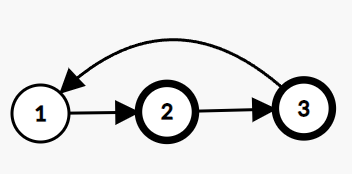
You are given a Singly Linked List of integers. Return true if it has a cycle, else return false.
A cycle occurs when a node's next points back to a previous node in the list.
Example:
In the given linked list, there is a cycle, hence we return true.
Problem approach
Use Floyd’s Cycle Detection Algorithm (Tortoise and Hare method) with two pointers moving at different speeds.
Time Complexity: O(N)
Space Complexity: O(1)
02
Round
Medium
Face to Face
Duration50 minutes
Interview date28 Feb 2023
Coding problem5
Timing: Conducted during regular daytime hours on campus (not late night).
Environment: Formal and slightly intense as it was face-to-face; overall well-organized and professional setup in the college campus.
Significant Activity: Focused more on in-depth technical discussion and real-time problem solving on paper/whiteboard, with cross-questioning based on answers.
Interviewer: Technically strong and detail-oriented; expected clear explanations, strong fundamentals, and confidence while answering.
1. Operating System
What is Virtual Memory? (Learn)
Problem approach
Explain how virtual memory allows execution of large programs using disk space and mention paging.
2. DBMS
What is Normalization and why is it important? (Learn)
Problem approach
Explain removal of redundancy and improving data integrity (1NF, 2NF, 3NF briefly).
3. OOPS
What is Abstraction? (Learn)
Problem approach
Hiding implementation details and showing only essential features (example: abstract class/interface).
4. Merge Two Sorted Arrays
Moderate
15m average time
85% success
0/80
Asked in companies



Ninja has been given two sorted integer arrays/lists ‘ARR1’ and ‘ARR2’ of size ‘M’ and ‘N’. Ninja has to merge these sorted arrays/lists into ‘ARR1’ as one sorted array. You may have to assume that ‘ARR1’ has a size equal to ‘M’ + ‘N’ such that ‘ARR1’ has enough space to add all the elements of ‘ARR2’ in ‘ARR1’.
For example:
‘ARR1’ = [3 6 9 0 0]
‘ARR2’ = [4 10]
After merging the ‘ARR1’ and ‘ARR2’ in ‘ARR1’.
‘ARR1’ = [3 4 6 9 10]
Problem approach
Use the two-pointer technique to compare elements from both arrays and insert the smaller one into the result array.
Time Complexity: O(N + M)
Space Complexity: O(N + M)
5. Power of Two
Easy
15m average time
85% success
0/40
Asked in companies



You have been given an integer 'N'.
Your task is to return true if it is a power of two. Otherwise, return false.
An integer 'N' is a power of two, if it can be expressed as 2 ^ 'K' where 'K' is an integer.
For example:
'N' = 4,
4 can be represented as 2^2. So, 4 is the power of two, and hence true is our answer.
Problem approach
Use the bit manipulation trick:
If N > 0 and (N & (N - 1)) == 0, then N is a power of 2.
Time Complexity: O(1)
Space Complexity: O(1)


Here's your problem of the day 
Solving this problem will increase your chance to get selected in this company
Skill covered: Programming
How do you remove whitespace from the start of a string?
Choose another skill to practice
Similar interview experiences
Software Engineer
1 rounds | 2 problems
Interviewed by ConsultAdd Inc
Rejected

187 views

0 comments

0 upvotes
Software Engineer
1 rounds | 2 problems
Interviewed by ConsultAdd Inc
Rejected
149 views
0 comments
0 upvotes
Software Engineer
1 rounds | 1 problems
Interviewed by ConsultAdd Inc
Rejected
158 views
0 comments
0 upvotes
Software Engineer
1 rounds | 2 problems
Interviewed by ConsultAdd Inc
Rejected
161 views
0 comments
0 upvotes
Companies with similar interview experiences
System Engineer
2 rounds | 4 problems
Interviewed by HCL Technologies

 Selected
 1673 views
0 comments
0 upvotes
System Engineer
3 rounds | 6 problems
Interviewed by HCL Technologies
Rejected
1105 views
0 comments
0 upvotes
System Engineer
3 rounds | 7 problems
Interviewed by HCL Technologies
Rejected
1307 views
0 comments
0 upvotes