





CredAvenue interview experience Real time questions & tips from candidates to crack your interview
SDE
CredAvenue


3 rounds | 5 Coding
problems

 Selected
 Interview preparation journey

Preparation
Duration: 2 months
Topics: Data Structures, OOPS, Dynamic Programming, System Design, DBMS.

Tip 1 : Be clear with the Basics of DSA
Tip 2 : Practice few questions from every Topic
Application process
Where: Linkedin
Eligibility: 1 Year Of Experience
Tip 1 : Be clear what you are doing in current company
Tip 2 : Have some personal projects as well.

Interview rounds
01
Round
Easy
Face to Face
Duration60 minutes
Interview date3 Jun 2022
Coding problem2
DSA Based Round
1. 3Sum
Moderate
15m average time
85% success

0/80
Asked in companies



You are given an array/list ARR consisting of N integers. Your task is to find all the distinct triplets present in the array which adds up to a given number K.
An array is said to have a triplet {ARR[i], ARR[j], ARR[k]} with sum = 'K' if there exists three indices i, j and k such that i!=j, j!=k and i!=j and ARR[i] + ARR[j] + ARR[k] = 'K'.
Note:
1. You can return the list of values in any order. For example, if a valid triplet is {1, 2, -3}, then {2, -3, 1}, {-3, 2, 1} etc is also valid triplet. Also, the ordering of different triplets can be random i.e if there are more than one valid triplets, you can return them in any order.
2. The elements in the array need not be distinct.
3. If no such triplet is present in the array, then return an empty list, and the output printed for such a test case will be "-1".
Problem approach
used 3 pointer approach with Time complexity: O(N^2).
2. K Most Frequent Elements
Moderate
10m average time
85% success
0/80
Asked in companies



You are given an Integer array ‘ARR’ and an Integer ‘K’.
Your task is to find the ‘K’ most frequent elements in ‘ARR’. Return the elements in any order.
For Example:
You are given ‘ARR’ = {1, 2, 2, 3, 3} and ‘K’ = 2.

The answer will {2, 3} as 2 and 3 are the elements occurring most times.
Problem approach
used Heap-based approach to solve
02
Round
Easy
Face to Face
Duration60 minutes
Interview date9 Jun 2022
Coding problem2
DSA based Round
1. Predecessor And Successor In BST
Moderate
25m average time
65% success
0/80
Asked in companies

Given a binary search tree of integers containing 'N' nodes. You have also been given an integer X.
Your task is to find the inorder successor and predecessor of the given X. Formally, print an array/list containing the inorder predecessor and successor in the same order.
For Example:
For the BST given below:
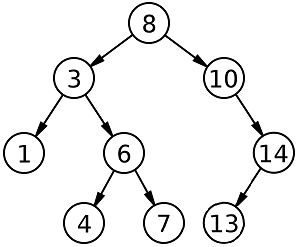
The inorder predecessor of 6 is 4.
The inorder successor of 6 is 7.
The inorder predecessor of 10 is 8.
The inorder successor of 10 is 13.
Note:
If there is no inorder predecessor or successor of 'X', then add -1 to the answer vector in its place.
2. Single Element in a Sorted Array
Easy
15m average time
85% success
0/40
Asked in companies


You are given a sorted array ‘arr’ of ‘n’ numbers such that every number occurred twice in the array except one, which appears only once.
Return the number that appears once.
Example:
Input: 'arr' = [1,1,2,2,4,5,5]

Output: 4

Explanation:
Number 4 only appears once the array.
Note :
Exactly one number in the array 'arr' appears once.
Problem approach
expected solution in LogN time. Used Binary Search Approach.
03
Round
Easy
Face to Face
Duration60 minutes
Interview date16 Jun 2022
Coding problem1
Hiring Manager Round
1. Technical Questions
Had a discussion with HM on Basic LLD concepts.
Had a discussion on projects mentioned in my Resume.
Had a deep discussion on the current work I was doing in my current company.
Behavioral Questions were also asked.


Here's your problem of the day 
Solving this problem will increase your chance to get selected in this company
Skill covered: Programming
How do you remove whitespace from the start of a string?
Choose another skill to practice
Similar interview experiences
Senior Software Engineer
3 rounds | 4 problems
Interviewed by CredAvenue
 Selected
1270 views

0 comments

0 upvotes
SDE - 1
4 rounds | 8 problems
Interviewed by Amazon
Selected 11210 views
0 comments
0 upvotes
SDE - Intern
1 rounds | 3 problems
Interviewed by Amazon
Selected 4455 views
0 comments
0 upvotes

SDE - 2
4 rounds | 6 problems
Interviewed by Expedia Group
 Selected
 3372 views
0 comments
0 upvotes
Companies with similar interview experiences

SDE
3 rounds | 6 problems
Interviewed by PhonePe
Selected 0 views
0 comments
0 upvotes

SDE
5 rounds | 8 problems
Interviewed by Mathworks
Selected 1323 views
0 comments
0 upvotes
SDE
4 rounds | 7 problems
Interviewed by PhonePe
Selected 0 views
0 comments
0 upvotes