





Credit Suisse interview experience Real time questions & tips from candidates to crack your interview
Business Technology Analyst
Credit Suisse


3 rounds | 10 Coding
problems

 Selected
 Interview preparation journey

Preparation
Duration: 6 months
Topics: Data Structures, Algorithms, DBMS , Aptitude, OOPS

Tip 1 : Must do Previously asked Interview as well as Online Test Questions.
Tip 2 : Go through all the previous interview experiences from Codestudio and Leetcode.
Tip 3 : Do at-least 2 good projects and you must know every bit of them.
Application process
Where: Campus
Eligibility: Above 7 CGPA
Tip 1 : Have at-least 2 good projects explained in short with all important points covered.
Tip 2 : Every skill must be mentioned.
Tip 3 : Focus on skills, projects and experiences more.

Interview rounds
01
Round
Easy
Face to Face
Duration60 minutes
Interview date13 Aug 2015
Coding problem5
This was a technical round with questions based on OOPS Concepts.
1. OOPS Question
What are the types of polymprphism?
Problem approach
Polymorphism is of two types :
1. Compile Time Polymorphism :
Invokes the overloaded functions by matching the number and type of arguments. The information is present during compile-time. This means the C++ compiler will select the right function at compile time. It is achieved through function overloading and operator overloading.
2. Run Time Polymorphism :
This happens when an object’s method is called during runtime rather than during compile time. Runtime polymorphism is achieved through function overriding. The function to be called is established during runtime.
2. OOPS Question
What is function overloading?
Problem approach
Two or more functions can have the same name but different parameters; such functions are called function overloading. In OOP, function overloading is known as a function of polymorphism. The function can perform various operations best on the argument list. It differs by type or number of arguments they hold. By using a different number of arguments or different types of arguments, the function can be redefined.
3. OOPS Question
What is a virtual function?
Problem approach
A C++ virtual function is a member function in the base class that you redefine in a derived class. It is declared using the virtual keyword. It is used to tell the compiler to perform dynamic linkage or late binding on the function. A 'virtual' is a keyword preceding the normal declaration of a function. When the function is made virtual, C++ determines which function is to be invoked at the runtime based on the type of the object pointed by the base class pointer.
4. OOPS Question
What are templates in C++?
Problem approach
A template is a simple and yet very powerful tool in C++. The simple idea is to pass data type as a parameter so that we don’t need to write the same code for different data types. For example, a software company may need sort() for different data types. Rather than writing and maintaining the multiple codes, we can write one sort() and pass data type as a parameter.
C++ adds two new keywords to support templates: ‘template’ and ‘typename’. The second keyword can always be replaced by keyword ‘class’.
5. OOPS Question
What is a Null Pointer?
Problem approach
A Null Pointer is a pointer that does not point to any memory location. It stores the base address of the segment. The null pointer basically stores the Null value while void is the type of the pointer.
A null pointer is a special reserved value which is defined in a stddef header file. Here, Null means that the pointer is referring to the 0th memory location. If we do not have any address which is to be assigned to the pointer, then it is known as a null pointer. When a NULL value is assigned to the pointer, then it is considered as a Null pointer.
02
Round
Easy
Face to Face
Duration60 minutes
Interview date13 Aug 2015
Coding problem4
Technical round with OOPS based questions mainly.
1. Technical Question
Data comes from the server in real time which passes through a decoder and then onto the display panel. Since data rate is not fixed, what should be done so that the display of data on the display panel is at a constant rate ?
Problem approach
Tip 1: A buffer can be used here
2. OOPS Question
What is a dangling pointer in C?
Problem approach
Sometimes the programmer fails to initialize the pointer with a valid address, then this type of initialized pointer is known as a dangling pointer in C. Dangling pointer occurs at the time of the object destruction when the object is deleted or de-allocated from memory without modifying the value of the pointer. In this case, the pointer is pointing to the memory, which is de-allocated. The dangling pointer can point to the memory, which contains either the program code or the code of the operating system. If we assign the value to this pointer, then it overwrites the value of the program code or operating system instructions; in such cases, the program will show the undesirable result or may even crash. If the memory is re-allocated to some other process, then we dereference the dangling pointer will cause the segmentation faults.
3. OOPS Question
What is a V-table?
Problem approach
Vtable stands for virtual table. It is a lookup table of functions used to resolve function calls in a dynamic/late binding manner.
Every class that uses virtual functions (or is derived from a class that uses virtual functions) is given it's own virtual table as a secret data member.This table is set up by the compiler at compile time.
A virtual table contains one entry as a function pointer for each virtual function that can be called by objects of the class. Every vtable has vpointer associated with it. The vpointer points to the vtable, and is used to access the functions inside the vtable. The vtable would be useless without a vpointer.
4. Convert Min Heap To Max Heap
Moderate
25m average time
75% success

0/80
Asked in companies



You are given an array of size ‘N’ which is an array representation of min-heap.
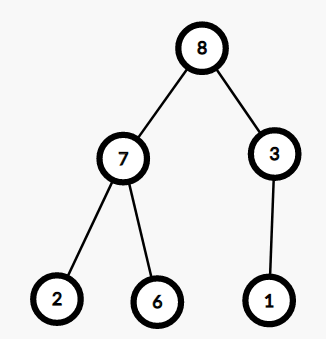
You need to convert this min-heap array representation to a max-heap array representation. Return the max-heap array representation.
For Example
Corresponding to given min heap : [1,2,3,6,7,8]
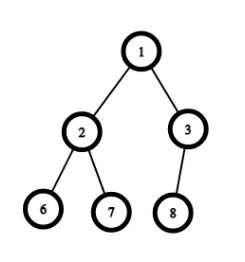
It can be converted to the following max heap: [8,7,3,6,2,1]
Problem approach
Simply build Max Heap without caring about the input. Start from the bottom-most and rightmost internal node of min Heap and heapify all internal nodes in the bottom-up way to build the Max heap.
Time Complexity : O(N)
03
Round
Easy
HR Round
Duration30 minutes
Interview date13 Aug 2015
Coding problem1
This was management interview round. Make sure you know everything on your resume. Most questions are based on your resume.
1. Basic HR Questions
1. Tell me in 60 secs why we should hire you?
2. What drives you every morning?
3. Favorite book? Why?
4. Some scenario in which you had to face a conflicting situation( Where you handled it on your own)
5. Scenarios for a manager to handle
6. Conflicting scenarios in which manager does not listen to you, or you are a manager and your subordinates disagree.
7. Which offers have you got ?
Problem approach
Tip 1: Be sure to do your homework on the organization and its culture before the interview.
Tip 2: Employers want to understand how you use your time and energy to stay productive and efficient. Be sure to emphasize that you adhere to deadlines and take them seriously.
Tip 3: Talk about a relevant incident that made you keen on the profession you are pursuing and follow up by discussing your education.


Here's your problem of the day 
Solving this problem will increase your chance to get selected in this company
Skill covered: Programming
How do you remove whitespace from the start of a string?
Choose another skill to practice
Similar interview experiences
C++ Developer
4 rounds | 7 problems
Interviewed by Credit Suisse
Selected 
1519 views

0 comments

0 upvotes
ENO
3 rounds | 7 problems
Interviewed by Credit Suisse
Selected 766 views
0 comments
0 upvotes
Fullstack Developer
3 rounds | 3 problems
Interviewed by Credit Suisse
 Selected
 1272 views
1 comments
0 upvotes
ENO
4 rounds | 4 problems
Interviewed by Credit Suisse
 Selected
 930 views
0 comments
0 upvotes