


D.E.Shaw interview experience Real time questions & tips from candidates to crack your interview
Quality Engineer II
D.E.Shaw


2 rounds | 5 Coding
problems

Rejected
Interview preparation journey

Preparation
Duration: 1 month
Topics: Data structures, algorithms, OOPS, API testing, low level design, puzzles

Tip 1 : Revise data structures and algorithms from time to time
Application process
Where: Linkedin
Eligibility: NA
Tip 1 : Keep content of your resume as relevant and specific to the profile to which you are applying as possible.
Interview rounds
01
Round
Medium
Online Coding Interview
Duration95 mins
Interview date14 Oct 2022
Coding problem2
The round consisted of 3 sections, Aptitude (28 mins), Technical Section (17 mins), and a Coding Section (two questions, one for 20 mins and the other for 30 mins). There was negative marking. An incorrect answer carried deduction of 33% of the total marks of that question. There was a time window of 12 hours within which the test was to be taken.
1. Longest Common Subsequence
Moderate

0/80
Asked in companies



You have been given two Strings “STR1” and “STR2” of characters. Your task is to find the length of the longest common subsequence.
A String ‘a’ is a subsequence of a String ‘b’ if ‘a’ can be obtained from ‘b’ by deletion of several (possibly, zero or all) characters. A common subsequence of two Strings is a subsequence that is common to both Strings.
Problem approach
1. Declare a 3D array with each dimension being equal to the length of one of the strings.
2. Fill the 3D array using tabulation, based on the matching characters.
2. Ninja And The LCM
Easy
15m average time
86% success
0/40
Asked in companies


Ninja has given two numbers ‘X’ and ‘Y’. He has to find the LCM of these two numbers.
LCM (Least Common Multiple) of two numbers is the smallest number that can be divisible by both numbers.
As you are his big brother. So help Ninja in calculating the LCM.
EXAMPLE:
Input: 'X' = 2,  ‘Y’=3

Output: "6"

As “6” is the smallest number that is divisible by both 2 and 3.
Problem approach
1. Define a function to calculate HCF of two numbers.
2. Find the LCM of the first two numbers using the relation, LCM(a, b) = a*b / HCF(a, b).
3. Pass the calculated LCM in the above step and the third number to the HCF function, LCM(a, b, c) = LCM(a, b) * c / HCF(LCM(a, b), c).
02
Round
Medium
Video Call
Duration60 mins
Interview date1 Nov 2022
Coding problem3
I was asked to suggest the day and time of the interview by the recruiter. I had to postpone the initial date of interview that I had suggested to which the recruiting team was accommodating. The interview took place on HackerRank where there was a collaborative code editor with video chat.
1. First Missing Positive
Moderate
18m average time
84% success
0/80
Asked in companies


You are given an array 'ARR' of integers of length N. Your task is to find the first missing positive integer in linear time and constant space. In other words, find the lowest positive integer that does not exist in the array. The array can have negative numbers as well.
For example, the input [3, 4, -1, 1] should give output 2 because it is the smallest positive number that is missing in the input array.
Problem approach
I gave two approaches — the naïve approach is to sort and traverse the array and check for the missing number. A better approach would be to create a hash map containing elements from 0 to n, where n is the length of the array (the smallest missing number would be at most equal to the length of the array). Traverse the array and increment the count of each element that is encountered. Traverse the hash map, the first element to have its value as 0 would be the answer.
2. Puzzle
You are going from point A to point B and encounter 2 red lights but stop at one of them. While returning, i.e. going from point B to point A through the same route, you stop twice. Draw the route for such a scenario to be legally possible.
Problem approach
Tip 1 : It can be solved on the idea of free left turn. One need not stop when they want to turn left even if the traffic signal is red.
Tip 2 : So, while going from point A to point B, the person had to turn left, so they did not stop, but while going from B to A, there would be a right turn for which they would have to stop.
3. Delete Kth node From End
Moderate
15m average time
95% success
0/80
Asked in companies



You have been given a singly Linked List of 'N' nodes with integer data and an integer 'K'.
Your task is to remove the 'K'th node from the end of the given Linked List and return the head of the modified linked list.
Example:
Input : 1 -> 2 -> 3 -> 4 -> 'NULL'  and  'K' = 2
Output: 1 -> 2 -> 4 -> 'NULL'
Explanation:
After removing the second node from the end, the linked list become 1 -> 2 -> 4 -> 'NULL'.
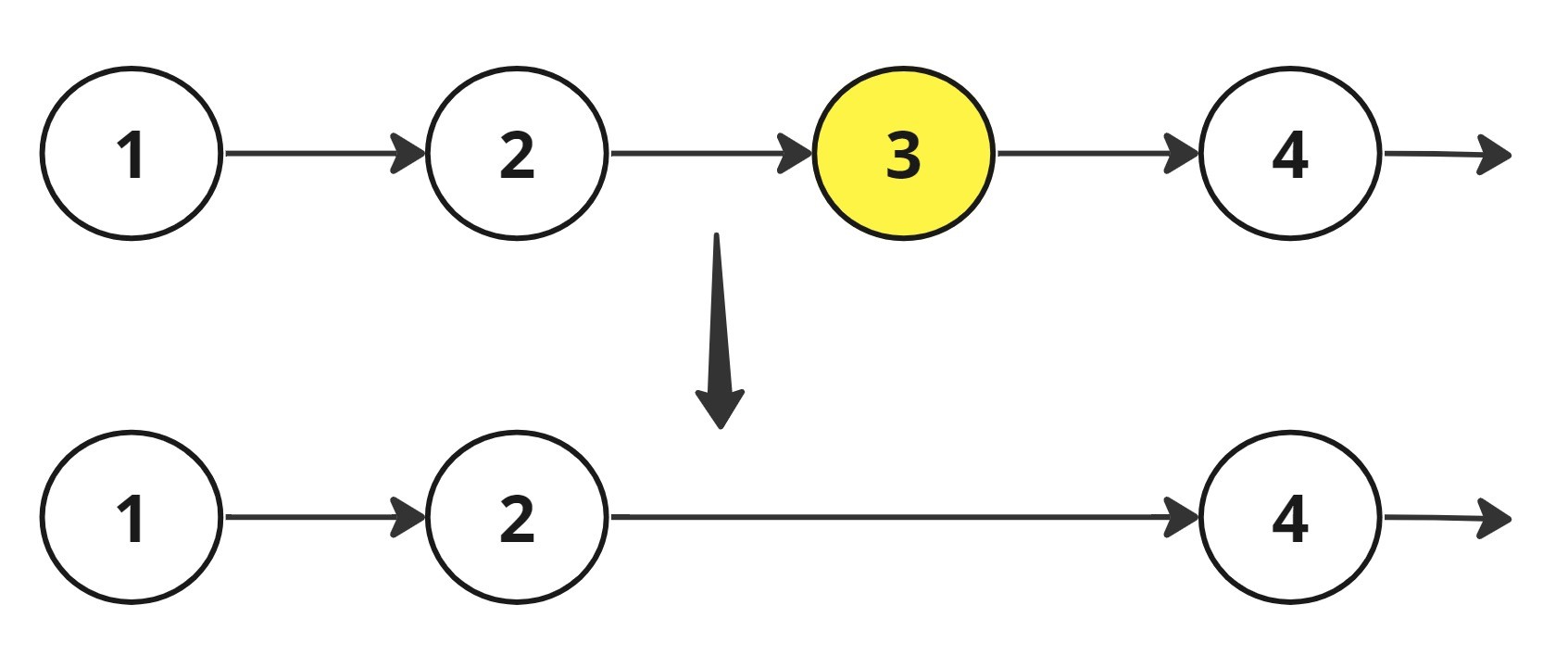
Problem approach
1. Traverse the linked list to find the length of the linked list and then traverse again to visit the kth node.
2. Define a temp pointer equal to head.
3. Move the head pointer from (k-1) to (k+1)th node.
4. Move the head pointer to kth node and free it.
Another way to solve it without the use of a head pointer would be to replace the data for every node, starting from the kth node.


Here's your problem of the day 
Solving this problem will increase your chance to get selected in this company
Skill covered: Programming
Which type of comments is used to comment on single lines of Java code?
Choose another skill to practice
Start a Discussion
Similar interview experiences
Software Developer
1 rounds | 6 problems
Interviewed by D.E.Shaw
Rejected

674 views

0 comments

0 upvotes
SDE - 1
3 rounds | 10 problems
Interviewed by D.E.Shaw
Rejected
732 views
0 comments
0 upvotes
SDE - 1
4 rounds | 8 problems
Interviewed by Amazon
 Selected
 1924 views
0 comments
0 upvotes
SDE - Intern
1 rounds | 3 problems
Interviewed by Amazon
Selected 819 views
0 comments
0 upvotes
Companies with similar interview experiences

Quality Engineer II
3 rounds | 4 problems
Interviewed by CIS - Cyber Infrastructure
 Selected
 612 views
0 comments
0 upvotes