





Dunzo interview experience Real time questions & tips from candidates to crack your interview

SDE - Intern
Dunzo


4 rounds | 7 Coding
problems
 Selected
 Interview preparation journey

Journey
I started my coding journey from my first sem of college when C was introduced. It is always been a fun to solve questions and saw the correct answer on screen. Then I started exploring DSA, initially it is tuff to be very honest but yeah! it pretty much like cricket as it is a great leveler means one day you would be a hero but that's not it you need to keep improving that's the best part of it and that's what life is. Meanwhile I did CP failed many times but I knew consistency is the key so I kept doing it and finally after facing rejection in 4 or 5 companies, I got the offer in Dunzo.
Application story
It is on campus opportunity for me. There were 4 rounds in total. First one is online assessment then followed by two rounds of DSA then the cultural fitment round.
Why selected/rejected for the role?
I passed online assessment round as I solved both the questions. In first DSA round, there were two questions it is code pairing round and I were able to solve both of them. Same for round 2 of DSA. Then in cultural fitment, there were discussion on project and behavioural questions which I framed in a nice way luckily and got selected.
Preparation
Duration: 5 months
Topics: Dynamic Programming, Graph, Trees, Binary Search, Recursion, OOPS

Tip 1 : Keep doing problems consistently
Tip 2 : Start as early as possible so that you can have sufficient time to complete DSA along with the revision.
Tip 3 : Showcase a good project in resume and have sound knowledge of it.
Application process
Where: Campus
Eligibility: 7.5 CGPA
Tip 1 : Have good projects in resume and definition of good is not tuff it simply means what you make you should be able to explain it.
Tip 2 : Try to make project that solve any real life problem, and it can be anything (a good example can be a contest reminder as I tend to miss my contests frequently then I decide to make a project on it.)
Tip 3 : Never ever put those things on resume that you don't know. It's not about quantity it's about quality.

Interview rounds
01
Round
Medium
Online Coding Test
Duration90 minutes
Interview date25 Dec 2022
Coding problem2
It is in afternoon, there were two coding questions in my case one is from strings and another is on api's.
1. Count Of Substrings Consisting Only Of Vowels
Easy
20m average time
80% success

0/40
Asked in companies


You are a string ‘S’. Your task is to count all the “substrings” of ‘S’ that contain only “vowels”.
Note :
1. The string ‘S’ consists of only lowercase English alphabets.
2. A ‘substring’ is a contiguous sequence of characters within a string.
3. Recall that vowels in lowercase English alphabets are: {‘a’, ‘e’, ‘i’, ‘o’, ‘u’}.
Problem approach
I first think about the brute force for it. Fortunately I was able to think of it in first 10-15 minutes. Facing problem to implement what I thought initially. But eventually ended up all test cases passed.
2. Letter Combinations of a Phone Number
Moderate
35m average time
65% success
0/80
Asked in companies



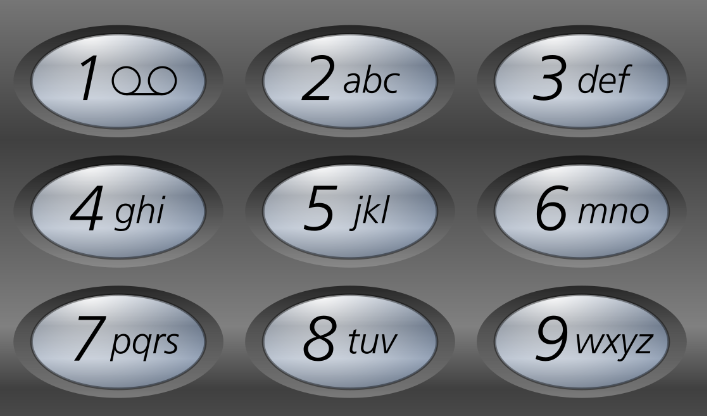
Given a string S containing digits from 2 to 9 inclusive. Your task is to find all possible letter combinations that the number could represent.
A mapping from Digits to Letters (just like in Nokia 1100) is shown below. Note that 1 does not map to any letter.
02
Round
Hard
Face to Face
Duration60 minutes
Interview date30 Dec 2022
Coding problem2
It is tuff actually as it is live code pairing round and first question interviewer asked from me is from DP. Although interviewer is supportive.
1. Game of Stones
Easy
15m average time
85% success
0/40
Asked in companies

Given the count of total stones in a game. Two-player ‘Ale’ and ‘Bob’ are playing the game. Your task is to find who will win the game if both the players are playing optimally.
Rules of the game.
1. In a single turn, a player can choose a single stone or ‘even’ number of stones.
2. They will play alternatively, which means in the first chance ‘Ale’ will collect the stones, in second-chance ‘Bob’ will collect the stones. And always ‘Ale’ will start the game.
3. If any player is not able to take any stones then another player will win the game.
Problem approach
It is a recursive problem so I first thought in that direction then I found there were subproblems that were overlapping then I thought about DP.
2. Russian Doll Envelopes
Hard
50m average time
50% success
0/120
Asked in companies


You are given a set of ‘N’ rectangular envelopes. The height and width of each envelope are given by arrays, ‘height’ and ‘width’ respectively, each consisting of ‘N’ positive integers. The height, width of the ith envelope is given by ‘height[i]’ and ‘width[i]’ respectively.
You can put one envelope inside another envelope if and only if both the height and width of one envelope is strictly greater than the height and width of the other envelope.
What is the maximum number of envelopes you can Russian doll? (put one inside other)
Note
Rotation of envelope is not allowed, that is, height and width can’t be exchanged
Problem approach
It is slight variation of LIS, fortunately I saw it before.
03
Round
Hard
Face to Face
Duration60 minutes
Interview date4 Jan 2023
Coding problem2
It is tuff actually as it is live code pairing round and first question interviewer asked from me is from DP. Although interviewer is supportive.
1. Longest Valid Parentheses
Moderate
10m average time
90% success
0/80
Asked in companies


You are given a string ‘S’ containing only the characters ‘)’ and ‘(‘. You need to find the length of the longest valid i.e. well-formed parentheses substring.
For example:
Let the given string be “(()())((”.

Here the valid parentheses substrings are: “()”, “()” and “(()())”. Out of these the longest valid string is “(()())” which has a length 6.
Problem approach
It is a recursive problem so I first thought in that direction then I found there were subproblems that were overlapping then I thought about DP.
2. First Missing Positive
Moderate
18m average time
84% success
0/80
Asked in companies


You are given an array 'ARR' of integers of length N. Your task is to find the first missing positive integer in linear time and constant space. In other words, find the lowest positive integer that does not exist in the array. The array can have negative numbers as well.
For example, the input [3, 4, -1, 1] should give output 2 because it is the smallest positive number that is missing in the input array.
Problem approach
I explained to him brute force first, which takes O(n log n) and constant extra space, after it, I tell him the second approach which runs in O(n) time but takes O(n) extra space.
04
Round
Medium
HR Round
Duration30 minutes
Interview date5 Jan 2023
Coding problem1
It is in afternoon I guess 3:30 to 4:00 and interviewer was some manager in Dunzo but very polite and yeah we had a great discussion on project along with behavioural questions.
1. Basic HR Questions
1. What were my favourite subjects in my academics?
2. Which project I am proud of?
3. Why do I want to join DUNZO? Why not any other organisation?
4. What difficulties did I face when I learned the new tech stack and how did I overcome it?
5. How do I keep myself updated?
6. Which Data Structures I am currently studying?
7. Then he asked me if I have any questions for him. I asked two questions.
Problem approach
Tip 1 : Walkthrough in the code of project so you must know about project properly.
Tip 2 : Read about behavioural questions before.
Tip 3 : Brush up your knowledge on DSA.


Here's your problem of the day 
Solving this problem will increase your chance to get selected in this company
Skill covered: Programming
How do you remove whitespace from the start of a string?
Choose another skill to practice
Similar interview experiences
SDE - Intern
2 rounds | 6 problems
Interviewed by Dunzo
Selected 
1015 views

0 comments

0 upvotes
SDE - Intern
2 rounds | 4 problems
Interviewed by Dunzo
 Selected
 945 views
0 comments
0 upvotes
SDE - Intern
2 rounds | 3 problems
Interviewed by Dunzo
 Selected
 1083 views
0 comments
0 upvotes
SDE - 1
3 rounds | 7 problems
Interviewed by Dunzo

Rejected
725 views
0 comments
0 upvotes
Companies with similar interview experiences
SDE - Intern
3 rounds | 6 problems
Interviewed by Amazon

Rejected
15605 views
4 comments
0 upvotes

SDE - Intern
4 rounds | 7 problems
Interviewed by Microsoft
 Selected
 15499 views
1 comments
0 upvotes
SDE - Intern
2 rounds | 4 problems
Interviewed by Amazon
Selected 10216 views
2 comments
0 upvotes