





Dunzo interview experience Real time questions & tips from candidates to crack your interview

SDE - 1
Dunzo


3 rounds | 6 Coding
problems

Rejected
Interview preparation journey

Journey
I have been practicing DSA and CS fundamentals since my 3rd year of engineering. Alongside, I also learned web development and built some good projects.
Application story
This company visited our campus for hiring, so I applied for it. The hiring process had multiple rounds, starting with an online assessment.
Why selected/rejected for the role?
I was rejected because I was not able to provide a concise and good solution to the question asked of me.
Preparation
Duration: 4 Months
Topics: Data Structures, Pointers, OOP, System Design, Algorithms, and Dynamic Programming

Tip 1: Mention some good projects on your resume.
Tip 2: Be confident.
Tip 3: Have a strong grasp of computer science fundamentals, data structures, and algorithms.
Application process
Where: Campus
Eligibility: No criteria
Tip 1: Good projects.
Tip 2: Having some achievements is a plus point.

Interview rounds
01
Round
Medium
Video Call
Duration90 Minutes
Interview date24 Dec 2022
Coding problem2
1. Check if Linked List is Palindrome
Easy
15m average time
85% success

0/40
Asked in companies



You are given a Singly Linked List of integers. You have to return true if the linked list is palindrome, else return false.
A Linked List is a palindrome if it reads the same from left to right and from right to left.
Example:
The lists (1 -> 2 -> 1), (3 -> 4 -> 4-> 3), and (1) are palindromes, while the lists (1 -> 2 -> 3) and (3 -> 4) are not.
2. Palindrome Partitioning
Moderate
25m average time
75% success
0/80
Asked in companies


You are given a string 'S'. Your task is to partition 'S' such that every substring of the partition is a palindrome. You need to return all possible palindrome partitioning of 'S'.
Note: A substring is a contiguous segment of a string.
For Example:
For a given string “BaaB”
3 possible palindrome partitioning of the given string are:
{“B”, “a”, “a”, “B”}
{“B”, “aa”, “B”}
{“BaaB”}
Every substring of all the above partitions of “BaaB” is a palindrome.
02
Round
Easy
Video Call
Duration60 Minutes
Interview date24 Dec 2022
Coding problem2
1. Merge Two Sorted Linked Lists
Moderate
15m average time
80% success
0/80
Asked in companies

You are given two sorted linked lists. You have to merge them to produce a combined sorted linked list. You need to return the head of the final linked list.
Note:
The given linked lists may or may not be null.
For example:
If the first list is: 1 -> 4 -> 5 -> NULL and the second list is: 2 -> 3 -> 5 -> NULL

The final list would be: 1 -> 2 -> 3 -> 4 -> 5 -> 5 -> NULL
2. Critical Connection
Hard
60m average time
55% success
0/120
Asked in companies


You are given a network with ‘N’ system nodes [0 to N - 1] and ‘M’ connection. Your task is to find out all critical connections in a given network.
Note: A connection between node ‘u’ and ‘v’ is said to be a critical connection, if after removal of a connection ‘u’ - ‘v’, there is no connection between node ‘u’ and ‘v’ and the network goes down.
For example:
For given N = 4, M = 4,
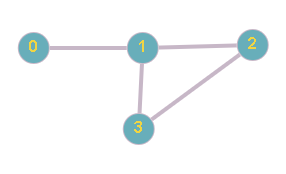
The connection between system node 0 and 1 is a critical connection.
03
Round
Easy
Video Call
Duration60 Minutes
Interview date24 Dec 2022
Coding problem2
1. Product Of Array Except Self
Easy
26m average time
0/40
Asked in companies


You have been given an integer array/list (ARR) of size N. You have to return an array/list PRODUCT such that PRODUCT[i] is equal to the product of all the elements of ARR except ARR[i]
Note :
Each product can cross the integer limits, so we should take modulo of the operation.

Take MOD = 10^9 + 7 to always stay in the limits.
Follow up :
Can you try solving the problem in O(1) space?
2. LRU Cache Implementation
Moderate
25m average time
65% success
0/80
Asked in companies



Design and implement a data structure for Least Recently Used (LRU) cache to support the following operations:
1. get(key) - Return the value of the key if the key exists in the cache, otherwise return -1.

2. put(key, value), Insert the value in the cache if the key is not already present or update the value of the given key if the key is already present. When the cache reaches its capacity, it should invalidate the least recently used item before inserting the new item.
You will be given ‘Q’ queries. Each query will belong to one of these two types:
Type 0: for get(key) operation.
Type 1: for put(key, value) operation.
Note :
1. The cache is initialized with a capacity (the maximum number of unique keys it can hold at a time).

2. Access to an item or key is defined as a get or a put operation on the key. The least recently used key is the one with the oldest access time.


Here's your problem of the day 
Solving this problem will increase your chance to get selected in this company
Skill covered: Programming
How do you remove whitespace from the start of a string?
Choose another skill to practice
Similar interview experiences
SDE - 1
3 rounds | 5 problems
Interviewed by Dunzo
 Selected
4719 views

0 comments

0 upvotes
SDE - 1
3 rounds | 6 problems
Interviewed by Dunzo
Rejected
781 views
0 comments
0 upvotes
SDE - 1
3 rounds | 7 problems
Interviewed by Dunzo
Rejected
726 views
0 comments
0 upvotes
SDE - 1
3 rounds | 5 problems
Interviewed by Dunzo
Rejected
807 views
0 comments
0 upvotes
Companies with similar interview experiences
SDE - 1
5 rounds | 12 problems
Interviewed by Amazon
 Selected
 115097 views
24 comments
0 upvotes
SDE - 1
4 rounds | 5 problems
Interviewed by Microsoft
Selected 58238 views
5 comments
0 upvotes
SDE - 1
3 rounds | 7 problems
Interviewed by Amazon
 Selected
 35147 views
7 comments
0 upvotes