





EPAM Systems interview experience Real time questions & tips from candidates to crack your interview
Software Engineer
EPAM Systems


4 rounds | 7 Coding
problems

 Selected
 Interview preparation journey

Preparation
Duration: 5 months
Topics: Data Structures, Algorithms, OOPS, DBMS, Computer Networks, Java Basics, Spring framework, J2EE, etc.

Tip 1 : Practise more DS/Algo questions mostly on Arrays, LinkedList, Trees, HashMaps, etc topics.
Tip 2 : Have good knowledge of at least one of the programming languages (like Java, Javascript, etc)
Tip 3 : Have some project experience as well.
Application process
Where: Company Website
Eligibility: 70% aggregate
Tip 1 : Resume should have at least one project defined.
Tip 2 : Highlight your achievements in your work experience section.

Interview rounds
01
Round
Medium
Online Coding Test
Duration90 minutes
Interview date25 May 2019
Coding problem3
1. Spiral Matrix
Easy

0/40
Asked in companies



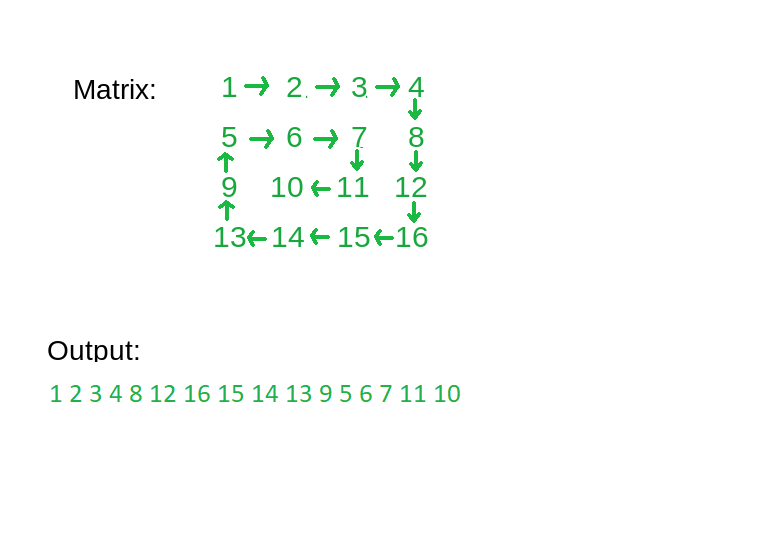
You are given a N x M matrix of integers, return the spiral path of the matrix
Example Of Spiral Path
2. Next Smaller Element
Moderate
25m average time
75% success
0/80
Asked in companies


You are given an array 'ARR' of integers of length N. Your task is to find the next smaller element for each of the array elements.
Next Smaller Element for an array element is the first element to the right of that element which has a value strictly smaller than that element.
If for any array element the next smaller element does not exist, you should print -1 for that array element.
For Example:
If the given array is [ 2, 3, 1], we need to return [1, 1, -1]. Because for 2, 1 is the Next Smaller element. For 3, 1 is the Next Smaller element and for 1, there is no next smaller element hence the answer for this element is -1.
Problem approach
Next Smaller Element : Used Stack to solve this
3. Letter Combinations of a Phone Number
Moderate
35m average time
65% success
0/80
Asked in companies


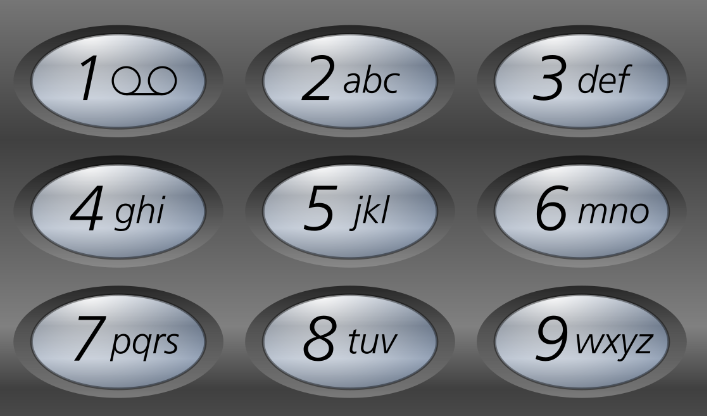
Given a string S containing digits from 2 to 9 inclusive. Your task is to find all possible letter combinations that the number could represent.
A mapping from Digits to Letters (just like in Nokia 1100) is shown below. Note that 1 does not map to any letter.
Problem approach
Letter Combinations of a Phone Number : Used backtracking to solve this
02
Round
Medium
Online Coding Test
Duration90 minutes
Interview date7 Jun 2019
Coding problem2
1. Merge Sort
Easy
15m average time
85% success
0/40
Asked in companies



Given a sequence of numbers ‘ARR’. Your task is to return a sorted sequence of ‘ARR’ in non-descending order with help of the merge sort algorithm.
Example :
Merge Sort Algorithm -

Merge sort is a Divide and Conquer based Algorithm. It divides the input array into two-parts, until the size of the input array is not ‘1’. In the return part, it will merge two sorted arrays a return a whole merged sorted array.
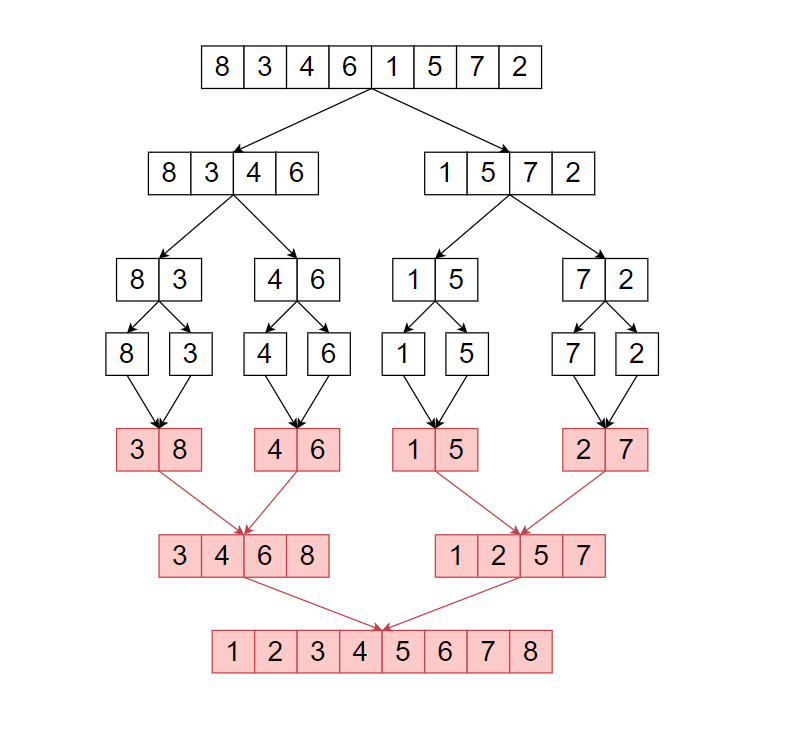
The above illustrates shows how merge sort works.
Note :
It is compulsory to use the ‘Merge Sort’ algorithm.
Problem approach
Merge Sort : Used Divide & Conquer approach
2. N Queens
Hard
55m average time
35% success
0/120
Asked in companies


You are given an integer 'N'. For a given 'N' x 'N' chessboard, find a way to place 'N' queens such that no queen can attack any other queen on the chessboard.
A queen can be killed when it lies in the same row, or same column, or the same diagonal of any of the other queens. You have to print all such configurations.
Problem approach
NQueens : Used Backtracking
03
Round
Medium
Face to Face
Duration90 minutes
Interview date7 Jun 2019
Coding problem1
1. Reverse List In K Groups
Hard
15m average time
85% success
0/120
Asked in companies


You are given a linked list of 'n' nodes and an integer 'k', where 'k' is less than or equal to 'n'.
Your task is to reverse the order of each group of 'k' consecutive nodes, if 'n' is not divisible by 'k', then the last group of nodes should remain unchanged.
For example, if the linked list is 1->2->3->4->5, and 'k' is 3, we have to reverse the first three elements, and leave the last two elements unchanged. Thus, the final linked list being 3->2->1->4->5.
Implement a function that performs this reversal, and returns the head of the modified linked list.
Example:
Input: 'list' = [1, 2, 3, 4], 'k' = 2

Output: 2 1 4 3

Explanation:
We have to reverse the given list 'k' at a time, which is 2 in this case. So we reverse the first 2 elements then the next 2 elements, giving us 2->1->4->3.
Note:
All the node values will be distinct.
Problem approach
K reverse linked list: Used recursive approach to solve this
04
Round
Medium
HR Round
Duration45 minutes
Interview date7 Jun 2019
Coding problem1
This was more focussed on behavioral questions, past experience on projects, environment looking forward to working with.
1. Basic HR Questions
- What are your expectations working with us?
- Explain your project and its key features.


Here's your problem of the day 
Solving this problem will increase your chance to get selected in this company
Skill covered: Programming
How do you remove whitespace from the start of a string?
Choose another skill to practice
Similar interview experiences
Software Engineer
2 rounds | 2 problems
Interviewed by EPAM Systems
Selected 
5055 views

0 comments

0 upvotes
Software Engineer
3 rounds | 5 problems
Interviewed by EPAM Systems
Selected 3514 views
0 comments
0 upvotes
Software Engineer
4 rounds | 4 problems
Interviewed by EPAM Systems
 Selected
 1344 views
0 comments
0 upvotes
Software Engineer
3 rounds | 5 problems
Interviewed by EPAM Systems
Rejected
3291 views
0 comments
0 upvotes
Companies with similar interview experiences

Software Engineer
4 rounds | 1 problems
Interviewed by Newgen Software
 Selected
 3571 views
2 comments
0 upvotes

Software Engineer
3 rounds | 6 problems
Interviewed by HashedIn
 Selected
 2838 views
0 comments
0 upvotes

Software Engineer
2 rounds | 2 problems
Interviewed by Ernst & Young (EY)
 Selected
 0 views
0 comments
0 upvotes