





Flipkart limited interview experience Real time questions & tips from candidates to crack your interview
SDE - 1
Flipkart limited


3 rounds | 7 Coding
problems

 Selected
 Interview preparation journey

Preparation
Duration: 12 months
Topics: Data Structures,OOPS, Algorithms, DBMS, SQL, Operating Systems, Networks, HTML, CSS, JS, NoSQL

Tip 1 : Be consistent and start early, I believe that consistency can beat smartness.
Tip 2 : Never underestimate yourself and surround yourself with good people who encourage you.
Tip 3 : If you're in any college society, maintain your schedule well and choose your priorities.
Application process
Where: Campus
Eligibility: No criteria
Tip 1: Never try to fake things in your resume, it will always come out.
Tip 2: Design your resume nicely using flowCV/Overleaf so that all the content is visible in one look.
Tip 3: Be well versed with whatever skills/projects you mention in your resume.

Interview rounds
01
Round
Hard
Online Coding Interview
Duration90 minutes
Interview date5 Oct 2021
Coding problem1
Coding round timing was of 90 mins from 8pm to 9:30. It consisted of 3 questions from Medium to Difficult level.
1. Linked List to binary Tree
Easy
15m average time
80% success

0/40
Asked in companies



Given a linked list containing N nodes where each node is associated with a certain value. The list is the representation of the level order traversal of a binary tree, you need to construct a complete binary tree from the given list and return its root.
Note
1. A complete binary tree is a binary tree in which every level, except possibly the last, is completely filled, and all nodes at the last level are as far left as possible.
2. All the node values are positive.
3. The size of the linked list is greater than 1.
4. The end of the linked list is represented by -1.
02
Round
Medium
Video Call
Duration60 minutes
Interview date20 Oct 2021
Coding problem2
Interview was of 1 hour. It was pure coding round, they didn’t ask questions from any other subjects like OS and DBMS.
1. Next Greater Number
Moderate
15m average time
90% success
0/80
Asked in companies


You are given a string S which represents a number. You have to find the smallest number strictly greater than the given number which contains the same set of digits as of the original number i.e the frequency of each digit from 0 to 9 should be exactly the same as in the original number.
For example:
If the given string is 56789, then the next greater number is 56798. Note that although 56790 is also greater than the given number it contains 1 '0' which is not in the original number and also it does not contain the digit '8'.
Note:
The given string is non-empty.

If the answer does not exist, then return -1.

The given number does not contain any leading zeros.
Problem approach
Standard leetcode problem.
2. Find the Good Matrix
Moderate
30m average time
65% success
0/80
Asked in companies



You have given a 2-dimensional array ‘ARR’ with ‘N’ rows and ‘M’ columns in which each element contains only two values,i.e., 0 and 1. Your task is to convert the given matrix into the Good matrix in which if an element is 0, you need to set all elements values present in its entire row and column to 0.
For example:
Consider ARR = [[1 , 0 , 1] ,
                [1 , 1 , 1] ,
                [1 , 1 , 1]],
the Good matrix after updating the given matrix as described in the question is
                [[0 , 0 , 0] ,
                 [1 , 0 , 1] ,
                 [1 , 0 , 1]].
Since ARR[0][1] is 0, we need to set all element’s values present in 0-th row and 1-th column to 0.
Note :
You do not need to print the matrix. Just change in the given input.
03
Round
Easy
Video Call
Duration60 minutes
Interview date21 Oct 2021
Coding problem4
Interview was of 1 hour. It was pure coding round,They didn’t ask questions from any other subjects like OS and DBMS.
1. Rotated sorted array search
Easy
0/40
Asked in company
You have been given an array of ‘N’ distinct integers which is sorted in ascending order and then rotated to the left by an unknown which you don’t know beforehand. For a given integer ‘X’, your task is to find the index of ‘X’ in the given array if it exists.
Please note that the sorted array A : [2, 3, 6, 8, 9, 11, 15] might become [6, 8, 9, 11, 15, 2, 3] after rotating it twice to the left.
Problem approach
Standard Binary Search problem.
2. Maximum of All Subarrays of Size K
Easy
15m average time
85% success
0/40
Asked in companies


You are given an array “A” of N integers. Your task is to find the maximum element in all K sized contiguous subarrays from left to right.
For Example:
If A = [3, 2, 3], and K = 2.
Then max of [3, 2] = 3 and max of [2, 3] = 3
So, the answer will be [3, 3]

If A = [3, 2, 3, 5, 1, 7] and K = 3.
Then max of [3, 2, 3] = 3
Then max of [2, 3, 5] = 5
Then max of [3, 5, 1] = 5
Then max of [5, 1, 7] = 7
So  the answer will be [3, 5, 5, 7]
Follow Up :
Can you solve the problem in O(N) time complexity and O(K) space complexity?
Problem approach
Foe each number at suppoe index i, find next greater on its left (suppose index j), and next greater on right (suppose index k). The answer will be (i-j)*(k-i).
3. Closest Distance Pair
Easy
20m average time
0/40
Asked in companies

You are given an array containing 'N' points in the plane. The task is to find out the distance of the closest points.
Note :
Where distance between two points (x1, y1) and (x2, y2) is calculated as [(x1 - x2) ^ 2] + [(y1 - y2) ^ 2].
Problem approach
Binary Search.
4. BFS in Graph
Easy
10m average time
90% success
0/40
Asked in companies


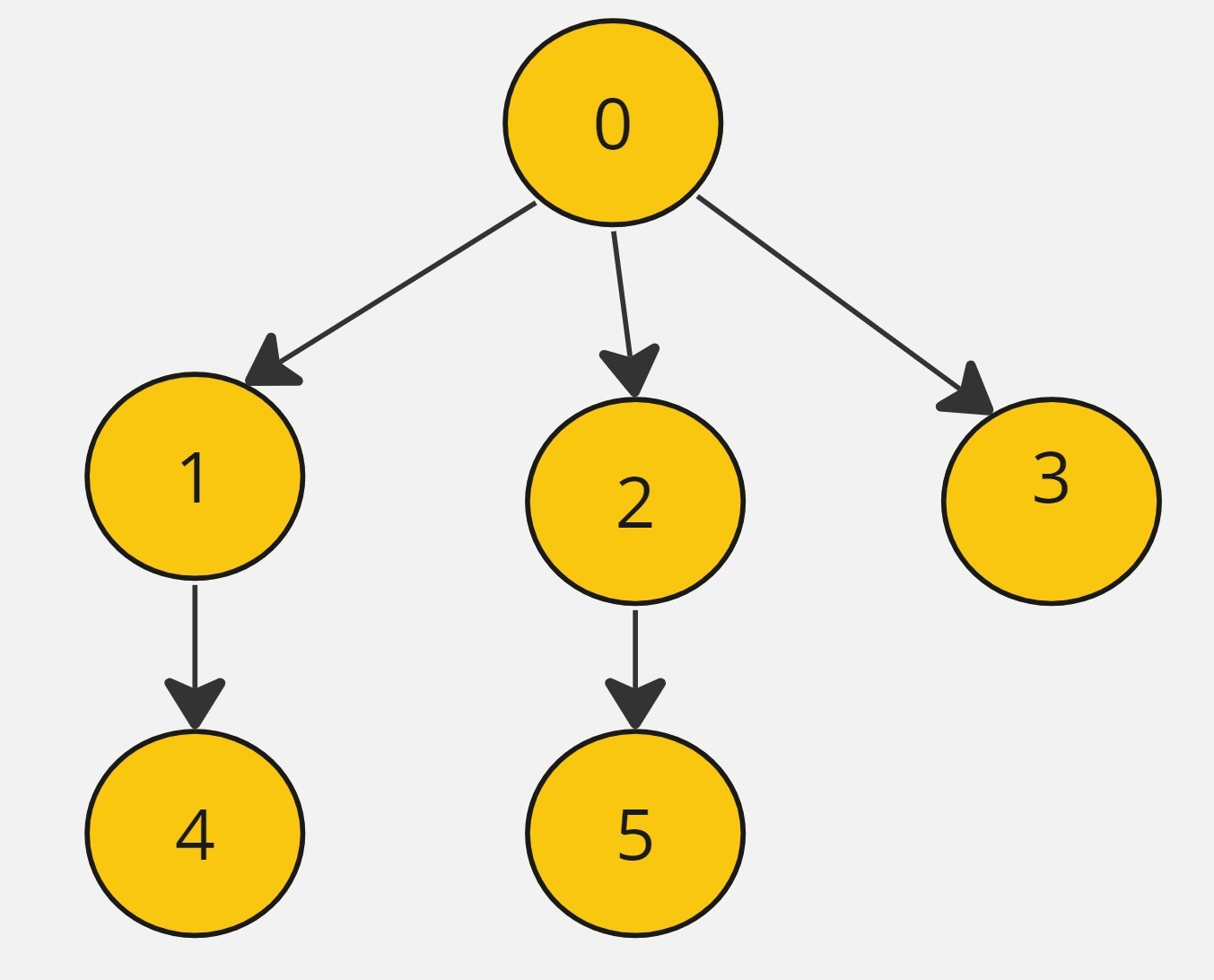
Given an adjacency list representation of a directed graph with ‘n’ vertices and ‘m’ edges. Your task is to return a list consisting of Breadth-First Traversal (BFS) starting from vertex 0.
In this traversal, one can move from vertex 'u' to vertex 'v' only if there is an edge from 'u' to 'v'. The BFS traversal should include all nodes directly or indirectly connected to vertex 0.
Note:
The traversal should proceed from left to right according to the input adjacency list.
Example:
Adjacency list: { {1,2,3},{4}, {5}, {},{},{}}

The interpretation of this adjacency list is as follows:
Vertex 0 has directed edges towards vertices 1, 2, and 3.
Vertex 1 has a directed edge towards vertex 4.
Vertex 2 has a directed edge towards vertex 5.
Vertices 3, 4, and 5 have no outgoing edges.

We can also see this in the diagram below.

BFS traversal: 0 1 2 3 4 5
Problem approach
Basic BFS approach.


Here's your problem of the day 
Solving this problem will increase your chance to get selected in this company
Skill covered: Programming
How do you remove whitespace from the start of a string?
Choose another skill to practice
Similar interview experiences
SDE - 1
3 rounds | 10 problems
Interviewed by Flipkart limited
 Selected
2634 views

0 comments

0 upvotes
SDE - 1
3 rounds | 7 problems
Interviewed by Flipkart limited
Selected 1189 views
0 comments
0 upvotes
SDE - 1
3 rounds | 3 problems
Interviewed by Flipkart limited
 Selected
 1719 views
0 comments
0 upvotes
SDE - 1
3 rounds | 4 problems
Interviewed by Flipkart limited
Selected 2198 views
0 comments
0 upvotes
Companies with similar interview experiences
SDE - 1
5 rounds | 12 problems
Interviewed by Amazon
 Selected
 115097 views
24 comments
0 upvotes
SDE - 1
4 rounds | 5 problems
Interviewed by Microsoft
Selected 58238 views
5 comments
0 upvotes
SDE - 1
3 rounds | 7 problems
Interviewed by Amazon
 Selected
 35147 views
7 comments
0 upvotes