





Flipkart limited interview experience Real time questions & tips from candidates to crack your interview
SDE - 1
Flipkart limited


3 rounds | 4 Coding
problems

 Selected
 Interview preparation journey

Journey
I was not feeling happy in my previous role at Airtel Digital (erstwhile Wynk Music) and wanted to make a move out as soon as possible. When I started looking for preparation strategies, most of them focussed on FAANG/MAANG/TAANG companies with 3-6 months of roadmaps of DSA grinding. I decided I didn't want to waste that much time. Neither I had the dying urge of working in above mentioned Big Tech Companies. So, I decided to apply for companies like Flipkart, Zeta, Zomato etc. which had a good tech culture and good exposure to offer.
Interview Experience:
I applied to Flipkart through LinkedIn and Instahyre and got response within a week. I had approximately 10 days to prepare for the hiring drive. The process consisted of 3 rounds:
1. Machine Coding Round
2. Problem Solving Round (DSA)
3. Hiring Manager Round
Machine Coding Round:
The purpose of machine coding is to basically check whether a developer has the ability to convert a problem statement into clean modularised code within a small span of time. The problem statement given to me was Library Management System. It had 6-8 requirements like issuing a book, returning a book, calculating fine, reserving a book etc. The time given was 1.5 hours, within which a clean functional code was to be written. I was able to finish the code within time and submit. Once you finish, you get on a call with one or two interviewers to discuss code. The aim of this discussion was as follows:
a. Ensure all requirements were met
b. The code was bug free and handled all the edge cases
c. Evaluate Code Quality. [Give max importance to this]
d. Ask questions on low level design choices
Problem Solving Round:
Machine coding round was followed by problem solving round to check data structure and algorithm skills. Usually, it lasts for 50 mins to one hour. One medium and one medium-hard difficulty were asked:
1. Given a boolean 2D array, where each row is sorted. Find the row with the maximum number of 1s. Expected Complexity [Time: O(n), Space: O(1)]
2. Check if a binary tree is complete binary tree. Follow up: Find the size of largest complete binary sub-tree in a binary tree.
I was able to come up with the solution for both the problems. For the first question, I had to first discuss solution and write it's code. For the second problem, first we discussed solution of initial problem and follow up question. I was asked to write pseudo code for the follow up question to the second problem. In the end, some time was left, which interviewer utilised for some questions that I had.
Hiring Manager Round:
This round did not have any technical obstacles, but was more about personality and culture fit. The hiring manager was very cordial, and he was more interested in understanding about me, my past experience/projects and technical challenges I worked on and how I solved those problems. I used this round to ask some clarifying questions about the role, tech-stack used and kind of work to expect once I joined. The hiring manager was convinced and this round ended on a high.
After few weeks, I got confirmation from HR that my feedback was good and they would be extending the offer to me.
How I prepared?
Machine Coding Round:
For machine coding round, focus on writing quality code in quick time. It's important to write modular and extensible code, with good coding practices. While most of this comes with experience and hands on practice, I would recommend spend some time preparing for it. I came across a website, Work-At-Tech (https://workat.tech/machine-coding/practice), which had some common machine coding round problems with solutions. I practiced 5-6 problems from here and read solutions for the rest. This gave me an insight on what to expect from this round, and how to write good code in quick time.
Problem Solving Round:
Since I had less time, I didn't have the luxury to solve large number of questions. So, I decided to solve only few good quality questions. I read some interview experiences of Flipkart to understand what were the type of questions asked, how many questions were asked. I understood that it was not required to solve easy and hard problems. It was important to go through only medium problems. I revised the most used data structures like Hashmap, Heaps, Binary Tree, BST, Array (1-d and 2-d) and Graphs. Apart from it, I revised the common algorithms associated with these data structures. This I did from a youtube channel called Striver. I watched all the videos in 2x speed to revise everything quickly. Post this, I went to leetcode and GeeksForGeeks and started practicing problems previously asked in Flipkart interviews. Try to do this diligently. Try to solve as many questions as possible. Don't get fixated on one problem, and don't feel low if you are unable to solve some easy problem. Give good number of hours here. I always believe it's better to give 10 hours for 10 days, than to give 1 hour for 100 days.
Hiring Manager Round:
For this, I would say no preparation is required. If your previous two rounds went good, which was the case for me, hiring manager rounds are usually non-technical. But if there was some red-flag in previous rounds, this round can also see some data structure algorithm question. It's important to be truthful in this round. Don't try to fake anything or present a personality that doesn't exist. This round has some standard questions like
1. How did you solve an ambiguous problem at work?
2. What are your best qualities or achievements?
etc.
You can easily find a list of such questions online. For each question try to think of some examples. If you give real-life examples to substantiate your answers, your candidature would stand-out. Avoid giving some template answers available online. To-the point and substantiated answers is the key for this round.
Application story
I applied for the role on instahyre with my updated resume. I got a call-back within a week. Flipkart at that time was conducting multiple hiring drives. I took 2 weeks for preparation and got my interviews scheduled.
Why selected/rejected for the role?
What helped me was a good resume, where I clearly explained what tasks I had worked on in the previous role.
If you know someone in flipkart, getting a referral increases chances of getting short listed.
Be confident during interviews, even when you don't know the answer. Try to approach the problem in objective way and don't site silent. Your interviewer will nudge you in the right direction.
Preparation
Duration: 1 Month
Topics: Dynamic Programming, Greedy Algorithm,Graphs, Binary Trees, Heaps, Arrays (1-d and 2-d), BST, Tries

Tip 1 : Solve as many questions as possible. Write code. Don't just read solutions.
Tip 2 : Write clean code. Even in Problem Solving Rounds.
Tip 3 : Try to master one language properly and learn to implement commons Data structures in it.
Tip 4 : For machine coding round, give proper names to the classes. Don't keep all the code in one class. Try to move general purpose logic like sorting, or filtering to some general purpose class like helper or utils.
Application process
Where: Other
Eligibility: No criteria
Tip 1 : Try to do one or two good projects on the skills you have mentioned.
Tip 2 : Please properly elaborate or explain what work you have done in previous role
Tip 3 : Don't write anything fake or something you won't be able to defend.

Interview rounds
01
Round
Medium
Video Call
Duration60 Minutes
Interview date12 May 2021
Coding problem1
This round was not exactly a System Design round, but actually a machine coding round, where we had to solve for some given requirements.
1. System Design Question
Design a Library Management System.
Problem approach
Tip 1 : Try to write clean code
Tip 2 : Try to first write down classes/functions on piece of paper and then start coding
Tip 3 : Don't put all functions/codes in one class. Try to break it down in multiple classes
02
Round
Medium
Video Call
Duration60 Minutes
Interview date12 May 2021
Coding problem2
In this round, there were two data structure/algorithm problems. We had to come up with an optimal solution and discuss time and space complexities of the solutions.
1. Row with Maximum 1's
Easy
10m average time
90% success

0/40
Asked in companies



You have been given a non-empty grid ‘mat’ with 'n' rows and 'm' columns consisting of only 0s and 1s. All the rows are sorted in ascending order.
Your task is to find the index of the row with the maximum number of ones.
Note: If two rows have the same number of ones, consider the one with a smaller index. If there's no row with at least 1 zero, return -1.
Example:
Input: 'n' = 3, 'm' = 3, 'mat' = [[1, 1, 1], [0, 0, 1], [0, 0, 0]]

Output: 0

Explanation: The row with the maximum number of ones is 0 (0 - indexed).
Problem approach
Since the array was sorted, first thing that came to mind was running a binary search on each row. But a closer view would show that once you know that for some row, values after column y are all 1, then from next row, you don't need to check columns beyond y. You only need to check columns before y.
2. Check Whether Binary tree Is Complete
Moderate
25m average time
70% success
0/80
Asked in companies



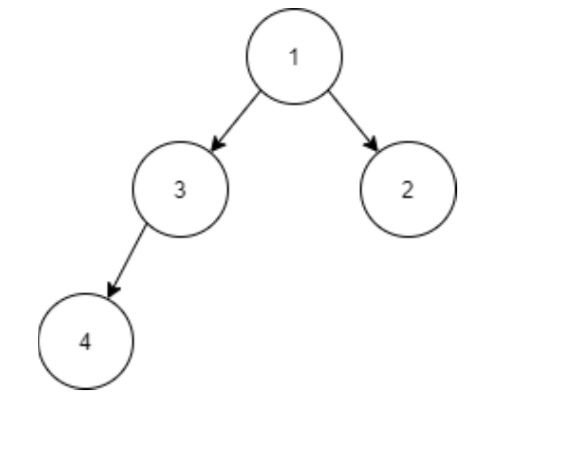
You are given a binary tree. Your task is to check whether the given binary tree is a Complete Binary tree or not.
A Complete Binary tree is a binary tree whose every level, except possibly the last, is completely filled, and all nodes in the last level are placed at the left end.
Example of a complete binary tree :
03
Round
Easy
Video Call
Duration45 minutes
Interview date12 May 2021
Coding problem1
Hiring Manager Round. This was more of a discussion, than a technical round
1. Technical Questions
How would you design a paginated api? How would you optimise the performance of this api?


Here's your problem of the day 
Solving this problem will increase your chance to get selected in this company
Skill covered: Programming
Which data structure is used to implement a DFS?
Choose another skill to practice
Similar interview experiences
SDE - 1
3 rounds | 10 problems
Interviewed by Flipkart limited
 Selected
2653 views

0 comments

0 upvotes
SDE - 1
3 rounds | 7 problems
Interviewed by Flipkart limited
Selected 1215 views
0 comments
0 upvotes
SDE - 1
3 rounds | 3 problems
Interviewed by Flipkart limited
 Selected
 1745 views
0 comments
0 upvotes
SDE - 1
3 rounds | 4 problems
Interviewed by Flipkart limited
Selected 2221 views
0 comments
0 upvotes
Companies with similar interview experiences

SDE - 1
5 rounds | 12 problems
Interviewed by Amazon
 Selected
 115355 views
24 comments
0 upvotes
SDE - 1
4 rounds | 5 problems
Interviewed by Microsoft
Selected 58428 views
5 comments
0 upvotes
SDE - 1
3 rounds | 7 problems
Interviewed by Amazon
 Selected
 35236 views
7 comments
0 upvotes