





Freshworks interview experience Real time questions & tips from candidates to crack your interview
Senior Software Engineer
Freshworks


5 rounds | 7 Coding
problems

 Selected
 Interview preparation journey

Preparation
Duration: 4 Months
Topics: Data structures, HLD, LLD, Database basics, operating system basics

Tip 1 : prepare github profile with few good projects
Tip 2 : solve questions from topics like dp, stack, queue, tree
Tip 3 : prepare HLD, LLD
Application process
Where: Naukri
Eligibility: No criteria
Tip 1 : add your github profile, competitive coding profiles
Tip 2 : add few achievements like open source contribution, hackathons
Tip 3 : add few personal projects with github link or working site link

Interview rounds
01
Round
Medium
Video Call
Duration75 Minutes
Interview date28 Feb 2021
Coding problem2
1. Triplets with Given Sum
Moderate
15m average time
85% success

0/80
Asked in companies



You are given an array/list ARR consisting of N integers. Your task is to find all the distinct triplets present in the array which adds up to a given number K.
An array is said to have a triplet {ARR[i], ARR[j], ARR[k]} with sum = 'K' if there exists three indices i, j and k such that i!=j, j!=k and i!=j and ARR[i] + ARR[j] + ARR[k] = 'K'.
Note:
1. You can return the list of values in any order. For example, if a valid triplet is {1, 2, -3}, then {2, -3, 1}, {-3, 2, 1} etc is also valid triplet. Also, the ordering of different triplets can be random i.e if there are more than one valid triplets, you can return them in any order.
2. The elements in the array need not be distinct.
3. If no such triplet is present in the array, then return an empty list, and the output printed for such a test case will be "-1".
Problem approach
Done this in O(N^2), interviewer was satisfied, he asked to modify the solution for returning triplets that sums to atleast N (instead of exact 0)
2. K-th largest Number BST
Easy
10m average time
90% success
0/40
Asked in companies



You are given a binary search tree of integers with 'N' nodes. Your task is to return the K-th largest element of this BST.
If there is no K-th largest element in the BST, return -1.
A binary search tree (BST) is a binary tree data structure which has the following properties.
• The left subtree of a node contains only nodes with data less than the node’s data.
• The right subtree of a node contains only nodes with data greater than the node’s data.
• Both the left and right subtrees must also be binary search trees.
Problem approach
Done using inorder traversal
02
Round
Medium
Video Call
Duration60 Minutes
Interview date2 Mar 2021
Coding problem2
1. System Design Question
Design database schema for support ticketing system (freshdesk)
Problem approach
Tip 1 : choose index properly
Tip 2 : ask about scale of the system
2. Count Ways To Reach The N-th Stairs
Moderate
30m average time
80% success
0/80
Asked in companies
You have been given a number of stairs. Initially, you are at the 0th stair, and you need to reach the Nth stair.
Each time, you can climb either one step or two steps.
You are supposed to return the number of distinct ways you can climb from the 0th step to the Nth step.
Note:
Note: Since the number of ways can be very large, return the answer modulo 1000000007.
Example :
N=3
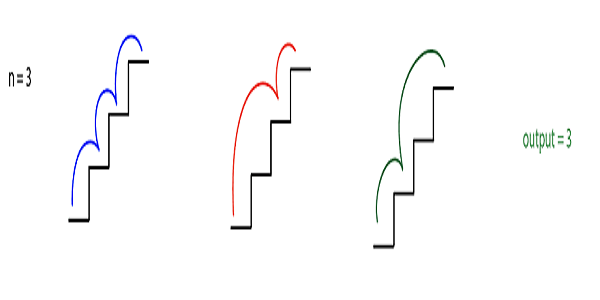
We can climb one step at a time i.e. {(0, 1) ,(1, 2),(2,3)} or we can climb the first two-step and then one step i.e. {(0,2),(1, 3)} or we can climb first one step and then two step i.e. {(0,1), (1,3)}.
03
Round
Medium
Video Call
Duration60 Minutes
Interview date5 Mar 2021
Coding problem1
1. System Design Question
Design BookMyShow LLD+HLD
04
Round
Easy
HR Round
Duration60 Minutes
Interview date19 Mar 2021
Coding problem1
This was hiring manager round
1. Technical Questions
Question on your current experience and problems solved
What is indexing in dbms.
Behavioral questions
05
Round
Easy
HR Round
Duration20 Minutes
Interview date30 Mar 2021
Coding problem1
This was culture fit round
1. Basic HR Questions
Basics questions on work culture, behavioral, reason to join freshworks


Here's your problem of the day 
Solving this problem will increase your chance to get selected in this company
Skill covered: Programming
How do you remove whitespace from the start of a string?
Choose another skill to practice
Similar interview experiences
Software Engineer
4 rounds | 6 problems
Interviewed by Freshworks
Selected 
3361 views

0 comments

0 upvotes
SDE - 1
5 rounds | 6 problems
Interviewed by Freshworks
Selected 1305 views
0 comments
0 upvotes
Senior Software Engineer
3 rounds | 7 problems
Interviewed by Freshworks
Selected 0 views
0 comments
0 upvotes
SDE - 1
4 rounds | 8 problems
Interviewed by Freshworks
Selected 1341 views
0 comments
0 upvotes
Companies with similar interview experiences

Senior Software Engineer
1 rounds | 3 problems
Interviewed by Intuit
Rejected
3320 views
1 comments
0 upvotes

Senior Software Engineer
5 rounds | 5 problems
Interviewed by PhonePe
Selected 3083 views
0 comments
0 upvotes

Senior Software Engineer
4 rounds | 4 problems
Interviewed by Walmart
 Selected
 8213 views
1 comments
0 upvotes