





GE (General Electric) interview experience Real time questions & tips from candidates to crack your interview
SDE - Intern
GE (General Electric)


3 rounds | 11 Coding
problems

 Selected
 Interview preparation journey

Journey
I applied to this company through on-campus placements in the first week of the July month. This was the first company that came to our college. I applied to this company because it is a stable company and has a good history in the field of technology
Application story
I applied to GE Digital through on-campus placements in the second week of july month. This company came to our college in the second week of the august and it was the first company which came to our college through on-campus placements. There were three rounds first was online coding round, second was technical round and third was HR round.
Why selected/rejected for the role?
I was selected to this role because I gave all the interviews rounds with confidence and almost gave answers to all the technical questions asked by the interviewer in all rounds and also I was very interactive througout the interviews
Preparation
Duration: 3 months
Topics: Data Structures and Algorithms, Operating System, DBMS, Computer Networks, OOPs and basics of system design (LLD and HLD)

Tip 1 : Prepare data structures and algorithms along with problem solving
Tip 2 : Prepare atleast two projects to have some knowledge of development
Tip 3 : Be confident while giving the interviews and be interactive throughout the interview
Application process
Where: Campus
Eligibility: No criteria
Tip 1 : Don't put irrelevant information in your resume for the sake of filling the page
Tip 2 : Have 2 or 3 good projects and put only the technologies and programming languages to which you are really confident.

Interview rounds
01
Round
Medium
Online Coding Test
Duration60 minutes
Interview date10 Jul 2022
Coding problem3
There were three coding questions with easy and medium difficulties and 90 minutres to solve these questions
1. Add One To Number
Easy
10m average time
90% success

0/40
Asked in companies



Given a non-negative number represented as an array of digits, you have to add 1 to the number, i.e, increment the given number by one.
The digits are stored such that the most significant digit is at the starting of the array and the least significant digit is at the end of the array.
For Example
If the given array is {1,5,2}, the returned array should be {1,5,3}.
Note
Input array can contain leading zeros, but the output array should not contain any leading zeros (even if the input array contains leading zeroes).
For Example:
If the given array is {0,2}, the returned array should be {3}.
2. Evaluate Division
Moderate
15m average time
85% success
0/80
Asked in companies



You are given an array of pairs of strings 'EQUATIONS', and an array of real numbers 'VALUES'. Each element of the 'EQUATIONS' array denotes a fraction where the first string denotes the numerator variable and the second string denotes the denominator variable, and the corresponding element in 'VALUES' denotes the value this fraction is equal to.
You are given ‘Q’ queries, and each query consists of two strings representing the numerator and the denominator of a fraction. You have to return the value of the given fraction for each query. Return -1 if the value cannot be determined.
Example :
'EQUATIONS' = { {“a”, ”s”} , {“s”, “r”} }
'VALUES' = { 1.5, 2 }
queries = { {“a”, “r” } }

For the above example (a / s) = 1.5 and (s / r) = 2 therefore (a / r) = 1.5 * 2 = 3.
3. Remove Duplicates
Easy
15m average time
80% success
0/40
Asked in companies



Ninja is playing with numbers but hates when he gets duplicate numbers. Ninja is provided an array, and he wants to remove all duplicate elements and return the array, but he has to maintain the order in which the elements were supplied to him.
02
Round
Easy
Video Call
Duration60 minutes
Interview date11 Jul 2022
Coding problem4
It was a technical round, and I was alone in the room.
I was very much confident
The interviewer asked 1 coding problem and some questions on OS, DBMS, OOPs, and my projects.
1. Maximum Width In Binary Tree
Moderate
38m average time
50% success
0/80
Asked in companies

You have been given a Binary Tree of integers. You are supposed to return the maximum width of the given Binary Tree. The maximum width of the tree is the maximum width among all the levels of the given tree.
The width of one level is defined as the length between the leftmost and the rightmost, non-null nodes in the level, where the null nodes in between the leftmost and rightmost are excluded into length calculation.
For example :
For the given binary tree
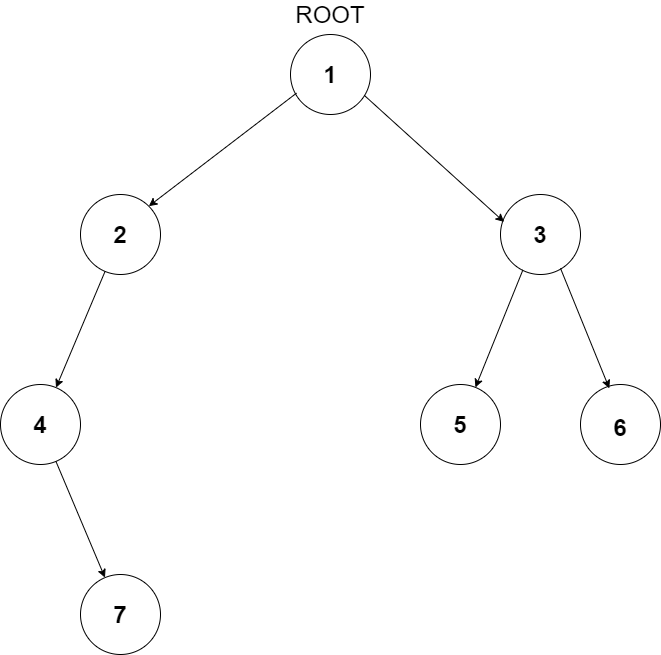
The maximum width will be at the third level with the length of 3, i.e. {4, 5, 6}.
2. OS Question
What is Cache memory? (Learn)
Problem approach
Cache memory is an extremely fast memory type that acts as a buffer between RAM and the CPU. It holds frequently requested data and instructions so that they are immediately available to the CPU when needed.
3. OS Question
What is virtual memory? (Learn)
Problem approach
Virtual Memory is a storage scheme that provides user an illusion of having a very big main memory. This is done by treating a part of secondary memory as the main memory.
4. DBMS Question
What is Sharding? (Learn)
Problem approach
Sharding is a method of splitting and storing a single logical dataset in multiple databases. By distributing the data among multiple machines, a cluster of database systems can store larger dataset and handle additional requests.
03
Round
Medium
HR Round
Duration60 minutes
Interview date11 Jul 2022
Coding problem4
1. Basic HR Question
Tell me about yourself other than the things that are mentioned in resume
Problem approach
Tip 1 : Do not ask the interviewer what he wants to know about you.
Tip 2 : Introduce yourself by including certain adjectives like problem-solving, innovation and tech-savvy,
creative, quick learner, etc. that best describe you in your professional life to boost your chances.
Tip 3 : Be confident and tell about extra curricular activities and achievements
2. Basic HR Question
Why do you want to work for our company?
Problem approach
Tip 1 : Talk about the past projects that you worked on that match the requirements of the current role.
Tip 2 : Talk about your career aspirations that are associated with this job role.
Tip 3 : Have the knowledge in hand about the company’s vision, mission, and the work it has done in recent
years that inspired you to join the organization.
3. Basic HR Question
Why should we hire you?
Problem approach
Tip 1 : How well you would perform the job and how you would be a great addition to the team.
Tip 2 : Tell that you are a good learner adn eager to learn new technologies
Tip 3 : Everything should boil down to how you can add great value to the organization.
4. Basic HR Question
What are your hobbies?
Problem approach
My hobbies are problem solving, Internet surfing, learning new technologies, playing Chess, listening to music, wathing standup comedy videos. In my spare time, I like to read news on my phone and traveling to my hometown.


Here's your problem of the day 
Solving this problem will increase your chance to get selected in this company
Skill covered: Programming
What's the main risk of a "Chat with Your Codebase" public API tool?
Choose another skill to practice
Similar interview experiences
Digital Technology Intern
4 rounds | 4 problems
Interviewed by GE (General Electric)
 Selected
2265 views

0 comments

0 upvotes
SDE - Intern
4 rounds | 6 problems
Interviewed by GE (General Electric)
 Selected
 2098 views
0 comments
0 upvotes

SDE - 1
3 rounds | 7 problems
Interviewed by OYO
Selected 6263 views
0 comments
0 upvotes
SDE - 1
3 rounds | 9 problems
Interviewed by Salesforce
 Selected
 4597 views
0 comments
0 upvotes
Companies with similar interview experiences
SDE - Intern
3 rounds | 6 problems
Interviewed by Amazon

Rejected
16243 views
4 comments
0 upvotes
SDE - Intern
4 rounds | 7 problems
Interviewed by Microsoft
Selected 16273 views
1 comments
0 upvotes
SDE - Intern
2 rounds | 4 problems
Interviewed by Amazon
Selected 10564 views
2 comments
0 upvotes