





Goldman Sachs interview experience Real time questions & tips from candidates to crack your interview

Analyst
Goldman Sachs


6 rounds | 12 Coding
problems

 Selected
 Interview preparation journey

Preparation
Duration: 3 months
Topics: DSA, Java(oops), DBMS, Spring, Hibernate.

Tip 1 : Be confident and try to communicate with the interviewer.
Tip 2 : Practice all the coding concepts.
Application process
Where: Naukri
Eligibility: Experience of 1yr was required in java development
Tip 1 : Have projects related to the skills mentioned in the job description.
Tip 2 : Be perfect with the things that you put on resume. If you feel not confident enough remove them from resume.

Interview rounds
01
Round
Medium
Online Coding Test
Duration120 minutes
Interview date19 Feb 2022
Coding problem2
A time window of 3 days will be provided. But once the exam gets started you will only have 120 minutes to finish. Exam will be of 120 points. You have to score at least 80-85 to qualify for the next round. Two coding questions were given. One was based on arrays and one was based on strings. Difficulty level - medium
1. Balanced parentheses
Moderate
10m average time
90% success

0/80
Asked in companies



Given an integer ‘N’ representing the number of pairs of parentheses, Find all the possible combinations of balanced parentheses with the given number of pairs of parentheses.
Note :
Conditions for valid parentheses:
1. All open brackets must be closed by the closing brackets.

2. Open brackets must be closed in the correct order.
For Example :
()()()() is a valid parentheses.
)()()( is not a valid parentheses.
Problem approach
Tip 1 : Read the problem statement carefully before starting to code.
2. Compress the String
Moderate
32m average time
60% success
0/80
Asked in companies

Write a program to do basic string compression. For a character which is consecutively repeated more than once, replace consecutive duplicate occurrences with the count of repetitions.
Example:
If a string has 'x' repeated 5 times, replace this "xxxxx" with "x5".
The string is compressed only when the repeated character count is more than 1.
Note:
Consecutive count of every character in the input string is less than or equal to 9. You are not required to print anything. It has already been taken care of. Just implement the given function and return the compressed string.
02
Round
Medium
Face to Face
Duration60 minutes
Interview date9 Mar 2022
Coding problem2
Slots will be provided and one slot was chosen by me. Environment used was coderpad which will be shared with us and the interviewer. Interviewer was good and patiently cleared all my doubts.
1. Sort 0 1
Moderate
0/80
Asked in companies


You have been given an integer array/list(ARR) of size N that contains only integers, 0 and 1. Write a function to sort this array/list. Think of a solution which scans the array/list only once and don't require use of an extra array/list.
Note:
You need to change in the given array/list itself. Hence, no need to return or print anything.
2. First non repeating character
Easy
15m average time
80% success
0/40
Asked in companies


Ninja is now bored with numbers and is now playing with characters but hates when he gets repeated characters. Ninja is provided a string, and he wants to return the first unique character in the string.The string will contain characters only from the English alphabet set, i.e., ('A' - 'Z') and ('a' - 'z'). If there is no non-repeating character, print the first character of the string. If there is no non-repeating character, return the first character of the string.
Problem approach
This can be solved using maps or by taking extra array(storing frequencies).
03
Round
Medium
Face to Face
Duration60 minutes
Interview date25 Mar 2022
Coding problem3
This round was 1st interview of superday(all interviews will be conducted on same day). Each round lasts for one hour. 2 interviewers will be there and are very supportive. Coderpad will be provided for coding the problem.
1. Bubble Sort
Easy
10m average time
90% success
0/40
Asked in companies



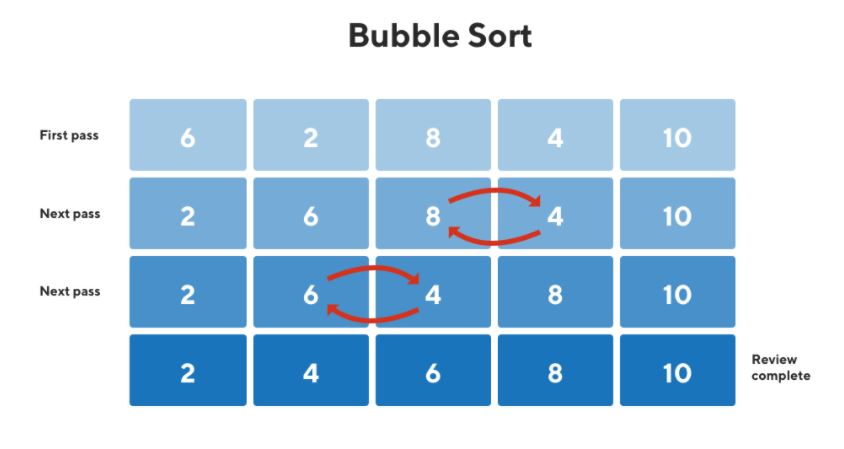
Bubble Sort is one of the sorting algorithms that works by repeatedly swapping the adjacent elements of the array if they are not in sorted order.
You are given an unsorted array consisting of N non-negative integers. Your task is to sort the array in non-decreasing order using the Bubble Sort algorithm.
For Example:
Bubble Sort implementation for the given array: {6,2,8,4,10} is shown below :-
2. Maximum Path Sum
Easy
0/40
Asked in companies

You are given an n-ary tree consisting of ‘N’ nodes. Your task is to return the maximum sum of the path from the root to the leaf node.
For example:
For the given tree:
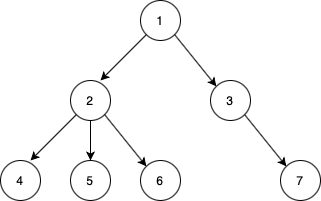
The path 1 -> 3 -> 7 produces the maximum i.e, 11.
Problem approach
I have solved this problem through recursion. I have discussed my approach with the interviewer and this discussion was good as it went on for 20minutes. He asked me all the edge case scenarios to check my code covers them or not. I have explained him all his cases and he satisfied.
3. Level order traversal
Easy
15m average time
85% success
0/40
Asked in companies



You have been given a Binary Tree of integers. You are supposed to return the level order traversal of the given tree.
For example:
For the given binary tree
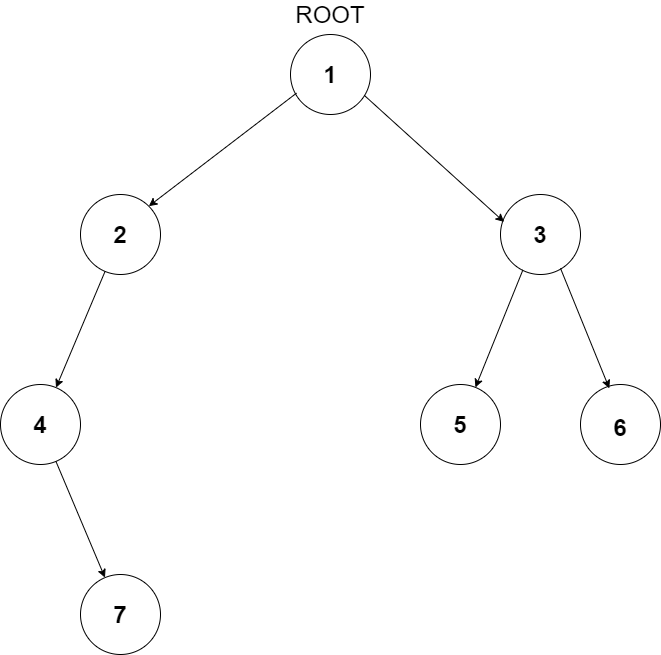
The level order traversal will be {1,2,3,4,5,6,7}.
Problem approach
I was asked to code this question fast as we were running out of time. I have codes this in short time as I was aware of tree traversals. I have solved this using the height concept of tree.
04
Round
Medium
Face to Face
Duration60 minutes
Interview date25 Mar 2022
Coding problem3
This round was taken just after 1st round(10minutes break was provided). This was taken on zoom with the help of coderpad. This interview also had 2interviewers.
1. Regular Expression Match
Easy
10m average time
90% success
0/40
Asked in companies

Given a string ‘str’ and a string ‘pat’. The string s has some wildcard characters i.e ‘?’ and ‘*’.
If any character is a ‘?’ we can replace that character with any other character.

If a character is a * we can replace * with any sequence of characters including the empty sequence.
Your task is to determine if it is possible that we can make ‘str' = 'pat’ using appropriate conversions in ‘str’.
For example:
Let str = “abc?" and pat= “abcd”

We return true as ‘?’ can be replaced with ‘d’ and this makes ‘str’ and ‘pat’ same.
Problem approach
I solved it with the help of frequency. Extra array was taken and stored all the frequencies and solved it.
2. Best Time to Buy and Sell Stock III
Hard
0/120
Asked in companies

You are Harshad Mehta’s friend. He told you the price of a particular stock for the next ‘n’ days.
You are given an array ‘prices’ which such that ‘prices[i]’ denotes the price of the stock on the ith day.
You don't want to do more than 2 transactions. Find the maximum profit that you can earn from these transactions.
Note
1. Buying a stock and then selling it is called one transaction.

2. You are not allowed to do multiple transactions at the same time. This means you have to sell the stock before buying it again.
Example:
Input: ‘n’ = 7, ‘prices’ = [3, 3, 5, 0, 3, 1, 4].

Output: 6

Explanation:
The maximum profit can be earned by:
Transaction 1: Buying the stock on day 4 (price 0) and then selling it on day 5 (price 3).
Transaction 2: Buying the stock on day 6 (price 1) and then selling it on day 6 (price 4).
Total profit earned will be (3 - 0) + ( 4 - 1) = 6.
Problem approach
Can go through above link. My solution is also similar to the one in link.
3. Puzzle Question
There are 9 boxes and 36 balls. Can we arrange odd number of balls in every box?
05
Round
Medium
Face to Face
Duration40 minutes
Interview date25 Mar 2022
Coding problem1
3round of superday. Only 1 interviewer was present.
1. Minimum Cost Tree From Leaf Nodes
Hard
20m average time
80% success
0/120
Asked in companies
Given an array/list ‘ARR' of size ‘N’, the task is to generate a Complete Binary Tree in such a way that the sum of the non-leaf nodes is minimum, whereas values of the leaf node correspond to the array elements in an In-order Traversal of the tree and value of each non-leaf node corresponds to the product of the largest leaf value in the left sub-tree and right sub-tree.
Example:
Let's say we have an 'ARR' = {1, 2, 3, 4}, so the possible complete
binary trees will be:
   4                                                          12
  /  \                                                       /  \
 1   8                                                      6    4
     / \                                                   /  \
   2   12                                                  2   3
        /  \                                              /  \
        3   4                                             1   2
  Sum of non-leaf nodes  = 24                    Sum of non-leaf nodes = 20
  So the required answer you have to return is 20.
06
Round
Medium
Face to Face
Duration60 minutes
Interview date25 Mar 2022
Coding problem1
This was 4th round. It is completely based on oops and core Java. It was like rapid fire as 2interviewers kept on asking questions one after the other.
1. OOPS
All the oops concepts were asked. All the collection frameworks were asked and asked me to explain how hashmap works(algorithm). Thread questions were asked and I have no work experience in multi threading and I told the interviewer same and he didn't ask any from multi threading.
Problem approach
Tip 1 : Be thorough with all the oops concepts and examples.
Tip 2 : Don't mention any word which you don't know as your next question can be on the word that you said.


Here's your problem of the day 
Solving this problem will increase your chance to get selected in this company
Skill covered: Programming
How do you remove whitespace from the start of a string?
Choose another skill to practice
Similar interview experiences
Analyst
1 rounds | 3 problems
Interviewed by Goldman Sachs
Rejected

1890 views

0 comments

0 upvotes
Analyst
3 rounds | 8 problems
Interviewed by Goldman Sachs
Rejected
1218 views
0 comments
0 upvotes
Analyst
5 rounds | 7 problems
Interviewed by Goldman Sachs

Rejected
2205 views
1 comments
0 upvotes
Analyst
3 rounds | 5 problems
Interviewed by Goldman Sachs
Rejected
8167 views
0 comments
0 upvotes
Companies with similar interview experiences

Analyst
3 rounds | 4 problems
Interviewed by Ernst & Young (EY)
 Selected
 2196 views
1 comments
0 upvotes

Analyst
2 rounds | 7 problems
Interviewed by Dunzo

Rejected
875 views
0 comments
0 upvotes
Analyst
3 rounds | 9 problems
Interviewed by HCL Technologies
 Selected
 0 views
0 comments
0 upvotes